Trauma-Informed Blog
New content weekly! Survivor Stories, Research Articles, Poetry, and more written by clinicians, coaches, survivors, and mental health professionals.
Remember...
Important Information About Our Content
Everything you find on this blog, CPTSDfoundation.org, or within our wider digital communities is created for educational and informational use only. No content shared here—whether by our staff or guest contributors—is intended to supersede or replace the clinical relationship you have with your medical or mental health providers. We are here to support your journey with information, but we do not provide medical advice or treatment. Guest opinions are their own and may not represent the views of CPTSD Foundation. Privacy Policy and Full Site Disclaimer, Terms of Service.

Inspirational Tugging – Teachers
Honestly, I thought that creative spark within might have abandoned me for good This hasn’t happened to me for quite some time now; inspiration is tugging at my brain, heart, and soul, prompting me...
Reflections From a Trauma Survivor: Open Your Heart
We, as people, have forgotten who we really are We live in a complex world. Our society is fast-paced and almost devoid of feeling in the internet era and incessant conference calls between...

Embracing Embodied Connection in Trauma Recovery
In the realm of trauma recovery, the journey from surviving to thriving can often feel like an uphill battle, fraught with challenges and setbacks. For far too long, the predominant approach to...

Understanding and Addressing Common Trauma Responses for Improved Well-Being
Trauma can be defined as any event that is deeply distressing to you, causing a significant impact on your emotional and mental well-being. While the experience of trauma is subjective and unique to...

Discovering Resilience: Sexual Trauma & the Power of Nature
Nature is known to have multiple facets that provide optimal physical and mental health. A study in 2021 found evidence linking nature exposure to improved cognitive function, brain activity, blood...

Join TAR Anon’s Free Support Meetings Today at 6 PM EDT
In the quiet corners of our neighborhoods, behind closed doors, and within the fabric of our communities, a silent pandemic rages on. It is not one that makes headlines or prompts global alarms, yet...

Pride and Shame: What Lies Between
Pride and shame are two sides of the same coin, perfect mirrors of one another. Both indicate the need for validation from another, separate us from our true nature, and keep us bound to our current...

Personal Honor, Integrity, Dignity, Honesty
From where do I come, and what do my own eyes see, and perceive in my world? Let us be clear: it is a personal choice for individuals to awaken from their societal slumber and commit to doing the...

Getting Rid of My Mirrors to Conquer Self-Loathing
Did you know that mirrors hide our deep, dark secrets? I was driving through East Texas one sunny morning in January for my tiny home retreat. (A tiny home was my spontaneous idea to minimize...

Misdiagnosed and Over-Medicated
Throughout the blurry state of being continuously sedated, I wandered through the pale, cold halls of the hospitals, the bus rides to and from weekly case management and therapy appointments, still...
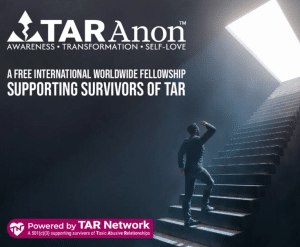
TAR Anon™: A Beacon of Support, Hope, and Healing for Caregivers in High-Conflict Situations
In the journey of life, few roles are as demanding and emotionally taxing as that of a caregiver, especially when it involves navigating through high-conflict situations. TAR Anon™, a beacon of...

Flying Under the Radar with Complex PTSD
May is Mental Health Awareness Month, so I am posting a series of articles about the mental health disorders that dominate my daily life: complex post-traumatic stress disorder (C-PTSD) and...
What is Complex Post-Traumatic Stress Disorder?
“Complex PTSD comes in response to chronic traumatization over the course of months or, more often, years. This can include emotional, physical, and/or sexual abuses, domestic violence, living in a war zone, being held captive, human trafficking, and other organized rings of abuse, and more. While there are exceptional circumstances where adults develop C-PTSD, it is most often seen in those whose trauma occurred in childhood”.