
Menopausal Psychosis or a Call to Healing

It all started one night back in mid-July 2005 when I woke up to use the bathroom. Within minutes I began shaking so badly that I could hardly hold a glass of water. I was so terrified that I called 911. Not wanting to wake my sons, I decided not to have the paramedics come and to just try to get back to sleep. Suspecting this late-night panic might have something to do with perimenopause, the next morning I decided to look up “Perimenopause and Night Panic” on my laptop.
I really didn’t expect to find anything and could hardly believe all the websites that came up—websites where other women were writing about their experiences with middle- of- the- night panic, their trips to the emergency room, and the various medications they needed to get through the night. Since I’d been able to manage my rather intense struggles with PMS in my younger years, I figured I’d be able to manage my perimenopausal symptoms just as well. Everything would be just fine, wouldn’t it?
Over the next few days, the shaking not only continued but worsened, leaving me trembling 24 hours a day. Soon, a whole host of other symptoms began to appear—unmanageable anxiety, little to no sleep, panic attacks, hot flashes, cold flashes, a racing pulse, skyrocketing blood pressure. Needless to say, I was terrified. Not knowing what was causing all these symptoms, I began running from doctor to doctor, from ER to ER, desperate to find someone who could help me. Knowing I wasn’t thinking clearly, I did ask a few of these doctors to admit me to a psychiatric facility, but each time I asked, the doctors refused.
Still thinking my symptoms might be related to perimenopause, I also tried pleading my case for bio-identical hormones, but these requests were also denied. With no diagnosis and no help in sight, I decided to go back online and start searching for my own answers. Through my frantic research and worsening emotional state, I concluded that I had contracted some dreadful disease and that I was dying. I told my sons I was dying. I told my husband I was dying. I told some of the teachers at my sons’ school that I was dying. I even wrote my obituary and an epitaph for when the time came.
Growing more and more frantic each day, about three months into this crisis I made an appointment with a neurologist to see if there was anything he could do to help me. As soon as I finished telling him about my symptoms, the first thing he asked me was, “Were you ever molested?” I was stunned. How could he possibly know? The neurologist went on to explain that he has a lot of women coming into his office “like this” (with symptoms like mine) who were molested.
The neurologist then said he’d run an EEG, just to show me that my brain was perfectly normal. Turns out that I had slowing brain waves—wave after wave of severe slowing. Even the neurologist was shocked by what he saw. Although he wasn’t able to offer a diagnosis, he did prescribe a certain medication, but I refused to take it since one of the side effects was thoughts of suicide and, well, at that point, I was already having more than enough of those.
A week later, still battling thoughts of suicide, I was finally admitted to a psychiatric hospital. Not even 24 hours into my stay I learned that I wasn’t the only woman on my ward who had experienced childhood trauma and neither was I the only woman there struggling with issues related to perimenopause. After speaking with some of these other women, I began to wonder if maybe my symptoms weren’t due to any sort of fatal disease but were in some way related to my history of abuse and to the hormonal changes of perimenopause. One of the nurses on my ward did mention a relative who’d experienced a menopausal psychosis. I thought maybe that was what I was experiencing as well.
One of the symptoms that made me believe I had some sort of psychosis was that I wasn’t able to cry.
Ever since the beginning of my crisis, it seemed that the only emotion I could access was fear. Then, one morning, while reading something from my journal to my hospital therapist, it finally happened. The tears began to fall! Although I was still shaking and could still barely think straight, somehow, in that moment I felt a sliver of hope.
Armed with this bit of hope, as soon as I was released from the hospital, I started immersing myself in every mind/ body healing practice I could fit into my budget and schedule. I already had a daily yoga and journaling practice, so I started going to talk therapy and group therapy, massage therapy, hypnotherapy, movement therapy—all with the hope of accessing and releasing more of the emotions that were driving my symptoms.
Although it took some time and a whole lot of tears, much to my surprise and relief, little by little it worked! With each emotion I released and with each episode of trauma I remembered, I began to feel more grounded and more like myself. Soon, I was able to go off all four of the psychotropic medications I’d been prescribed while in the hospital as well as the bio-identical hormones I’d finally started taking.
Inspired by the positive effect mind/body practices were having on my healing, I decided to become certified in hypnotherapy. After I told the hypnosis instructor about my psychosis—about the shaking, the sleeplessness, and the psychiatric hospital—without any hesitation he said, “That sounds like a Spiritual Emergency!” Having no idea what a Spiritual Emergency was, as soon as I got home, I bought a few books and started to do some research.
I quickly learned that a Spiritual Emergency is a crisis of personal growth and transformation—a sort of healing crisis— and that there are many different types of spiritual emergencies. Based on what I read, it seemed that the type of Spiritual Emergency I experienced was something known in ancient Indian Philosophy as a Kundalini Crisis.
A Kundalini Crisis is an energy- based mind/body healing crisis that can be triggered by many life events, including the hormonal fluctuations of perimenopause. Some of the symptoms of this type of Spiritual Emergency include intense shaking, feelings of heat and cold, electric vibrations, and insomnia.
I was so in awe of everything that happened to me and how I was able to heal that I went on to earn an MA degree in Transpersonal Psychology with a focus on Spiritual Mentoring and Feminine Spirituality. My first course in this program was Spiritual Crisis and my last course was writing a memoir about my experience as my Culminating Project.
Today, there are many books and online articles that describe how a history of childhood trauma can make menopausal symptoms much more intense and frightening. Many women’s health experts believe this is due to the emotions and energies of past traumas that need to be acknowledged, processed, and released. One book that I found to be especially helpful in presenting the healing aspects of perimenopause is The Wisdom of Menopause by Dr. Christiane Northrup. In her book, Dr. Northrup discusses how the fluctuating hormones of menopause work to set the stage for this time of profound healing.
There really are no words that can express how terrifying this type of perimenopausal crisis can be, especially for women like me who are used to having everything under control. I had carried my trauma so well for so many decades. I earned college degrees and held full time jobs. I got married and had children. But when perimenopause came, I simply could not carry the trauma any longer. My mind, body, and spirit would not allow it. So, in a way, I really was dying. The old me was dying to make room for the new me—the older, wiser me who would finally have the courage to speak about my abuse, to let go of the pain I was carrying, and heal.
It’s important to keep in mind that what happened to me is not the experience of all midlife women—only 15- 20%. But with more than two million women entering perimenopause each year that means 300,000 to 400,000 each year are likely to experience symptoms so severe that they can’t help but fear that they’re either dying or losing their minds. Hopefully, with information about Spiritual Crisis making its way into various psychiatric manuals such as the DSM (Diagnostic and Statistical Manual of Mental Disorders), we will begin to see some changes in how menopause and trauma-related crises are treated within the medical and psychiatric communities. My hope in writing and speaking about my experience with perimenopause and trauma is to offer insights, support, and hope to women who are experiencing what may appear to be a “menopausal psychosis” but is actually a very challenging and yet liberating and empowering call to healing.
Wishing all of us much hope and wholeness on our healing journeys.
Many blessings,
Lynda Wisdo, MA, CYT
Grof, Christina and Stanislav Grof, MD. Eds. Spiritual Emergency. New York: Penguin
Putnam. 1989. Print.
Northrup, Christiane, MD. The Wisdom of Menopause, Creating Physical and Emotional
Health During the Change. New York: Bantam Dell. 2001. Print.
Barbach, Lonnie, PhD. The Pause, Positive Approaches to Perimenopause and Menopause. 2nd. New York: Penguin Putnam. 1993. Print.
“How Menopause, PTSD and Complex PTSD Interconnect.” https://www.cptsdrelief.co.uk/how-menopause-ptsd-complex-ptsd-interconnect/
October 17, 2024. Web. 23 May 2026.
Photo Credit: Unsplash
Guest Post Disclaimer: This guest post is for educational and informational purposes only. Nothing shared here, across CPTSDfoundation.org, any CPTSD Foundation website, our associated communities, or our Social Media accounts, is intended to substitute for or supersede the professional advice and direction of your medical or mental health providers. The thoughts and opinions expressed are those of the guest author and do not necessarily reflect the views of the CPTSD Foundation. For further details, please review the following: Terms of Service, Privacy Policy and Full Disclaimer
- About the Author
- Latest Posts
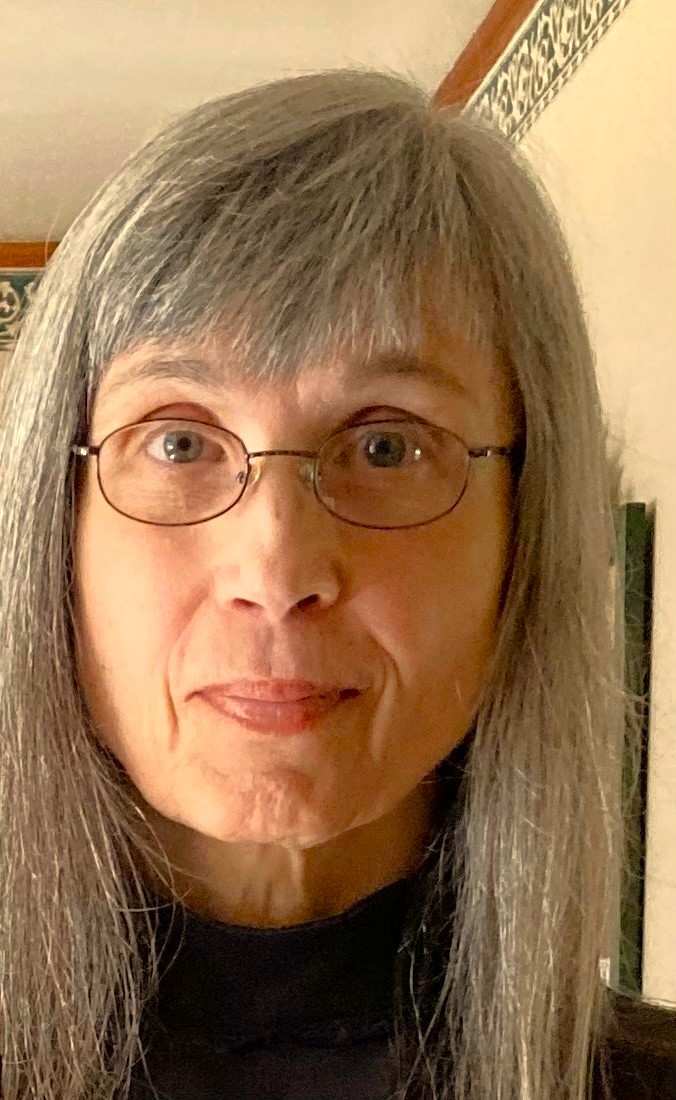
Lynda Wisdo, MA CYT
A survivor of complex trauma, Lynda holds an MA degree in Transpersonal Psychology with a focus on Feminine Spirituality and Spiritual Mentoring. She is also a Certified Trauma-Informed Yoga Instructor, Menopause Coach, and author of a memoir/research project about her experience with a menopause-related Psychosis/Spiritual Emergency titled, Menopause in Crisis~ When Spiritual Emergency Meets the Feminine Midlife Passage. In 2024 and 2025 Lynda was invited to share information about her experience with menopause and Spiritual Emergency at the annual UK conference on The Intersection of Trauma and Menopause. The focus of Lynda’s writing and healing practice is to offer insights and support to women who are dealing with the challenges of childhood trauma and its effect on their perimenopausal journeys. She can be reached through her website at https://wisewomanmenopause.weebly.com/