
Feelings Aren’t Insects
Just when I thought I couldn’t feel any worse, my mom’s accusatory words cut into my soul like shrapnel. Her words embedded themselves in my heart and mind: “You don’t know how to be happy.” Sometimes she delivered the extended version, her lip curled in disgust: “When things are going too good for you, you find a way to f*ck it up.” These words, whether flung at me in childhood or during adulthood, always catapulted me into a downward spiral.
I internalized her disappointment and methodically picked myself apart. I measured the accuracy of her harsh judgment, weighing the possibilities. Could she possibly be right? Were depression and anxiety something I chose?
Unfortunately, sometimes I believed her. Only now can I understand why I let her words land that way. I didn’t want to get attached to something that would vaporize or be interrupted by “the other shoe dropping,” leaving me feeling barren and robbed. It’s not that I wasn’t ever happy as a child. The issue, I think, is that early on, I developed a distorted relationship with the concept of happiness.
I can recall several moments of sheer joy that also came with an awareness and fear that it would leave me. I have distinct memories of internally saying, “Oh…this is so good…I have to remember this. I need to hold onto this.” I mentally captured these joyful moments like fireflies in a jar. By adulthood, I had become accustomed to happiness as this elusive “thing” that would never truly “belong” to me. In my early twenties, I wrote: “You depend on happiness that never stays too long.” I simply could not imagine “happiness” as a fixed state. The good thing is…I still can’t. Coming up, I’ll explain why this is good.
The pause between the question, “Are you happy?” and my reply is getting shorter. Furthermore, I am less likely to define my current state in comparative terms such as “Well, I’m happier than I was when…”In other words, I’m beginning to fully embrace happiness in the moment that it envelops me. Happiness, of course, is not a state that I sustain in every moment of every day. It never will be. It can’t be that for anyone. This shift within is happening because my relationship with feelings in general has changed significantly.
I’m learning to lean into feelings at the moment they show up rather than trying to whisk away the hard feelings or hoarding the good feelings while they last. I no longer view any emotion as a fixed state, or a standalone episode. It’s not as simple as just being happy or just being sad. After decades of living in a state of “all or nothing,” I’m finally learning that I can feel multiple things at once, some light and some heavy.
Several factors contributed to this shift, probably the biggest being feeling my feelings in therapy. Gradually, I practiced this skill a little bit more here and there outside of that space. I’m going to share an exercise I tried last spring. I’m writing about it because it marked a pivotal shift in my growth. It is based on the “Identify, Accept, Attribute, Act” (IAAA) process. Doing this for a month significantly impacted my relationship with feelings. At first, I was hesitant. After the first week, I began to feel a shift occur within.
I tracked my feelings three times a day, doing my best to check in with myself at the same time every day. I’m going to paraphrase the process below, which included three questions and one acknowledgement:
- “What do I feel right now?”
- After acknowledging what I felt, I paused to accept what I was feeling. Instead of running from my feelings, I leaned into them.
- “To what/who/where/when is this feeling connected?”
- “What do I do with these feelings?”
IDENTIFY:
By the time I did this exercise, I had over a year of solid therapy under my belt and had begun to develop a greater acceptance of “feeling my feelings.” At the same time, my young children brought home handouts about “zones of regulation” and learned to identify feelings, I asked one of my therapists to print and share multiple copies of a feelings wheel–one for each room. I did this so that I, in my early 40s, could learn to identify my feelings. By the time I started this exercise, I had considerably broadened my understanding and acceptance of complicated feelings. That said, I was still surprised by how often I felt more than one feeling at a time. It was interesting to learn that I could simultaneously experience sometimes “polar opposite” feelings, such as anxiety and contentment.
ACCEPT:
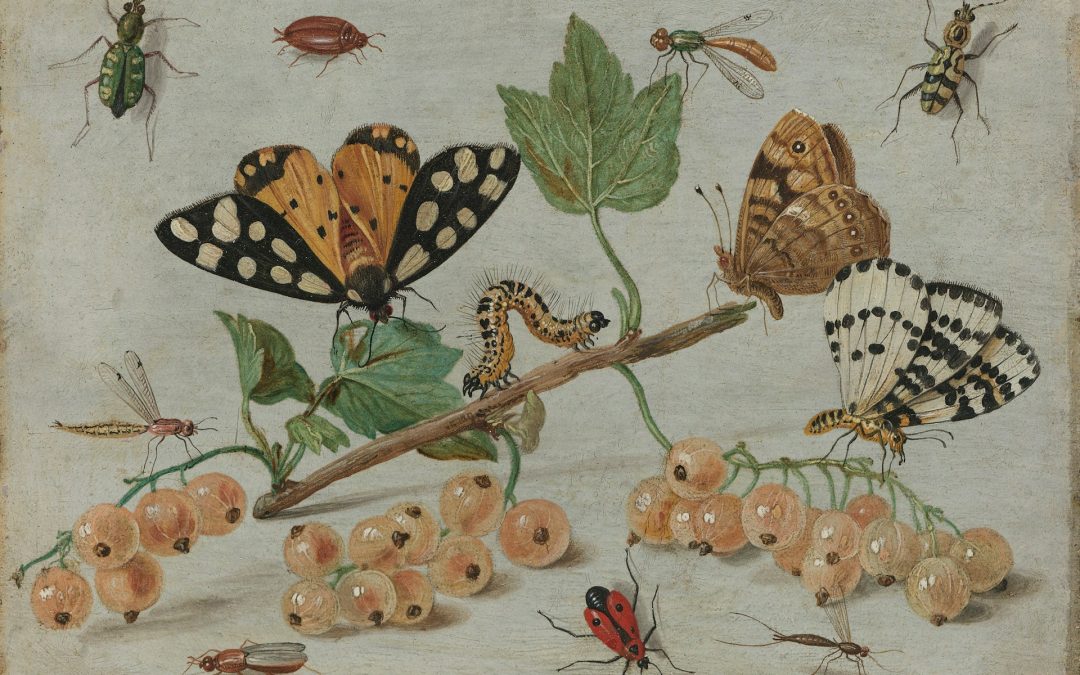
This exercise helped take the idea of “feeling my feelings” out of the therapy hour and into my everyday life. Just as I regularly did in therapy, and occasionally began doing in everyday life, I very intentionally, very regularly began accepting my feelings, including the feelings that weren’t comfortable or didn’t make sense. I sat in these feelings that I had always viewed as something to either be swatted away like pesky mosquitoes, or jarred up like beautiful fireflies. As the title of this piece indicates, I finally reached the now-obvious conclusion that feelings are not insects. Huh…who knew?
ATTRIBUTE:
Next, I asked myself where these feelings came from. Sometimes my feelings were directly connected to something currently happening. Often, especially if it was an anxious or sad feeling, it had roots in my past. As it relates to feelings of happiness (and similar feelings such as optimism, excitement, contentment, gratitude, and hopefulness), this exercise helped me become more aware of what made me happy. All of these “recipes for happiness” were simple. Over the course of a month, I identified feeling joy related to a wide range of things, including, but not limited to, sunshine, watching my favorite movie, getting a few things done, a rainy day, nature, a good night of sleep, and working. This process not only helped me better identify my feelings, but in connecting each one to a potential source, I also increased my awareness of where I can find or create happiness in the future.
ACT:
My favorite entry occurred toward the end of this month-long exercise when I identified my feeling in that moment as “relieved” because I “expressed feelings” and I committed to “do it again.” I noticed a theme that emerged repeatedly in relation to positive feelings related to happiness. My “action” item for so many of these “happy” feelings boiled down to one word: “enjoy.” It sounds so simple, doesn’t it? Are you laughing out loud? I am because come on…who are we kidding here? As you may know, “simply enjoying the moment” is not always as easy as it sounds. But…I learned that it is possible!!!
I am a highly skeptical (some might say pessimistic) person, so I was blown away when this strange little exercise actually worked! When I reminded myself over and over and over again to just enjoy the moment, it gradually became easier to embrace the joy. More often, I leaned into happiness without the temptation to begin the internal countdown to its disappearance. I felt a solid shift within. While, of course, I still have moments of wanting to mentally record happiness so I can “play it back” when it disappears, that happens less often.
When this shift took place, I wrote a reflection of my complicated feelings around happiness and hope. I had always struggled to write “happy” songs and “happy” poems. They never came naturally, and instead, my words repeatedly leaned into the darkness and sadness that felt more like “home.” But…I challenged myself to change the tune. This is what I wrote:
Attempt at a Happy Song
Trying to pen a new kind of song
Suspended in light and hope
To live inside the dreams I’ve tried
that never felt like home
Inside a room of dreams
Once too afraid to see
Hope a noose, afraid to wear
Will it strangle me?
It’s heavy knots of disappointment
Tangle with despair
Begging to be free
Am I here or there?
Writing from a place of love
To the swollen emptiness
That called my life its own
I’ve settled for less
And not enough
Can I be loved
much less known?
If I surrender to happiness
Will the words still be mine?
If I learn the language of love
Will it steal my voice?
Or stake another loss to find?
Without the pain will I disappear?
Might the shadows still stare?
Will they rob my reflection from the mirror?
I know that I’m still there
I know that I’m still there
Spells of hope embedded in my heart
I don’t know what to do with them
Should I pull them apart
Before they see I’m here?
Maybe just be with them
Show them it’s alright to care
Self is always near
I am still right here
Will the world through these eyes
Bend to a new truth
To a life I’ve never lived
Grounded in new roots
I want to call this home
Safe inside, within
Compassion is a new song
That feels so good to sing
Cascading hope
Gentle waves of belief
Seeping into my heart
a reminder that peace awaits
On the other side of grief
I know that I’m still here
I know that I’m still here
I now understand my mom’s words in a new way; they were more of a deflection from her than a reflection of me. Furthermore, I no longer believe them. Instead, I now know that I can be happy. Two decades ago, when I wrote the line about happiness being something that “never stays too long,” I wasn’t wrong. That’s okay because as I heal, it stays longer and longer. I am more fully able to accept it in the moment. I less often find myself “storing” it for later or “mourning” it before it leaves. Instead, I just sit in it and smile…somewhat defiantly, of course, because it turns out I can be happy. And…so can you.
Photo Credit: Unsplash
Guest Post Disclaimer: This guest post is for educational and informational purposes only. Nothing shared here, across CPTSDfoundation.org, any CPTSD Foundation website, our associated communities, or our Social Media accounts, is intended to substitute for or supersede the professional advice and direction of your medical or mental health providers. The thoughts and opinions expressed are those of the guest author and do not necessarily reflect the views of the CPTSD Foundation. For further details, please review the following: Terms of Service, Privacy Policy and Full Disclaimer
- About the Author
- Latest Posts
Finally feeling truly alive for the first time in my life, I am writing from a place of gradual healing with an eye to the future and a hope of connecting with others on similar paths. Forced to withhold a tsunami of emotions deemed irrelevant under the roof of my childhood “home,” the blank white pages of my notebooks invited my raw reflections without judgment. Writing allowed me to free the burdens of my soul, but at some point, I muzzled myself. My pen lay dormant for years until, at 41 years old, I experienced a traumatic flashback during an everyday activity that shook me to the core. Five days later, I started writing about the things I had long withheld. I couldn’t stop. Written words have once again become my refuge. I now recognize that these words, resurrected from the ashes of my pain, may have the power to help others. Above all, I want to magnify and share the messages that I have most treasured on my journey: we are not alone and we don’t ever have to go back. This is where we live now and the future is ours.