Writer’s Note: I previously wrote about my experience being a victim of psychological abuse. Two years from my first writing, I find myself in a much better place in my recovery, and I want to share new insights. I also want to recommend a book by Shannon Thomas that greatly impacted my life.
I’d had enough of the hustle and bustle of Los Angeles and decided it was time to escape to a simpler place to clear my mind. With a long weekend approaching, I booked a shipping container on a farm in California’s wine country. As I drove through the rolling hills and sun-soaked vineyards of Central California, I finally started to relax. This weekend was for me and me alone.
At the top of my weekend to-do list was unpacking an Amazon package containing a book I had been itching to read: Healing from Hidden Abuse by Shannon Thomas. I had read dozens of other books in search of clarity regarding a specific trauma from high school and college that still inhabited my body, but none had provided the understanding I was seeking. Little did I know that within this little package lay the answers I had been desperately searching for.
What is psychological abuse?
Psychological abuse is a sophisticated form of brainwashing, stalking, and mind control. The perpetrator(s) deliberately selects a target and employs subtle and strategic methods of coercion, intimidation, and manipulation, gradually wearing down the victim’s mental state without leaving any evidence. Due to its covert nature, when the victim speaks up to ask for help, she is often not believed and is labeled to be the “crazy” one. Meanwhile, the abusers walk away with no blood on their hands.
Psychological abuse is not limited to romantic relationships or parent-child dynamics. I didn’t seek it out, nor did I cause it. It didn’t happen in my home, and it wasn’t the result of a silly conflict with a boyfriend. It happened at school, where I became the target of covert bullying by two individuals–twin sisters. They used me as a measuring stick for their academic success, believing that if they could extinguish my bright light, it would make them appear more successful in comparison.
My abusers were deranged. They had a sick obsession with identifying my internal weaknesses, insecurities, and fears. They weaponized this information against me, attacking me where it hurt the most. Over time, they eroded everything that mattered in my life: my relationships with family and friends, my love for learning, my sense of safety, and my innate zest for life as an empath. And they did it all in a way where not a single soul would notice. Except for me.
A silent murder: no words to describe the pain
To explain what psychological abuse feels like to someone who has never experienced it, I would compare it to what the prisoners endured in the Stanford Prison Experiment of 1971. It felt as though I was curled up into a tight ball, starving in a solitary confinement cell of my own mind, body, psyche, and soul. My abusers and their “flying monkeys” would occasionally pass by my cell, gawk at my suffering through the narrow window slit with smirks on their faces, and dangle a carrot in front of me to taunt me. I would crawl closer and closer to the carrot with my trembling hand extended, but at the last second, they would rip it back through the window slit and walk away laughing, leaving me to starve again in the darkness.
Though I had seemingly more significant traumas to recover from, I wrestled for years with post-traumatic stress symptoms related to these bullies. My abusers took over my mind uncontrollably. I couldn’t clearly describe what they had done to me. My reality had been distorted. Even after they were long gone, they continued to dictate what I did, said, and thought. I was utterly terrified of them. I avoided anyone and anything that might remind me of them or trigger flashbacks related to their abuse. This avoidance grew exponentially over the years, and I ultimately lost everything from my hometown because of them. I didn’t trust anyone anymore. I couldn’t even trust myself.
Misdiagnosed, misunderstood, and revictimized
It takes someone who has survived psychological abuse to truly understand its impact on the mind, body, psyche, and soul. Throughout their time tormenting me, my abusers caused me to end up in the hospital numerous times. I learned the hard way that most mental health professionals do not understand psychological abuse and mind control, which can lead to further gaslighting of the victim. The medical providers labeled me with schizophrenic and psychotic diagnoses and injected various anti-psychotics to calm me down. While these short-term treatments numbed and tranquilized me, the long-term effects of the abrupt medication changes only created more side effects after each discharge.
I didn’t see any improvement with a therapeutic approach either. The fact that my experience stemmed from school bullying, rather than in a romantic or familial context, made mental health professionals take it even less seriously. I was laughed at, misdiagnosed, and dismissed as overthinking, paranoid, hysterical, even obsessed.
Some professionals took things even further. Being upfront about my Stockholm Syndrome reactions to the abuse, including suicidal ideation, got me in trouble. Multiple professionals diagnosed me with Borderline Personality Disorder and ordered me to be institutionalized. Another diagnosed me with Dissociative Identity Disorder (formerly Multiple Personality Disorder), suggesting that my perpetrators were one of my “alters.” He convinced me that my abusers weren’t real people but rather figments of my imagination, and then spent three months brainwashing me into communicating with numerous other alters he fabricated. If the psychological abuse hadn’t already done enough crazymaking, these medical providers, who groomed me to fulfill their own sick agendas, made me feel even more insane.
Topo Chicos and Central California cafés
Sitting at a quaint café in Paso Robles, California, I was at my wit’s end. My body couldn’t take it anymore. I ordered a Topo Chico, poured it over a glass of ice, and began reading Healing from Hidden Abuse.
I had only planned to read the first couple of chapters and then get on with my day, but three Topo Chicos and a multitude of tears later, I had finished the book cover to cover.
I sat there in awe. I did not know this woman, and she certainly didn’t know me. But she understood me. It was like she had written the book specifically for me. In that moment, she was sitting across the coffee table, holding my hand and wiping away my tears, reassuring me that one day everything would be okay.
This was in the summer of 2022. Over the next two years, I reread the book four times and listened to the audiobook on repeat during long drives. At the time, I was still living in California, but I noticed in Shannon’s bio at the end of the book that she was a counselor in the metroplex of my hometown. I knew in my heart that one day, I would meet the woman who validated what I had been through.
Deprogramming and recalibration
Fast forward to 2024, and I found myself living on the outskirts of my hometown. I reached out to Shannon and was accepted as her client.
Meeting with Shannon was my saving grace. As I stepped into her office, I was terrified to face yet another mental health professional who might revictimize me. But the moment I entered her office, I felt a warmth that I hadn’t experienced in any therapist’s office before. The Christmas decorations filled me with a childlike joy, and the Diet Coke from the mini-fridge was so refreshing.
In her book, Shannon guides readers through the six stages of recovery from psychological abuse. It’s safe to say that I had been stuck in Stage 1–the Despair stage–for many years. When therapy began, I could barely articulate what had been done to me. I was dissociated, overmedicated, and sleep-deprived.
Additionally, I was still concerned I might be The Girl Who Cried Wolf. In a world where the words narcissist, sociopath, and psychopath are thrown around carelessly, I felt guilty for calling myself a victim. Was I no different from all the tone-deaf TikTokers who sling these labels onto the slightest person who annoys them?
From despair to restoration
Shannon assured me I wasn’t overthinking anything and that my pain was valid. With patience and empathy, she began walking me through the stages of recovery.
At that time, I was still meeting with several other therapists and psychiatrists across different parts of the state, along with multiple hospital visits, including what would become my final suicide hold of my life. In environments where my suffering continued to be pathologized, Shannon listened with open ears and didn’t add fuel to the fire.
My recovery process from psychological abuse, both in therapy and on my own, felt like I was deprogramming from a cult. My body had to recalibrate itself, and my mind needed to register that I was no longer in danger. But I didn’t want to spend any more time rehashing and ruminating about what had been done to me; I had already endured enough of that in my head for years. While I did some of this with Shannon, and it was necessary at first, the real work was in reclaiming my power.
What Shannon did so well in our work together was fast-track my healing to what she identifies as the Restoration phase (Stage 6) of recovery. I took active steps to begin rebuilding a life of peace and contentment. She encouraged me to get colorful decorations for my blank apartment walls, take on part-time jobs to have social interaction during my recovery, and get a little bit of exercise each day. Therapy became an opportunity to create a beautiful painting from a blank canvas.
Taking my power back
The panic attacks, crying spells, and paramedic visits are long gone. I no longer have emotions attached to the abuse. The only things that remain are the visual and auditory remnants of the trauma, in the form of flashbacks, and I won’t stop until they are eradicated as well.
Because of what the twins did to me, I have unlocked an internal strength I didn’t know I had. During my healing process, I discovered that my abusers were ten thousand times more afraid of me than I ever was of them. I was not targeted because I am weak; I was targeted because of my strengths. I was targeted because I possess the very qualities that my abusers never will. While they had me fooled for quite some time, with a clearer head and a restored subconscious, I can finally see them for the con artists they truly are.
It is possible to recover from the crazymaking
Survivors, if no mental health professional has given you this validation, I hope you can hear it from me: You are not crazy; you were just damaged by crazy. You are not sick; you were just injured by truly sick people. You do not have a personality disorder or any other extreme diagnosis as a result of what you’ve experienced; you are a trauma survivor who had healthy reactions to being violated. You are not broken beyond repair; you are simply a survivor of an insidious form of hidden abuse that is widely misunderstood by both mental health professionals and laypeople.
Rest easy and know this: You are normal. You are healthy. You are human. You have survived pure evil, and you just need to be listened to.
Baby steps to a beautiful post-abuse life
I hope my story encourages survivors that healing is possible. Over the past two years, after receiving proper support regarding the reality of what I experienced, I have worked tirelessly to rebuild what my bullies robbed from me. Slowly but surely, I am restoring my life to a sense of normalcy.
My work with Shannon has shown me that there is life, freedom, joy, and peace after psychological abuse. Each time I left Shannon’s office, I felt a renewed sense of hope that it would be possible to return to the “me” I once knew. In both her writing and in the therapy room, Shannon leads with compassion, empathy, and a tender heart for survivors of psychological abuse. In Shannon, I have gained a lifelong confidant and therapeutic relationship that I know is 100% safe to return to if I ever need it.
For those seeking clarity on their suffering, I encourage you to curl up with a cozy blanket and read Healing from Hidden Abuse. Please visit www.shannonthomas.com for more information.
Featured Post Photo by Oscar Keyson Unsplash
To my readers who have been following my journey: I am excited to share that I have created a personal blog called “Little Cabin Life.” This blog chronicles my healing journey, where I share my experiences and the things I am doing to support my recovery. You’ll also find tips that have been helpful to me along the way. If you’re interested in following my story, please feel free to visit www.littlecabinlife.com.
Guest Post Disclaimer: Any and all information shared in this guest blog post is intended for educational and informational purposes only. Nothing in this blog post, nor any content on CPTSDfoundation.org, is a supplement for or supersedes the relationship and direction of your medical or mental health providers. Thoughts, ideas, or opinions expressed by the writer of this guest blog post do not necessarily reflect those of CPTSD Foundation. For more information, see our Privacy Policy and Full Disclaimer.


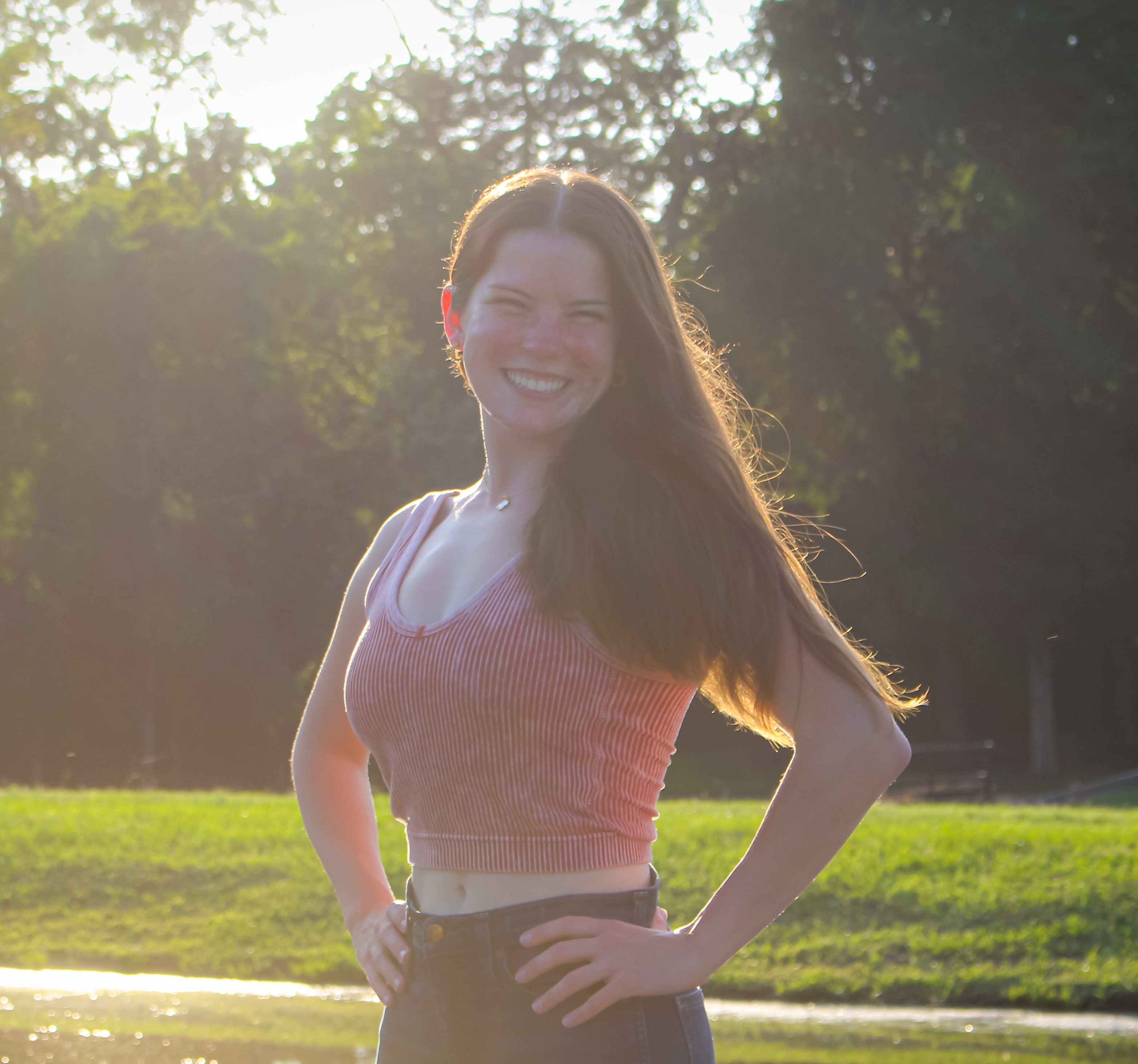
My name is Natalie, and I am a survivor of about 13 years of absolute psychological torture from Complex PTSD symptoms. For the longest time, I thought I was inherently sick and broken beyond repair. I spent over a decade running around in circles in the medical system trying to figure out what was “wrong” with me and how to “fix” it.
♡ What is Complex PTSD? ♡
Complex PTSD symptoms come from severe, prolonged, and numerous incidents of trauma, typically of a relational nature. Symptoms can come from any type of trauma, though, and the trauma doesn’t necessarily have to stem from childhood — adults can develop CPTSD as well. Trauma can damage the brain and shrink the hippocampus, causing many of the symptoms of CPTSD. I decided to go public with my story to be a voice for the voiceless. There are too many survivors being told CPTSD is a lifelong sentence, and they are not being given the tools they need to overcome their symptoms.
♡ My Story ♡
I endured multiple types of traumas starting at around age thirteen, including numerous situations of both individual and large-group interpersonal cruelty. Some of these situations forced me to switch environments. My body couldn’t fathom what was happening, and my nervous system shut down. I saw danger everywhere, operated in a panicked survival mode, and lived in fear, anxiety, and isolation. I did my best to appear “normal” on the outside, keep a smile on my face, and control what was happening on the inside, distracting myself with extreme workaholism and doing nice things for others. I took active steps to keep branching out in confidence again, but these traumas kept piling onto each other and overlapping. I wasn’t ready to give up yet, though, because I knew my family and friends would be distraught if I did. The most difficult and heartbreaking part of my story is that the two communities I set out to seek healing in—religion and the medical system itself—caused further trauma when some religious leaders, congregation members, and medical professionals chose to take advantage of my vulnerability for their own motives. In most of these situations, I didn’t even realize I was a victim until outsiders pointed it out for me and that my vulnerability made me a target of malicious people. Each future situation of being targeted was just salt on the wound of the original incident.
♡ My Struggles to Find Answers ♡
What I went through all those years was so severe, and my symptoms and physical body reactions as a result were so excruciating that I went as far as to see a neurologist, concerned that my symptoms were the result of some sort of nervous system disorder. However, he returned with no paperwork in his hands to inform me that there was nothing wrong with me but that I was simply completely traumatized, and my body reacted accordingly. I finally realized that my symptoms were not the result of an inherent mental or physical illness and began to take a trauma-based approach to my healing after many years of believing that I was “sick” for the rest of my life. My true progress began when I finally rejected the lies that were told to me that I would have to manage my symptoms for the rest of my life and made the decision to believe that I was fully capable of healing from my excruciating pain.
♡ Finding My Own Healing ♡
I am excited to share tips for natural, somatic, and holistic healing that have helped me overcome things like dissociation, flashbacks, sleep challenges, anxiety, hypervigilance, and more. I began to pursue unique methods of healing after many years of not seeing much progress through westernized care, and this was the catalyst for fast-tracking my healing. I aim to help survivors overcome their feelings of self-guilt, blame, and humiliation and help them realize that their bodies had normal reactions to abnormal situations.
I’m so glad I didn’t give up when my pain felt unbearable. I know what I’ve survived. I know the work I’ve put in to overcome it. I am finally living a life of consistent peace and contentment, and I am sharing my story from the other side. I hope to encourage other survivors that there was never anything wrong with them to begin with and that they are capable of living healthy, happy, and fulfilled lives. I aim to live my life in love of both others and myself, understanding that everyone has a story of their own. I am grateful to the CPTSD Foundation for giving me an opportunity to share my story.
♡ Personal Blog ♡
To learn more about my healing journey, please visit my personal blog, “Little Cabin Life,” at:
littlecabinlife.com
I was “diagnosed” with CPTSD last April 2025. I have a long history of psychological abuse. I lost myself for 15 years. In 2022 I lost almost everything. My job, my dad, my church. My sister in law and brother in law are the source of my hidden abuse. Reading your story is so validating. As I was reading I was struck in my gut because my abusers name is Shannon. I took it as a positive sign. I will download the book and listen to it. I hope it will answer the many unmet longings I have since enduring their torment. Thank you for sharing.
Hi there,
I am so sad to hear about the pain you experienced at the hands of your sister & brother-in-law. I’m glad to know that my story encouraged you and gave you some much-needed validation. I hope that the resource I shared will bring you even more answers. I wish you the best on your healing journey. ♡