
From Touch-Starved to Touch-Afraid: The lasting impact of touch deprivation
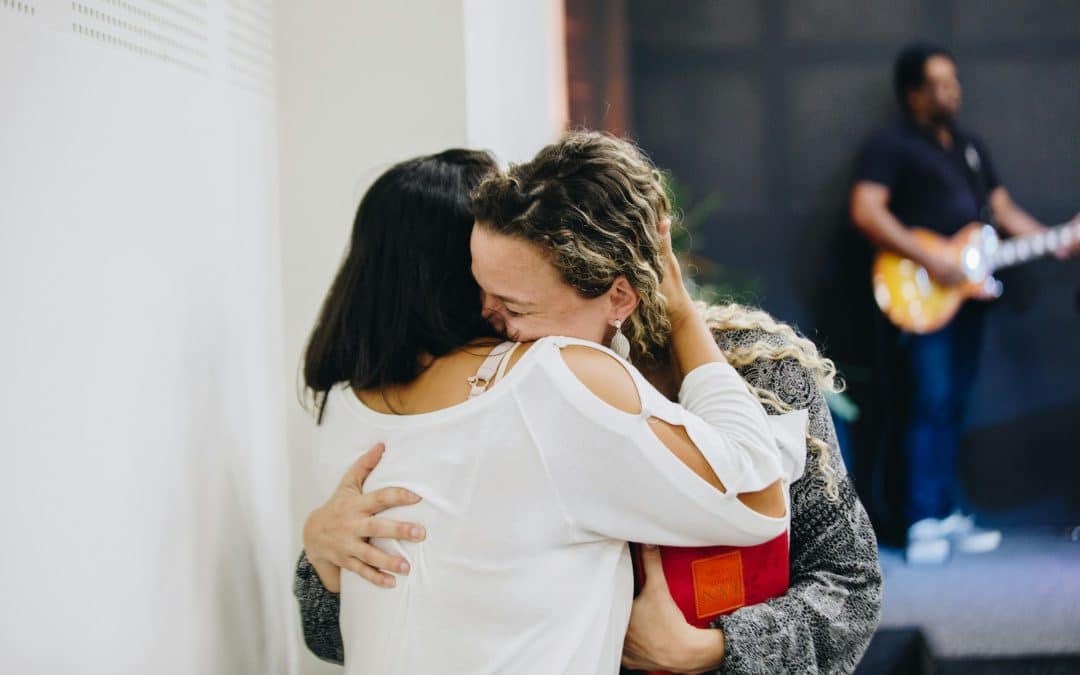
Growing up without affection can shape the way we seek and avoid love. On my thirteenth birthday my mother drove me to a mental hospital in Chicago. She claimed she couldn’t ‘handle’ me anymore. That was confusing to me because I had been ‘handling’ myself and my younger brother for years before that, since I was 9.
During that stay my psychologist tried to get me to hug my mother during a session. I was sitting in my sparsely furnished room, on top of my bed with the reversable pink and blue comforter, and I was gripping the fabric so tight in my fists that my knuckles went white.
I told the psychologist, “I can’t remember the last time anyone hugged me.” Facts. I never did hug my mother, even though the psychologist kept insisting, session after session. My mother was putting on a show for the clinician, and I saw right through it.
Some kids grow up surrounded by physical affection and closeness, but some don’t. I was one of those children. My paternal grandmother showered me with love and I was addicted to it. That feeling was stripped from me when we moved 5 hours away to Northwest Indiana.
I don’t think any of my teachers had a clue in what type of environment I was getting raised. I don’t think any alarm bells were going off for anyone because no one notices what happens to a child who never gets tucked in or kissed on the forehead. No one notices what happens when a child grows up without getting hugged or consoled when they’re hurt. No one notices because nothing visible happens to that child.
What happens is the child’s body notices. The child’s body keeps notes. The nervous system is keenly aware of what’s going on. Long before we have words for loneliness, we learn what comfort feels like or what it doesn’t feel like.
We are wired for touch
Touch is not a luxury, it is a developmental need. Attachment theory demonstrates that children rely on caregivers for the basic life necessities like shelter and food, but they also rely on caregivers for emotional and physical comfort.
Harry Harlow’s famous monkey studies showed that infant monkeys consistently preferred a soft, comforting ‘mother’ over a wire mother that just provided food. Modern research continues to demonstrate that affectionate touch supports emotional regulation, social development, attachment security and overall well-being. Children who long for touch are not needy; they are responding to a basic human need.
When affection is missing
Children will often adapt to what is available to them, to what their environment provides, rather that recognizing that something’s missing, or what they’re experiencing is wrong. They may grow up thinking that parents weren’t supposed to provide anything other that what is needed for basic survival. They may not understand that their parent was emotionally distant until they have the exposure to families that are different, and it will cause a great deal of confusion for children from families where affection was absent.
As a child you cannot miss what you never knew existed, but your nervous system still knows that something’s absent that you developmentally require. The absence of affection is generally an invisible loss because, to these children, it just feels normal.
Research suggests that experiences of affectionate touch during childhood are associated with specific attachment styles and comfort with touch later in life.
Looking for love in all the wrong places
Children who grow up emotionally and/or physically deprived often become adults who hunger for connection. This might manifest itself in various ways, like becoming attached too quickly to people who show you the kind of affection you did not experience as a child. Sometimes those people aren’t the best people from whom to receive the affection.
Sometimes the energy we have attracts people who feel comfortable, familiar, and if your childhood environment was traumatic, filled with emotional instability and abuse, you might be attracting someone who behaves the same way, even though initially the attention received feels good.
Emotionally neglected people will feel intensely attracted to people who give them warmth and validation, even though that person might be emotionally immature and even abusive. The unprotected adult survivor might ignore relationship red flags. Doing so is not evidence of weakness; it’s evidence that you’re trying to fill an unmet need. When you’re starving, receiving crumbs can even feel like a feast.
When touch becomes entangled with pain
For some people, love and sometimes friendships can arrive wrapped inside emotionally abusive packages. The person might ‘love bomb’ you, might give you validation and affection that’s followed with criticism, their safe and loving touch might end up conditional over time and emotional abuse might reside alongside physical affection.
Over time, choosing someone who feels familiar and comfortable might become someone who is not emotionally safe. Once that occurs too often, your body will perceive the person as a threat, and the closeness with that person that used to feel wonderful becomes dangerous and your body knows before your mind does because it recognizes a familiar pattern it has felt before.
Studies on attachment and childhood emotional maltreatment indicate that early neglect and later harmful relationships can affect future relationship quality, trust, and emotional regulation.
From Touch-Starved to Touch-Afraid
The heartbreaking twist is that many people who once desperately wanted affection might recoil from it later because the body senses danger. The reaction becomes instantaneous, even if the mind doesn’t want to, even if the relationship partner doesn’t like it and you fight about it, repeatedly. An unsafe partner that you are committed to stay with will undoubtedly affect your nervous system’s ability to accept touch and intimacy without fear.
Over time, touch with your partner will feel uncomfortable. Without even thinking, you might flinch when the partner reaches for physical connection because you are now uncomfortable with affection from someone your nervous system knows to be unsafe. You might become hypervigilant about emotional and physical attention with your partner. Your inner child that once craved affection and attention becomes the adult who no longer trusts it.
Avoiding touch isn’t always about not wanting closeness. Sometimes it’s about not feeling safe enough to receive it.
Learning That Safe Touch Exists
Healing often begins when affection is no longer tied to conditions, manipulation, or performance. It is vitally important to remove yourself from unhealthy relationships. That might be very difficult because if you have children, that becomes complicated. If your unhealthy partner recognizes his or her contribution to your distrust in them, and is willing to work on their abusive tendencies, then there might be hope to maintain the relationship.
However, your nervous system will not be duped. It will take a great deal of time and work on both sides. Your partner must work on their abusive tendencies and become consistently safe. You need to set boundaries to what you will accept and what you will not and you must hold your partner to those boundaries. They must experience consequences of breaking those boundaries. This healing work will be very painful; I’m not going to sugar coat it.
What to strive for
Adult survivors of emotional abuse and complex trauma need to find relationships (romantic and otherwise) with people who are consistently safe. The partners need to know, on an intimate level, the trauma you experienced so they know how to encourage connection, affection, and intimacy in ways that feel safe to your nervous system. If you’ve been in unsafe adult relationships previously, your nervous system will be skeptical and distrustful like a dog that has been chronically beaten by a previous owner.
The goal is not becoming more affectionate. The goal is feeling safe enough to choose it. Small steps, small efforts, and micro affections will help, but your partner must feel safe to your nervous system. Be kind to yourself because your nervous system wants the best for you. Sometimes healing looks like allowing yourself to lean into a hug instead of bracing for what comes next and having a partner who is informed and patient is paramount to your comfort level with touch.
Some children grow up hungry for touch, and some adults spend years searching for it. Sometimes adults spend years learning to trust touch again. Beneath these experiences is the same truth: we were never designed to survive without connection. The part of you that still longs to be held in safe, familiar, and comfortable arms is not broken, it’s just part of being human.
Resources
Book: Running on Empty by Jonice Webb
Book: The Body Keeps the Score by Bessel van der Kolk
Book: Attached by Amir Levine and Rachel Heller
Book: Adult Children of Emotionally Immature Parents by Lindsay C. Gibson
References
Beltrán, M. I., Harrison, N. A., & O’Brien, J. T. (2020). Affective touch experiences across the lifespan: Developmental and individual differences. Neuroscience & Biobehavioral Reviews, 118, 659–669. https://doi.org/10.1016/j.neubiorev.2020.08.018
Narvaez, D., Wang, L., Gleason, T., Cheng, Y., & Lefever, J. B. (2019). The importance of early life touch for psychosocial and moral development. Psychology, 10(11), 1443–1466.
Packheiser, J., et al. (2024). A systematic review and multivariate meta-analysis of the effects of touch interventions. Nature Human Behaviour, 8, 1060–1077.
Simpson, J. A., & Rholes, W. S. (2017). Adult attachment, stress, and romantic relationships. Current Opinion in Psychology, 13, 19–24.
Tejada, A. H., Dunbar, R. I. M., & Montero, M. (2020). Physical contact and loneliness: Being touched reduces perceptions of loneliness. Adaptive Human Behavior and Physiology, 6, 292–306.
Photo Credit: Unsplash
Guest Post Disclaimer: This guest post is for educational and informational purposes only. Nothing shared here, across CPTSDfoundation.org, any CPTSD Foundation website, our associated communities, or our Social Media accounts, is intended to substitute for or supersede the professional advice and direction of your medical or mental health providers. The thoughts and opinions expressed are those of the guest author and do not necessarily reflect the views of the CPTSD Foundation. For further details, please review the following: Terms of Service, Privacy Policy and Full Disclaimer
- About the Author
- Latest Posts

Angela Solic, Ph.D., is an educator, scholar, and advocate whose career spans more than twenty‑five years. She began teaching college‑level reading, writing, and communication in 1998 while earning her master’s degree in English, and later completed her Ph.D. in Education in 2010, a testament to her determination to thrive after surviving extensive childhood trauma. In 2007, Angela transitioned from teaching students to teaching college faculty members. Over the course of her career, she has trained thousands of faculty members worldwide, specializing in instructional design, learning innovation, and evidence‑based teaching practices. In 2018 she created and leads the Center for Teaching Excellence and Innovation at Rush University in Chicago, a hub for educator support, curriculum development, and pedagogical transformation.
Besides being dedicated to improving college teaching, Angela is determined to help advocate for complex childhood trauma, especially emotional abuse, through “The Still I Heal Project”, an Instagram‑based advocacy platform dedicated to educating parents, survivors of emotional abuse, and mental‑health professionals about trauma, resilience, and recovery. You can find out more about her project at stillihealproject.org.
“Adult survivors of emotional abuse and complex trauma need to find relationships (romantic and otherwise) with people who are consistently safe.” Yes 100%, however you seem to have missed out the part that says where am I meant to find this when I have nobody in my life that currently gives it too me. Every article says the exact same thing but not one of them ever gives help in finding these what feels like mythical safe people.