Tobie sat in their car, knuckles white against the steering wheel, jaw clenched so tight their teeth might crack. They had just left yet another family gathering where their boundaries were trampled, their feelings dismissed, and their experiences minimized. The familiar heat rose in their chest, spreading up their neck, making their ears burn.
“Stop it,” they whispered to themselves. “Just let it go. You’re overreacting.”
But the anger wouldn’t subside. Instead, it swirled inside Tobie like a storm gathering strength. They’d learned early that anger wasn’t welcome in their childhood home. “Don’t you dare raise your voice.” “Stop being so sensitive.” “You have nothing to be angry about.” These messages had been hammered into them since before they could remember.
And yet here it was again—this overwhelming force that felt too big for their body. Tobie didn’t know what to do with it. Sometimes they’d push it down until it became a hard, cold stone in their stomach. Other times, it would erupt unexpectedly, leaving damaged relationships and crushing shame in its wake.
As they sat there trying to breathe, tears of frustration welling up, Tobie wondered: Was this anger poisoning them from within? Or was it trying to tell them something important—something they needed to hear?
Understanding Anger: What It Really Is
Anger is one of our primary emotions—as natural and necessary as joy, sadness, or fear. At its core, anger is information. It’s your mind and body’s alert system telling you that something isn’t right, that a boundary has been crossed, or that you or someone you care about may be in danger.
Physically, anger is an energy surge designed to prepare you for action. Your heart rate increases, muscles tense, breathing quickens, and stress hormones flood your system. This physical response evolved to help us survive threats. When we perceive an injustice or threat, our bodies prepare us to protect ourselves.
But for survivors of narcissistic abuse and complex trauma, anger becomes complicated. When you’ve grown up in an environment where expressions of anger were punished, where your emotional needs were invalidated, or where anger was wielded as a weapon against you, your relationship with this emotion becomes distorted.
Many survivors learned early that anger was:
Forbidden (“Nice people don’t get angry”)
Dangerous (“If I show anger, I’ll be abandoned or punished”)
Sinful (“Anger is a sin that separates you from God”)
Unproductive (“Anger doesn’t solve anything”)
A weakness (“You’re too sensitive/emotional”)
These messages create a deep confusion. Your anger arises naturally in response to mistreatment, yet you’ve been taught it’s wrong to feel it. This contradiction creates internal conflict that can last decades.Subscribed
A Roadmap for This Journey
In this article, we’ll explore the complex relationship between trauma and anger, looking at when anger acts as a poison in our lives and when it serves as a much-needed antidote. We’ll examine different types of anger, how it affects our bodies and brains, and practical ways to work with this powerful emotion rather than against it.
If you’re feeling shame about your anger or hopelessness about ever having a healthy relationship with it, know that this article offers concrete tools and perspectives that can help. Many trauma survivors have transformed their relationship with anger from one of fear and avoidance to one of respect and partnership. You can too.
We’ll move from understanding anger at the individual level to examining how it functions in broader contexts like communities and systems. Throughout, we’ll return to our central question: Is anger the poison that’s making you sick, or is it the antidote to what’s actually poisoning you?
The Many Faces of Anger
Anger, like a fluid, takes different forms depending on its container and circumstances. For trauma survivors, it may show up in various ways:
Righteous Anger: The pure, clean anger that rises when witnessing injustice—either against yourself or others. This form of anger has propelled social movements, inspired change, and protected the vulnerable. It’s the anger that says, “This is wrong, and it needs to stop.”
Protective Anger: The fierce energy that rises to defend yourself or loved ones. For many survivors, they can access anger on behalf of others long before they can feel it for themselves. “How dare they treat my friend that way?” often comes more easily than “How dare they treat ME that way?”
Repressed Anger: Anger that’s been pushed down and denied, often resurfacing as depression, anxiety, or physical ailments. Many trauma survivors become experts at swallowing their anger, not even recognizing it as such.
Internalized Anger: When anger turns inward, becoming self-criticism, self-harm, or self-sabotage. “I hate myself for letting this happen” is internalized anger that’s lost its true direction.
Chronic Rage: A constant state of anger that becomes a baseline emotion, coloring all experiences. This often happens when there’s been no safe outlet or validation for legitimate anger over a long period.
Vengeful Anger: The desire to make perpetrators suffer as you have suffered. While a natural response to significant harm, this form of anger can become consuming if not addressed.
Coercive Anger: Using anger as a tool to control others, much like abusers do. Some survivors unconsciously adopt this pattern after seeing it modeled.
Displacement: Directing anger at safer targets rather than its true source. Snapping at a cashier when you’re really angry at your abusive parent is displacement.
Understanding which form your anger takes is the first step toward working with it rather than against it.
Anger in the Body: How It Feels When You’ve Been Disconnected
Many trauma survivors have become so accustomed to pushing anger away that they no longer recognize its physical signatures. Reconnecting with how anger feels in your body can help you identify and work with this emotion before it becomes overwhelming.
Anger might show up as:
A tightness or heat in your chest or throat
Clenched jaw or teeth grinding
Tension in your shoulders, neck, or fists
A knot or churning in your stomach
Shallow, rapid breathing
Feeling flushed or hot in your face and neck
Restlessness or the need to move/pace
Headaches or pressure behind your eyes
A surge of energy through your arms and legs
Difficulty concentrating on anything else
Unexpected tears or crying when trying to express yourself strongly
A feeling of pressure that seems to need release
For those who’ve disconnected from anger, these sensations might be misinterpreted as anxiety, panic, or even illness. Learning to name these feelings as anger is an important step toward healing.
For many people, especially those socialized as female, anger often comes out as tears—which can be incredibly frustrating when you want to appear strong or be taken seriously. If this happens to you, know that it’s a common physiological response, not a sign of weakness. Some people find that acknowledging this pattern out loud (“I’m not sad, I’m angry, and my body expresses anger through tears”) can help others understand what’s really happening.
The Neurobiology of Anger After Trauma
Understanding what happens in your brain and body when you experience anger can help normalize and manage these intense feelings.
When you experience a trigger, your brain’s alarm system (the amygdala) activates, sending signals that prepare your body for fight or flight. For trauma survivors, this system is often oversensitive due to past danger, meaning you might have stronger, faster anger responses even to minor threats.
At the same time, trauma can impact the part of your brain responsible for logical thinking and impulse control (the prefrontal cortex). This can make it harder to “think through” your anger in the moment.
“Flooding” occurs when your nervous system becomes overwhelmed with stress hormones, effectively shutting down your ability to think clearly. This explains why you might say or do things in anger that you later regret—your rational brain becomes less accessible during extreme emotional activation.
For those with complex trauma, the nervous system often operates from a place of chronic hyperarousal. Your baseline anxiety level is already high, so it takes much less to push you into anger or rage. This isn’t a character flaw—it’s your brain and body trying to protect you based on past experiences.
When Your Reaction Seems “Too Big”
Have you ever felt embarrassed by how strongly you reacted to something that seemed small? There’s a saying in trauma therapy: “If it’s hysterical, it’s historical.” This means that when your reaction seems disproportionate to the current situation, it might be connected to your history of trauma.
For example, a simple comment from a friend might trigger an intense anger response not because the comment itself was so terrible, but because it echoed similar comments from years of emotional abuse. Your nervous system doesn’t distinguish between past and present threats—it just recognizes a familiar pattern and sounds the alarm.
This doesn’t mean your feelings aren’t valid. They absolutely are. But understanding the connection between past wounds and present triggers can help you navigate these intense emotions with more self-compassion. It’s not that you’re “overreacting”—it’s that you’re responding to the cumulative weight of many similar experiences, not just the current one.
Like any powerful medicine, anger can heal or harm depending on how it’s used. Anger becomes poisonous when:
It’s chronic and unprocessed: Anger that remains unaddressed over time creates a state of constant stress. Your body stays flooded with stress hormones, wearing down your immune system, heart, and other vital functions. Chronic anger has been linked to heart disease, digestive problems, weakened immunity, and shorter lifespans.
It consumes your thoughts: When angry thoughts play on endless loop, they steal your present moment and your peace. This rumination keeps wounds fresh and prevents healing.
It becomes your primary identity: When “angry victim” becomes your main way of seeing yourself, it can keep you stuck in pain rather than moving toward healing.
It leads to harmful behaviors: Using anger to justify hurting yourself or others perpetuates cycles of harm rather than breaking them.
It prevents connection: When unmanaged anger becomes a wall between you and potential support, it isolates you when you most need connection.
It blinds you to nuance: Anger can sometimes create black-and-white thinking that oversimplifies complex situations and people.
It masks deeper emotions: Sometimes anger serves as a cover for more vulnerable feelings that may be harder to access or express. When we only experience the surface anger without recognizing what’s beneath it—like hurt, fear, disappointment, grief, or shame—we miss important information about our needs and experiences.
When Anger Is the Antidote
For many trauma survivors, accessing healthy anger is actually a crucial part of healing. Anger can be the antidote when:
It helps you recognize mistreatment: For those gaslit into doubting their perceptions, anger often emerges as the first clear signal that something is wrong. That surge of “No, this isn’t right!” can be the beginning of trusting yourself again.
It provides motivation to change: Anger can be the fuel that powers you out of harmful situations and into better ones. Many survivors report that anger was what finally gave them the strength to leave abusive relationships or set firm boundaries.
It restores your sense of worth: Feeling angry about mistreatment implies that you deserved better—a revolutionary concept for many trauma survivors. Anger says, “I matter enough to be treated well.”
It reconnects you with your power: Anger reminds you that you can take action and effect change. For those who’ve felt helpless, this reconnection with personal power is healing.
It validates your experience: Allowing yourself to feel angry about abuse confirms that what happened to you was wrong. This counteracts the minimization and denial that often accompany trauma.
It provides an exoskeleton: Anger can sometimes function as an exoskeleton—a hard outer shell that keeps you functioning when otherwise you might collapse. While not a permanent solution, this protective function of anger can be necessary during certain phases of healing.
It sets necessary boundaries: Healthy anger helps you establish and maintain the boundaries needed for your well-being, often for the first time.
It counteracts toxic shame: For many trauma survivors, existential shame—the false belief that there is something inherently wrong with you—acts as a poison in the psyche. Healthy anger can be the antidote to this shame, asserting “What happened to me was wrong” instead of “I am wrong.”
It cuts through numbness: When trauma has caused emotional numbing or dissociation, anger can sometimes be the first emotion strong enough to break through, reconnecting you with your capacity to feel.
Strategic Anger: The Medicine Cabinet
For some trauma survivors, especially those still in harmful relationships, anger can serve a critical purpose—not as poison hurting you now, but as a medicine you keep ready for when you need it.
When Holding Onto Anger Serves a Purpose
Malina’s relationship followed a painful cycle—criticism and control, followed by tearful apologies and promises to change. Each time, she felt her anger rise, but then questioned herself: “Maybe this time is different. Maybe I’m overreacting.” She forgave, her anger faded, and the cycle began again.
Over time, Malina realized that without her anger, she couldn’t maintain the resolve to leave. Each time she forgave, she lost the emotional fuel that almost propelled her to safety. So she chose to hold onto her anger—not out of spite, but as a resource. She wasn’t being vindictive; she was preserving medicine she knew she’d need.
This isn’t bitterness or rumination. It’s a conscious choice. In harmful situations—where leaving is constrained by finances, custody, health, or safety—anger can be a vital fuel for self-protection and eventual escape.
Anger as Protection Against Premature Vulnerability
“I can’t afford to let go of my anger yet,” Devon told his therapist. “If I do, I’ll start believing things are fine and drop my guard.” Devon’s anger wasn’t stubbornness—it was a shield, protecting him from vulnerability with someone who had repeatedly broken his trust.
In unsafe situations, releasing anger too soon can leave you exposed. It keeps you alert to patterns you might otherwise dismiss and guards you against the pull of gaslighting.
When Anger Preservation Happens Unconsciously
Sometimes, anger is preserved without conscious effort. Your nervous system, attuned to danger from past experiences, might maintain a level of protective anger without your deliberate effort. You might pick fights, remember past hurts seemingly “out of nowhere,” or feel irritable around someone who has harmed you—even when things seem fine.
Rather than judging this as “holding onto the past,” consider that your body might be protecting you in the most effective way it knows. Tobie, who we met at the beginning of this article, later realized their anger after family gatherings wasn’t just about what had happened that day—it was a safeguard rooted in a lifetime of boundary violations.
Timing Matters
Long-term, the goal is to process anger in ways that free you from its weight. But sometimes, the wisest choice is to say, “I’m not ready to release this anger yet. It’s keeping me safe.”
To use anger strategically, consider:
Containing it temporarily so it doesn’t overwhelm your daily life. You might visualize placing it in a secure container you can open when needed.
Distinguishing between strategic anger and harmful rumination. Are you maintaining awareness of critical truths, or endlessly recycling pain?
Acknowledging that this is a temporary strategy. In time, developing other protective skills will allow for fuller healing.
Being compassionate with yourself. Preserving anger for safety is an adaptive choice—not a failure.
Anger, when recognized as medicine rather than poison, becomes a resource—protecting you until you’re ready to create lasting safety and healing.
Processing Anger: From Poison to Antidote
The goal isn’t to eliminate anger but to transform it from a destructive force into a constructive one. Here are some approaches to begin this transformation:
Name it to tame it
Simply acknowledging “I am feeling angry right now” begins to engage your thinking brain and reduces alarm system activation. This simple act creates a tiny bit of space between you and the emotion, making it more manageable.
Practice: Next time you notice anger rising, pause and say (aloud or to yourself): “I am feeling angry right now. This is anger moving through my body.” Notice if this creates even a small shift in your experience.
Find the message in your anger
Anger always carries information. It might be telling you about:
A boundary that’s been crossed
A need that isn’t being met
A value that’s been violated
An old wound that’s been triggered
An injustice that needs addressing
Find more clarity by writing the following:
What specifically triggered my anger? (Describe the situation)
What boundary of mine might have been crossed?
What need of mine isn’t being met?
Does this remind me of something from my past?
What would need to change for me to feel better?
If you’re having trouble identifying what’s beneath your anger, it can help to complete this sentence: “I’m angry because I didn’t get/have/receive _______.” or “I’m angry because _______ happened and it wasn’t fair/right/acceptable.”
Breaking the Rumination Cycle
When anger becomes repetitive thoughts that play on endless loop—replaying offenses or imagining confrontations—it can transform from a protective force into a drain on your well-being. This rumination keeps wounds fresh and steals your present moment.
For trauma survivors, rumination often serves a purpose: it can help identify patterns in abusive behavior and validate your experiences when you’ve been gaslighted. This is why simply telling yourself to “stop thinking about it” rarely works. Part of you may rightfully sense that this thinking process, painful as it is, serves a protective function.
However, when rumination becomes constant, it can keep you stuck in a state of heightened stress without moving you toward healing. Finding balance is key. Here are a few approaches that honor rumination’s protective intent while creating more space in your life:
Set boundaries around rumination: Rather than ruminating throughout the day, designate specific times to process these thoughts. “I’ll think about this during my 30-minute walk, but not while I’m with my children.” This contains the process without dismissing its importance.
Capture the insights: Keep a journal where you record patterns and realizations that emerge from your anger-based rumination. This validates that your mental work has purpose and creates a record you can refer to instead of needing to constantly keep the thoughts active.
Interrupt the physical cycle: When rumination feels overwhelming, change your physical state. Stand up, stretch, splash cold water on your face, or engage in brief intense exercise. This physical pattern-break can momentarily disrupt the thought cycle.
Engage your senses: Ground yourself in the present moment by naming five things you can see, four you can touch, three you can hear, two you can smell, and one you can taste. This simple practice activates different neural pathways and provides temporary relief.
Remember that becoming skilled at managing rumination takes practice. Each time you gently redirect your thinking, you’re creating more choice about when and how to process your anger—even if the rumination returns minutes later. With consistent practice, you can develop more control over when you engage with these thoughts rather than having them control you.
Address the physical energy of anger
Anger creates a surge of energy meant for action. Finding safe ways to discharge this energy can prevent it from getting stuck in your body. If physical exercise feels overwhelming due to exhaustion from CPTSD or other health issues, even small movements can help:
Gentle options: Slowly squeezing and releasing your hands, shoulder rolls, gentle swaying, humming or making sounds, taking a short walk, rocking back and forth
More vigorous options: Dancing, walking briskly, cleaning, gardening
High intensity options: Running, swimming, martial arts, screaming in a private space
Even if your anger feels hard-wired into your nervous system and too overwhelming to discharge, starting with just 30 seconds of one of these activities can begin to shift the physical experience.Subscribed
Express it appropriately
Learning to voice your anger in ways that aren’t destructive is a crucial skill. In situations where it’s safe to express your feelings directly:
Instead of: “You always ignore me, you’re so selfish!” Try: “I feel hurt and angry when my needs aren’t acknowledged.”
If you’re dealing with someone who might weaponize your “I feel” statements or use them against you, you might need more direct communication: “That doesn’t work for me.” “I’m not available for this conversation right now.” “I need to step away.” “This behavior is unacceptable.”
Remember that appropriate expression doesn’t always mean saying something in the moment. Sometimes writing a letter you never send or speaking your truth to a trusted friend is the safest way to express your feelings.
Look beneath the anger
Often, what appears as anger on the surface is actually masking more vulnerable emotions that might feel unsafe to express directly. Once the immediate intensity of anger subsides, ask yourself what else you might be feeling.
Common emotions beneath anger include:
Hurt: “I’m hurt that my needs weren’t considered.”
Fear: “I’m afraid this means I don’t matter.”
Disappointment: “I expected to be treated with respect.”
Grief: “I’m sad about what this relationship isn’t.”
Shame: “I feel exposed or humiliated.”
Helplessness: “I can’t control what’s happening.”
Write it out
Journaling about your anger—especially in uncensored, unfiltered ways that you don’t share with others—can help process the emotion without causing harm. Try writing a letter to the person you’re angry with that you don’t send, or simply dump all your thoughts onto paper without filtering.
Channel it constructively
Many survivors transform their anger into advocacy, creativity, or service that helps others. This doesn’t mean toxic “turning lemons into lemonade” thinking, but rather finding meaning that emerges organically from your experience.
Remember that anger’s visit is temporary
Even though it can feel eternal in the moment, anger, like all emotions, will naturally rise and fall if you don’t cling to it or push it away. If you’ve been angry for as long as you can remember, this might be hard to believe—but even chronic anger has waves and fluctuations. Noticing when your anger is even slightly less intense can help you recognize that it isn’t a permanent state, even if it’s been with you for a very long time.
If any of these approaches feel overwhelming or out of reach right now, that’s completely understandable. Trauma can make working with strong emotions particularly challenging. Keep reading for guidance on what to do when anger feels unresolvable.
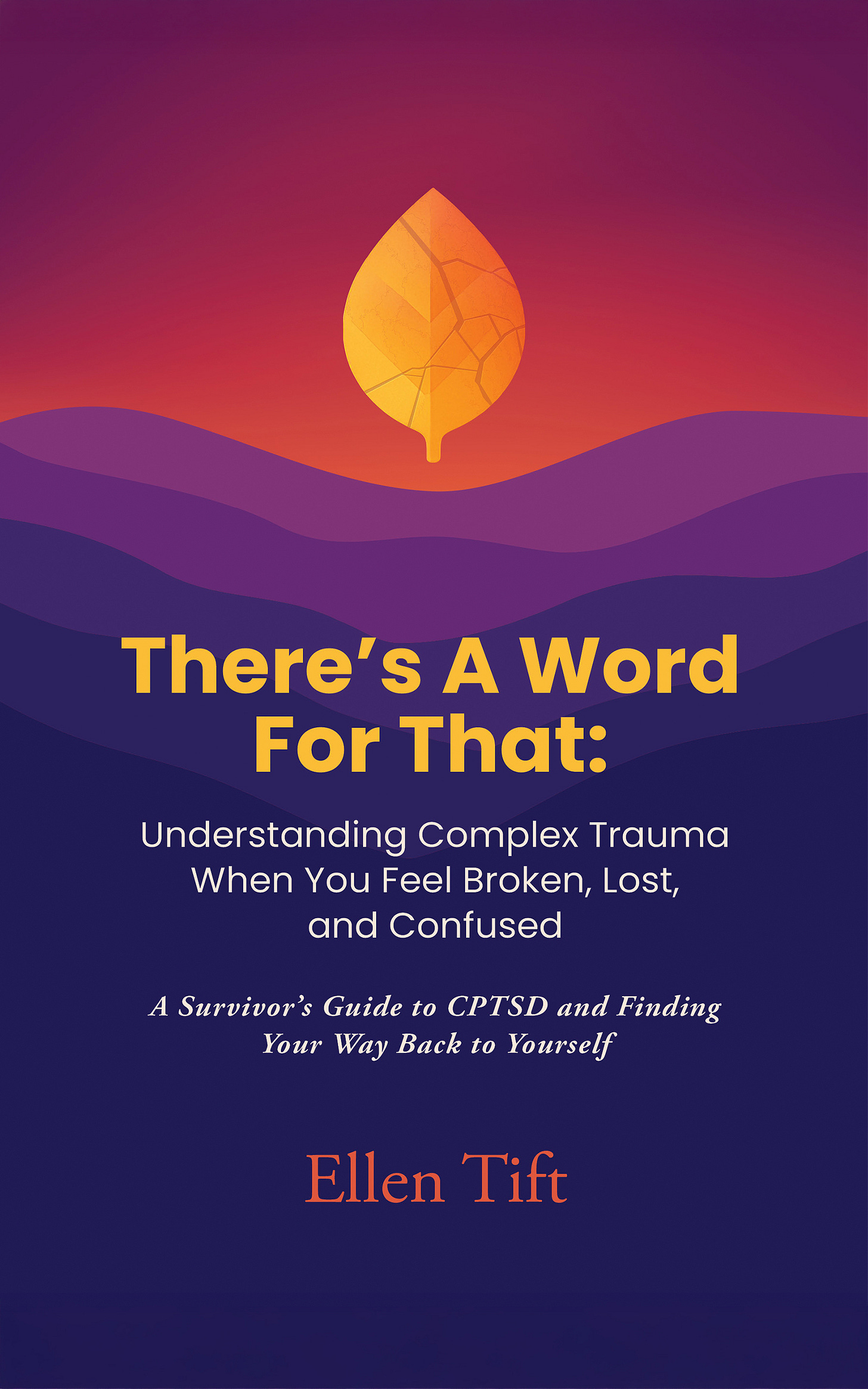
Read the rest of this article in Ellen’s first book of her “There’s A Word for That” series: https://a.co/d/02U7m1gT
Guest Post Disclaimer: This guest post is for educational and informational purposes only. Nothing shared here, across CPTSDfoundation.org, any CPTSD Foundation website, our associated communities, or our Social Media accounts, is intended to substitute for or supersede the professional advice and direction of your medical or mental health providers. The thoughts and opinions expressed are those of the guest author and do not necessarily reflect the views of the CPTSD Foundation. For further details, please review the following: Terms of Service, Privacy Policy and Full Disclaimer
Ellen Tift** is a longtime university educator, veteran musician, and trauma-informed writer. After three decades as a music professor, she now brings the same clarity, depth, and care to her work on narcissistic abuse, betrayal trauma, and Complex PTSD.
A survivor herself, Ellen combines lived experience with extensive research to offer insight that’s both emotionally validating and intellectually grounded in language that’s easy to understand. Her writing speaks to fellow survivors with warmth, precision, and hard-earned wisdom.
Her book series, _There’s A Word For That_, began its release in 2025 on Amazon and Kindle. Designed for overwhelmed minds and hurting hearts, each volume can be read in small doses, with skimmable headings and stand-alone sections that meet readers right where they are.
We use cookies on our website to give you the most relevant experience by remembering your preferences and repeat visits. By clicking “Accept”, you consent to the use of ALL the cookies.
This website uses cookies to improve your experience while you navigate through the website. Out of these cookies, the cookies that are categorized as necessary are stored on your browser as they are essential for the working of basic functionalities of the website. We also use third-party cookies that help us analyze and understand how you use this website. These cookies will be stored in your browser only with your consent. You also have the option to opt-out of these cookies. But opting out of some of these cookies may have an effect on your browsing experience.
Necessary cookies are absolutely essential for the website to function properly. This category only includes cookies that ensures basic functionalities and security features of the website. These cookies do not store any personal information.
Any cookies that may not be particularly necessary for the website to function and is used specifically to collect user personal data via analytics, ads, other embedded contents are termed as non-necessary cookies. It is mandatory to procure user consent prior to running these cookies on your website.