Trauma-Informed Blog
New content weekly! Survivor Stories, Research Articles, Poetry, and more written by clinicians, coaches, survivors, and mental health professionals.

Remember...
Important Information About Our Content
Everything you find on this blog, CPTSDfoundation.org, or within our wider digital communities is created for educational and informational use only. No content shared here—whether by our staff or guest contributors—is intended to supersede or replace the clinical relationship you have with your medical or mental health providers. We are here to support your journey with information, but we do not provide medical advice or treatment. Guest opinions are their own and may not represent the views of CPTSD Foundation. Privacy Policy and Full Site Disclaimer, Terms of Service.
Losing My Marbles
Emotions, losing control, not being yourself. I kept feeling like it was something I did. Something I could undo or fix so everything would turn out alright. Unfortunately, things kept getting...
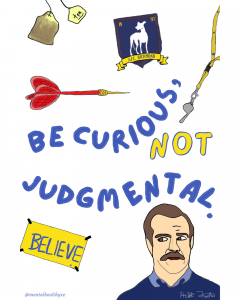
How This ‘Ted Lasso’ Theme Relates to My Complex PTSD Healing Journey
This article was originally published on The Mighty. “Ted Lasso” is not a TV show that I would have chosen to watch on my own. In fact, until it was recommended to me, I somehow hadn’t even heard...
Impostor Syndrome and Self -Compassion
Impostor Syndrome occurs for all sorts of reasons and it pushes us to become extremely hard on ourselves. It also robs us of seeing ourselves: as human beings doing their best, just as they are....
A Change of Affection Part II – How A Trauma Bond is Formed
How A Trauma Bond is Formed Scaly grey snake heads with the dead black eyes of a reptile weaved back and forth. Bright red tongues darted to and fro. They covered the Uhaul. I couldn’t look away....

Sense of Safety As a Disabled Person
This blog originally posted at: https://powerfullypowerless.wordpress.com/2019/08/09/sense-of-safety-as-a-disabled-person/ Safety is the condition of being protected from or unlikely to cause...
This Different Way of Seeing My C-PTSD Flight Response Blew My Mind
This article was originally Published on The Mighty. I opened my eyes and the first thought that popped in my head was: “I do not want to get out of bed.” The classic morning refrain for us...
The Tragedy of Never Feeling Safe
Growing up in a dysfunctional home, many who have developed complex post-traumatic stress disorder (CPTSD) did not have the emotional or physical support they needed from their parents. Often, as...

Attunement – A Lost Connection
I want to visit an older concept that relates to trauma in this blog. Intersubjectivity is a theory developed by Daniel Stern-a prominent American Psychiatrist and Psychoanalytic theorist in...
A Change of Affection – Trauma Bond
And there it was. I should have known better. They were always intent on taking anything that mattered away. Especially anything that brought me joy.
Modern Psychology Needs Flexibility and Techniques, Not Brutal Force
Post-Traumatic Growth; Can We Embrace New Possibilities? By Maria Anna van Driel, www.nexttruth.com When somebody experiences a traumatic event, they are often supported by people in social,...
Where My Crazy Started
When you're at work you don't want to appear weak. You don't want to get the feeling everyone sees you as a victim. But that's what happened to me. I broke down in the middle of the police...

The Adverse Effects of Child Abuse on Our Work Life
There is a lot of information on how being unemployed often triggers depression and anxiety. Obviously, this is accurate, however, there isn't much to help those whose mental illnesses stop them...

What is Complex Post-Traumatic Stress Disorder?
“Complex PTSD comes in response to chronic traumatization over the course of months or, more often, years. This can include emotional, physical, and/or sexual abuses, domestic violence, living in a war zone, being held captive, human trafficking, and other organized rings of abuse, and more. While there are exceptional circumstances where adults develop C-PTSD, it is most often seen in those whose trauma occurred in childhood”.


