
The Power of Your Breath
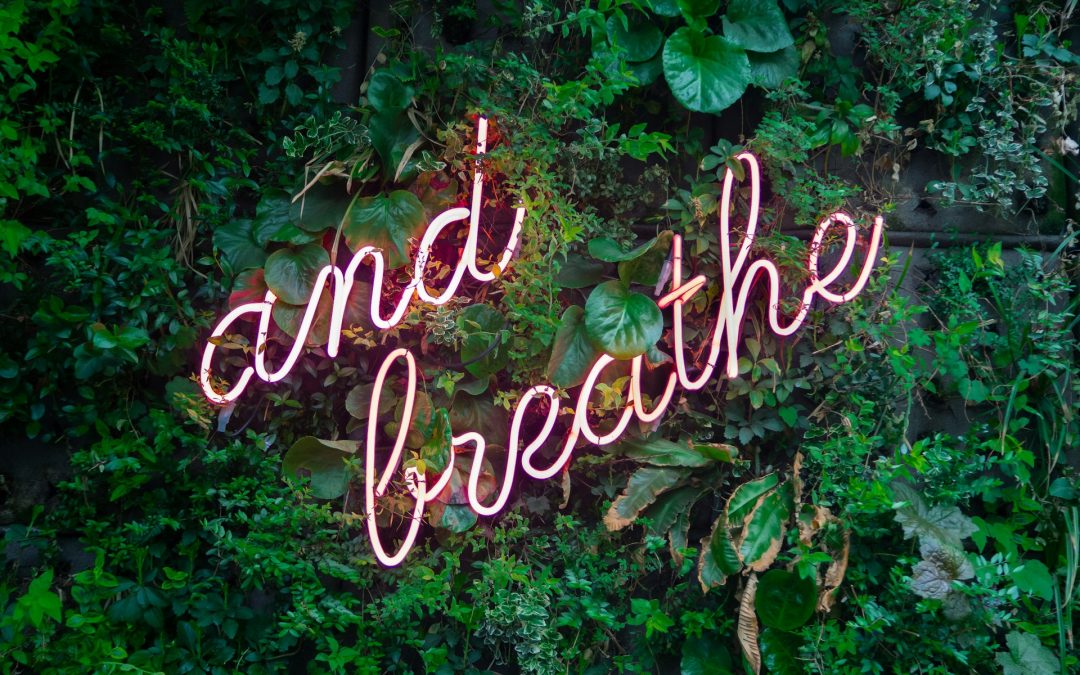
Did you know that your breath is the fastest way to calm down when you are feeling dysregulated?
Nobody is immune from stress, regardless of age and we all have one thing in common — we react. How we react to stress is different for everyone, but there is a simple way we can all calm:
Through breathing
I see the way stress affects those around me. In my colleagues, my students and my own family and friends. None of us are good at juggling too many things, but many of us do.
I know I do. I take on too much and then I wonder how I’m going to get through it all.
Most of us forget that one of the most powerful tools that you have available is your breath. Breathing happens whether you think about it or not. It’s automatic, like a car engine stuck in gear.
Your breath is vital to keep you alive. Everything in your body is dependent on it. Without breathing, we would die within minutes.
When you are stressed, your breath often gets faster and shallow while your body goes through physical changes to cope with stress. It releases hormones to prepare your body for fight or flight to combat the situation.
Slowing down your breathing is the quickest way to calm down and get your body to go back into “safe mode.”
There are many benefits of doing regular simple breathing exercises to relieve anxiety, emotional overwhelm, panic attacks and improve your sleep.
As a trauma survivor, I have used many types of breathing techniques when I’m feeling overwhelmed or triggered.
I want to share these with you.
Five Finger Breathing
This is something you can easily do anytime and anywhere. I use this all the time and I’ve taught it to my students. Even kindergartners can do it.
Spread out one of your hands so that you have room between your fingers. (A little like reaching the keys on a piano). I usually start from the bottom of my thumb but you can start from your little finger, if that feels more natural.
How it works:
Put your index finger at the base of your thumb then trace your index up the thumb as you breathe in. Hold your breath to the count of 1,2,3 then exhale as you trace your index down the other side of your thumb. Keep breathing in and out as you move your index from your fingers to your little finger.
Star Breathing
This one is similar to the five finger breathing, but instead of tracing your fingers, you trace the shape of a star in the air. You can even do it on a piece of paper if it works better for you.
How it works:
Inhale on each line of your star shape, tracing up with your index. Hold for 1,2,3. Then exhale going down. Repeat as many times as you need to.
Tracing shapes or familiar symbols is repetitive and will slow down your racing thoughts and giving you focus.
Box Breathing (4–4–4–4)
This technique is repetitive and steady, which should help calm those racing thoughts in no time. It’s a great one to try if you simply cannot calm down and your breathing is almost out of control. This works if you stick to the times four rule.
How it works:
Breathe in for four seconds. Hold for four seconds. Breathe out for four seconds. Hold for four seconds. Repeat.
Belly Breathing
This is a technique that requires you to sit down or stand. Choose a space where you feel comfortable and won’t be disturbed for a few minutes.
How it works:
Put one of your hands on your belly and breathe in slowly through your nose. Take notice of how your body feels as your lungs fill with air. Hold to the count of 1,2,3. Then exhale through the mouth.
The 4,7, 8 Breathing Technique
This technique is great for reducing anxiety and panic attacks quickly. It’s helped me several times when I’ve felt this way.
It’s simple and you can do it anywhere and at anytime. I’ve noticed that not many people are even aware when I’m doing it. I’ve done it in meetings, in elevators, the mall, and even in the food market.
How it works:
Inhale to the count of 1,2,3 and 4. Hold your breath for 7 seconds. Then exhale to the count of 8 seconds.
Rainbow Breathing
This technique works best when you either stand up with a straight back. I’ve done this while sitting cross-legged too, but it only works when your back is straight.
How it works:
Imagine that you are drawing an invisible rainbow above your head.
Inhale as you spread both arms out wide and lift them into an arc above your head. Hold to the count of three. Then exhale as you let your arms down slowly into their normal position by your sides.
The Shoulder Drop Technique
This technique is good if you are feeling tense or angry. You can do it anywhere but if you’re conscious of prying eyes, privacy is best.
How it works:
You simply inhale as you lift both shoulders. Hold for a few seconds. The relax your shoulders while you exhale. Repeat as many times as you need and focus on the out breath. With every breath, you will start feeling your body becomes less tense.
A final note:
Being stressed is not a nice feeling, and most of us feel that way every day. There’s just too much going on. By trying out these simple and quick techniques, you will start feeling much better.
I know they all worked for me.
I hope you will start to feel the difference in your body too, as your body regains its equilibrium.
Which one will you try first?
Let me know which one has helped you the most.
Take care
Remember, you matter.
My name is Lizzy. I’m a trauma survivor, a wife, a mom, a teacher, and an author.
If you like reading my posts, then please follow me.
For more about me: www.elizabethwoodsauthor.com
Support your fellow writer:
https://ko-fi.com/elizabe69245484
Photo Credit: Unsplash
Guest Post Disclaimer: This guest post is for educational and informational purposes only. Nothing shared here, across CPTSDfoundation.org, any CPTSD Foundation website, our associated communities, or our Social Media accounts, is intended to substitute for or supersede the professional advice and direction of your medical or mental health providers. The thoughts and opinions expressed are those of the guest author and do not necessarily reflect the views of the CPTSD Foundation. For further details, please review the following: Terms of Service, Privacy Policy and Full Disclaimer
More from Elizabeth Woods:
- About the Author
- Latest Posts

For more about me: https://www.elizabethwoodsauthor.com
Elizabeth Woods grew up in a world of brutal sex offenders, murderers, and inconceivably neglectful adults. Elizabeth is passionate about spreading awareness of what it is like to survive after trauma. She is the author of several books and has written her memoir, telling her childhood story: The Sex-Offender’s Daughter: A True Story of Survival Against All Odds, available on Amazon Kindle and paperback.
Elizabeth is also the author of “Living with Complex PTSD” and the Cedar’s Port Fiction series: “Saving Joshua”, “Protecting Sarah”, “Guarding Noah” and “Bringing Back Faith,” and “Restoring Hope,” available here: https://www.amazon.com/stores/author/B0BCBZQN7L/allbooks?ingress=0&visitId=7e223b5b-1a29-45f0-ad9d-e9c8fdb59e9c&ref_=ap_rdr&ccs_id=931f96e2-c220-4765-acc8-cc99bb95e8bd