
Once, I Dropped My Basket
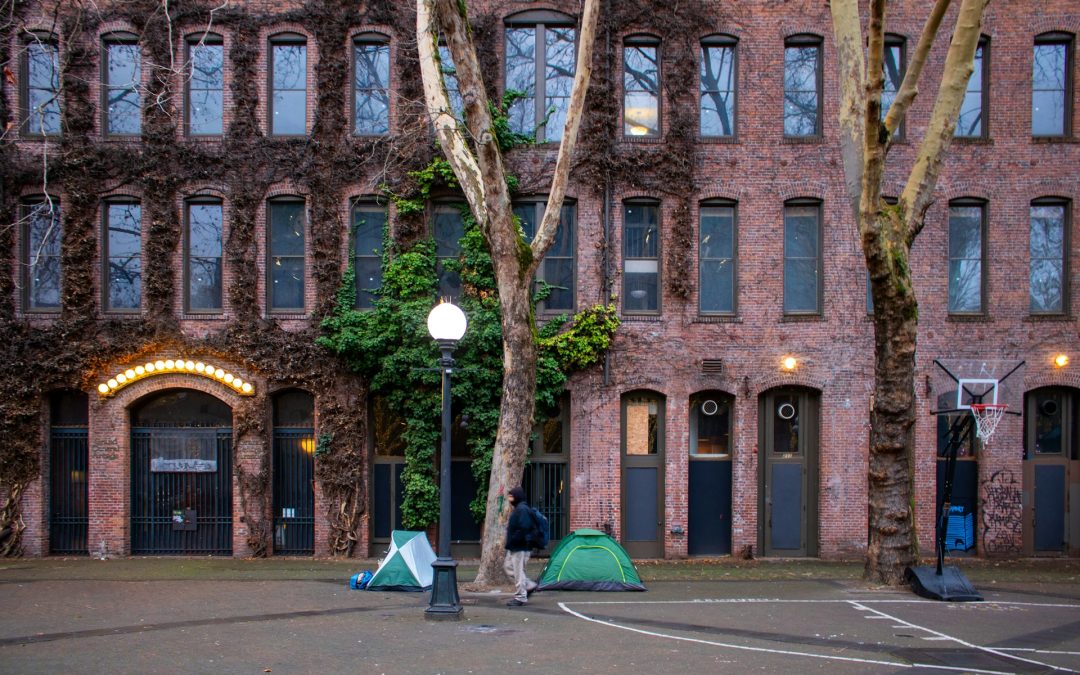
My whole world had fallen apart at the seams. What was left, after everything was said and done, was myself, a six-man tent, everything I owned in a backpack, and my dog.
I had run away from everything that hurt me — and in the running, I had been reduced to this.
My best friend Crystal tried to cheer me up as we set the tent up in her backyard. “Pretend it’s an adventure,” she said, smiling that smile of hers. “Like an extended camping trip in the Andes. Use your imagination. You’re good at that.”
I burst into tears and had a full-blown meltdown.
After everything I had fought against in my life, it had come down to this. A canvas roof. A sleeping bag on the ground. A dog curled against my side because he was the only warmth left. I lay there that first night listening to the neighborhood sounds — a distant television, someone’s sprinklers, the ordinary world going on without me — and asked the only question I had left.
*Why? What did I do to deserve any of this?*
As the days went by and I dragged myself up each morning to work two jobs and do my best impression of a normal person, something began to shift. Slowly. Reluctantly.
Maybe this wasn’t a punishment. Maybe it was a lesson.
I had run so far from everyone and everything that had ever hurt me that I had ended up running from myself, too.
I had stopped cooking — the one thing that had always been mine. I stopped answering phone calls. I stopped going places. I had completely isolated from the world. And when I finally sat still long enough to ask myself why, the honest answer was uncomfortable.
I wasn’t afraid of other people hurting me. What more could anyone take that hadn’t already been taken?
What I was really afraid of was facing myself. Facing how deeply disappointed I was in *me.*
I had done so much healing. I had worked through so many broken places. But there was one part I had been circling around for years without ever walking straight into it — the part of you that feels things on your behalf. The part that needed my forgiveness before anyone else’s.
God had placed me in that tent, in front of myself, with nowhere left to run. It was time to apologize to her. To say *I’m sorry for believing everyone else instead of believing in you. I’m sorry for talking to you the way I would never let anyone else talk to you. I’m sorry for abandoning you when you needed me most.*
Living in that tent was, in a strange way, the only thing that was going to hold me accountable for how I had treated myself.
Here is something I had to reckon with that I don’t hear people talk about enough: I was as much to blame for my pain as anyone who had abused me — not because what they did was acceptable, but because I had allowed their voices to become my own. I had bought into the abuse. I had repeated it to myself long after they were gone. I had every opportunity, eventually, to stand up for myself and chose not to — because I didn’t know how, because no one had ever taught me, because I had missed somewhere along the way the lesson about protecting yourself.
But here is what I also learned: blame is a dead end. Looking for someone to hold responsible for your pain — including yourself — keeps you standing in the wreckage instead of walking away from it. At some point you have to put it down. All of it. And just begin.
So I began to forgive. Myself first. Everyone else after.
—
And as I did, my life got better. Therapy became less like combat and more like conversation. Eventually, I found a real roof and a real bed, and I thanked God every morning for clean sheets in a way I never had before and never will stop.
I still carry things from those days. I read a room the moment I walk into it. I catch the microexpressions people don’t know they’re making. Small talk drains me in ways I can’t always explain. Some of those things I may never lose — and I’ve made my peace with that. They are the scars of someone who survived, and survival leaves marks.
But I also learned something the tent gave me that I wouldn’t trade: I learned to rely on myself. And slowly, carefully, I learned to trust again. Not everyone is out to hurt you. The ones who are will show you quickly. And you are more capable of recognizing them now than you have ever been.
The tent didn’t break me.
It introduced me to myself.
And that person — the one I met on the ground with a dog and a backpack and nowhere left to hide — turned out to be someone worth knowing.
Photo Credit: Unsplash
Guest Post Disclaimer: This guest post is for educational and informational purposes only. Nothing shared here, across CPTSDfoundation.org, any CPTSD Foundation website, our associated communities, or our Social Media accounts, is intended to substitute for or supersede the professional advice and direction of your medical or mental health providers. The thoughts and opinions expressed are those of the guest author and do not necessarily reflect the views of the CPTSD Foundation. For further details, please review the following: Terms of Service, Privacy Policy and Full Disclaimer
- About the Author
- Latest Posts

I am a survivor of parental narcissistic family scapegoat abuse as well as physical and mental abuse in my romantic relationships. I have been diagnosed as neurodivergent lately in life, and im a cycle breaker. I’ve been through hell so I can help others get through it too.