
It Can Stop With You: How Survivors of Childhood Abuse Can Break the Generational Cycle

I’ve spent just about two months creating and sharing content on social media platforms and in those two months I have had interactions with thousands of people across the globe. I’ve realized something that gives me pause. Many people are flippant about parents abusing children, citing the following reasons:
- Their parents treated them that way, so they did the same to their kids
- They didn’t know any better
- That generation didn’t know how to be loving towards their kids (citing Boomers mostly)
Are any of those valid reasons why a parent abuses their children? Instead of giving you my own opinion here, let’s jump into what research says.
Childhood trauma can increase the risk that harmful patterns reach the next generation, but trauma does not program someone to become an abuser.
Some research examples and summaries
A landmark 2018 meta-analysis by Assink and colleagues examined 84 studies and found that children whose parents had experienced childhood maltreatment were about 3 times more likely to experience maltreatment from those parents. However, while those data appear strong, there are some methodological biases to the study. Instead of relying on the hypothesis that “abused children grow up to become abusive parents”, what we can reliably say is that the evidence doesn’t indicate that this is true.
One year later Madigan and colleagues evaluated 142 studies covering more than 227,000 parent/child dyads. Their work found a modest, but statistically significant intergenerational association. What this means is that if a parent is abused themselves, there’s a higher likelihood that they will abuse their kids, but it’s not saying that it will happen, or that the previous abuse causes future abuse.
Madigan and colleagues were back at it in 2025. They looked at 65 independent studies and 80 samples. They divided the studied families into four distinct categories of general maltreatment:
- Cycle maintainers: parent was maltreated and the child was maltreated
- Cyle breakers; parent was maltreated but the child was not
- Cycle initiators: parent was not maltreated but the child was
- Controls: neither generation experienced maltreatment
Across their studies they found that the majority of families were in the control category, followed with 23.6% being cycle breakers, 17% were cycle maintainers, and a little over 11% were cycle initiators.
This last bit of research directly challenges the excuses written above. A survivor can carry increased vulnerability to perpetuate harm into parenthood, but that vulnerability is not an inevitability.
If you’re curious about data on physical abuse, their results were: 49.3% as controls, 23.2% as cycle breakers, 18.5% cycle maintainers and 9% cycle initiators.
More research is needed specifically focused on emotional abuse, also referred to as psychological maltreatment. There’s only one study that specifically examined intergenerational emotional abuse. It found that parents who experienced psychological maltreatment had a higher likelihood of psychologically harming their children through criticizing, ridiculing, and yelling, but this study is not enough evidence to make a claim that previous abuse causes future abuse.
What is the best predictor that trauma will carry to the next generation?
So, what might actually carry trauma from one generation to another? A 2020 systematic review of 97 studies looked at survivors of child abuse, neglect, and violence who later became parents. Adults how experienced physical abuse or witnessed domestic violence had a greater risk of abusive or neglectful parenting. The risk increases when survivors experienced multiple types and repeated episodes of childhood maltreatment, sometimes referred to as ‘complex PTSD or CPTSD’.
It seems like trauma forms a cascade effect:
childhood abuse → trauma symptoms/emotional dysregulation → relationship difficulties or chronic stress → impaired parenting responses → increased risk to the next generation
Interrupting any part of this cascade can potentially interrupt the cycle.
The newest evidence points toward maternal mental health and social support being powerful mediators to trauma repeating in future generations. The authors also concluded that strengthening parental mental health and social support are important opportunities for disrupting intergenerational trauma.
How to avoid perpetuating cycles of abuse
What that means is that if you have experienced childhood trauma and maltreatment, it is important to work on that, to treat that trauma, to help yourself to avoid abusive behaviors toward your own children.
It is very important to heal what happened to you, learn what healthy parenting looks like and sounds like, and build systems that help you respond intentionally when you are triggered.
For current or future parents who experienced childhood abuse, here is a list to help you.
- Learn your triggers before your children find them for you. Children will cry, argue, reject affection, say “no,” embarrass you, make mistakes, challenge authority, have tantrums, and sometimes behave in ways that feel disrespectful. For someone with a trauma history, ordinary child behavior can activate an old threat response. Learn to recognize “My nervous system is reacting to my past; my child is not my past.”
- Learn emotional regulation, not just anger management. Your goal is to learn what to do with anger, fear, shame, rejection, overwhelm, and helplessness without transferring them to your child. Pausing, leaving the room safely, grounding, slowing your voice, and postponing discipline until regulated can interrupt an old pattern in real time.
- Become curious about what was normalized in your childhood. Ask yourself: What did my family call discipline? What happened when children disagreed? Were apologies allowed? Was affection conditional? Were children humiliated, compared, threatened, ignored, hit, screamed at, or made responsible for adults’ emotions? Some behaviors don’t initially register as harmful when they were simply called “parenting” in your childhood.
- Learn healthy parenting deliberately. If healthy parenting wasn’t modeled for you, don’t expect yourself to intuitively know all of it. Study child development, authoritative parenting, emotion coaching, healthy boundaries, nonviolent discipline, and repair. Breaking a cycle often requires replacing an old behavioral repertoire with a new one instead of suppressing the old one.
- Work on your trauma before and during parenthood. Research points to parental mental health as an important pathway through which childhood adversity can affect the next generation. Trauma-focused therapy, when appropriate, can help with PTSD symptoms, shame, emotional dysregulation, attachment difficulties, dissociation, and beliefs formed during abuse. Healing is part of protecting the next generation.
- Be especially careful when your child reaches the age at which you were harmed. Parents can experience unexpected emotional reactions when their children reach developmental stages associated with their own trauma. You may suddenly realize how small you actually were, grieve what happened to you, become unusually protective, or react strongly to behavior that reminds you of yourself. Recognizing this possibility beforehand can help.
- Don’t confuse obedience with emotional health. A child who never disagrees, never complains, anticipates everyone’s moods, apologizes constantly, and tries desperately to keep a parent happy isn’t necessarily exceptionally “good.” Those can also be adaptations to an environment in which emotional safety depends on compliance. You want to have a child that feels safe enough to be themselves.
- Give your child permission to have boundaries, even with you. Allow appropriate “no,” privacy, bodily autonomy, preferences, disagreement, and age-appropriate independence. One powerful way to break generational trauma is to teach children: You don’t have to surrender yourself in order to be loved.
- Choose your partner and support system carefully. Breaking the cycle isn’t only about what you do. A healthy parent cannot fully compensate for another adult who chronically frightens, humiliates, controls, or abuses a child. Pay attention to how potential partners respond to boundaries, frustration, criticism, children, vulnerability, and power. If your partner is abusive, you need to quickly and seriously reconsider that relationship in order to save your children from trauma that destroys them and requires significant repair in adulthood.
- Repair when you get it wrong. Cycle-breaking parents will still lose patience. They’ll say things they regret. They’ll misunderstand their children. The difference isn’t perfection, it’s repairing afterward: “I yelled at you. You didn’t deserve to be spoken to that way. I was frustrated, but managing my frustration is my responsibility. I’m sorry. I’m going to work on responding differently.” Repair teaches something many abused children never learned: love does not require pretending harm didn’t happen.
It’s our responsibility to make ourselves as healthy as possible for the future generation. For me, I broke a lot of cycles. I did not abuse my children and did not use drugs or alcohol. I couldn’t save them from trauma, however, because their father is a narcissist and married an even worse narcissist than he is. My children were unfortunately caught in this war that lasted a long time. I couldn’t save them from my own mother, although I should have tried harder when they were younger to keep them away from her. She was a much better grandparent than she was a parent, until she wasn’t. And once she wasn’t, it was awful and damaging to my adult children. Please help save the future generations by healing your wounds so they don’t infect your children and the children after them.
References
Ahmed, R. S., & Shaban, M. (2025). Breaking the cycle: A systematic review of intergenerational transmission of child maltreatment and preventive parenting interventions. Child Abuse & Neglect, 169(Pt 1), 107743. https://doi.org/10.1016/j.chiabu.2025.107743
Assink, M., Spruit, A., Schuts, M., Lindauer, R., van der Put, C. E., & Stams, G. J. J. M. (2018). The intergenerational transmission of child maltreatment: A three-level meta-analysis. Child Abuse & Neglect, 84, 131–145. https://doi.org/10.1016/j.chiabu.2018.07.037
Greene, C. A., Haisley, L., Wallace, C., & Ford, J. D. (2020). Intergenerational effects of childhood maltreatment: A systematic review of the parenting practices of adult survivors of childhood abuse, neglect, and violence. Clinical Psychology Review, 80, 101891. https://doi.org/10.1016/j.cpr.2020.101891
Madigan, S., Cyr, C., Eirich, R., Fearon, R. M. P., Ly, A., Rash, C., Poole, J. C., & Alink, L. R. A. (2019). Testing the cycle of maltreatment hypothesis: Meta-analytic evidence of the intergenerational transmission of child maltreatment. Development and Psychopathology, 31(1), 23–51. https://doi.org/10.1017/S0954579418001700
Madigan, S., Turgeon, J., Racine, N., Zhu, J., Alink, L. R. A., Ereyi-Osas, W., Jang, G., & Fearon, R. M. P. (2025). Patterns of continuity and discontinuity of childhood maltreatment across generations: A meta-analysis. Development and Psychopathology, 37(5), 2590–2611. https://doi.org/10.1017/S0954579425000239
Mew, E. J., Poulin, R., Shabanova, V., Gorman, H., Meadows, M.-C., Bonumwezi, J. L., Chung, V., Hennein, R., Huang, A. Y., Quach, K., Blas, V., Ondrusek, A., Weinreb, K. S., Nyhan, K., Soliai-Lemusu, S., McCutchan-Tofaeono, J., Hawley, N. L., & Lowe, S. R. (2026). Family-level mediators in the intergenerational transmission of maternal childhood trauma: Systematic review and meta-analysis of pooled effect measures. Child Maltreatment. Advance online publication. https://doi.org/10.1177/10775595261425582
Racine, N., Deneault, A.-A., Thiemann, R., Turgeon, J., Zhu, J., Cooke, J., & Madigan, S. (2025). Intergenerational transmission of parent adverse childhood experiences to child outcomes: A systematic review and meta-analysis. Child Abuse & Neglect, 168(Pt 1), 106479. https://doi.org/10.1016/j.chiabu.2023.106479
Sirparanta, A. E., Danner Touati, C., Cyr, C., & Miljkovitch, R. (2025). Parental history of childhood maltreatment and offspring attachment insecurity and disorganization: Two meta-analyses. Trauma, Violence, & Abuse, 26(3), 420–435. https://doi.org/10.1177/15248380241282995
Photo Credit: Unsplash
Guest Post Disclaimer: This guest post is for educational and informational purposes only. Nothing shared here, across CPTSDfoundation.org, any CPTSD Foundation website, our associated communities, or our Social Media accounts, is intended to substitute for or supersede the professional advice and direction of your medical or mental health providers. The thoughts and opinions expressed are those of the guest author and do not necessarily reflect the views of the CPTSD Foundation. For further details, please review the following: Terms of Service, Privacy Policy and Full Disclaimer
- About the Author
- Latest Posts
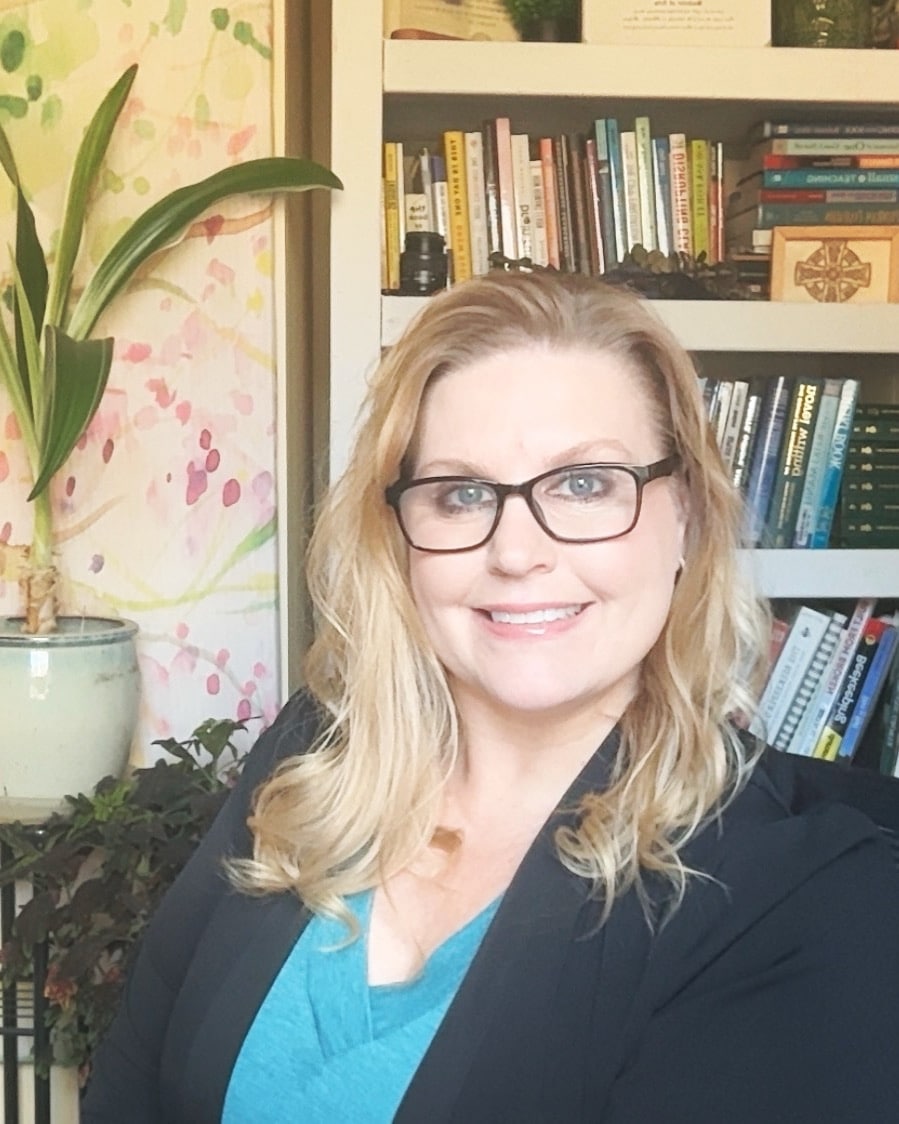
Angela Solic, Ph.D., is an educator, scholar, and advocate whose career spans more than twenty‑five years. She began teaching college‑level reading, writing, and communication in 1998 while earning her master’s degree in English, and later completed her Ph.D. in Education in 2010, a testament to her determination to thrive after surviving extensive childhood trauma. In 2007, Angela transitioned from teaching students to teaching college faculty members. Over the course of her career, she has trained thousands of faculty members worldwide, specializing in instructional design, learning innovation, and evidence‑based teaching practices. In 2018 she created and leads the Center for Teaching Excellence and Innovation at Rush University in Chicago, a hub for educator support, curriculum development, and pedagogical transformation.
Besides being dedicated to improving college teaching, Angela is determined to help advocate for complex childhood trauma, especially emotional abuse, through “The Still I Heal Project”, an Instagram‑based advocacy platform dedicated to educating parents, survivors of emotional abuse, and mental‑health professionals about trauma, resilience, and recovery. You can find out more about her project at stillihealproject.org.