
Hiding in Plain Sight
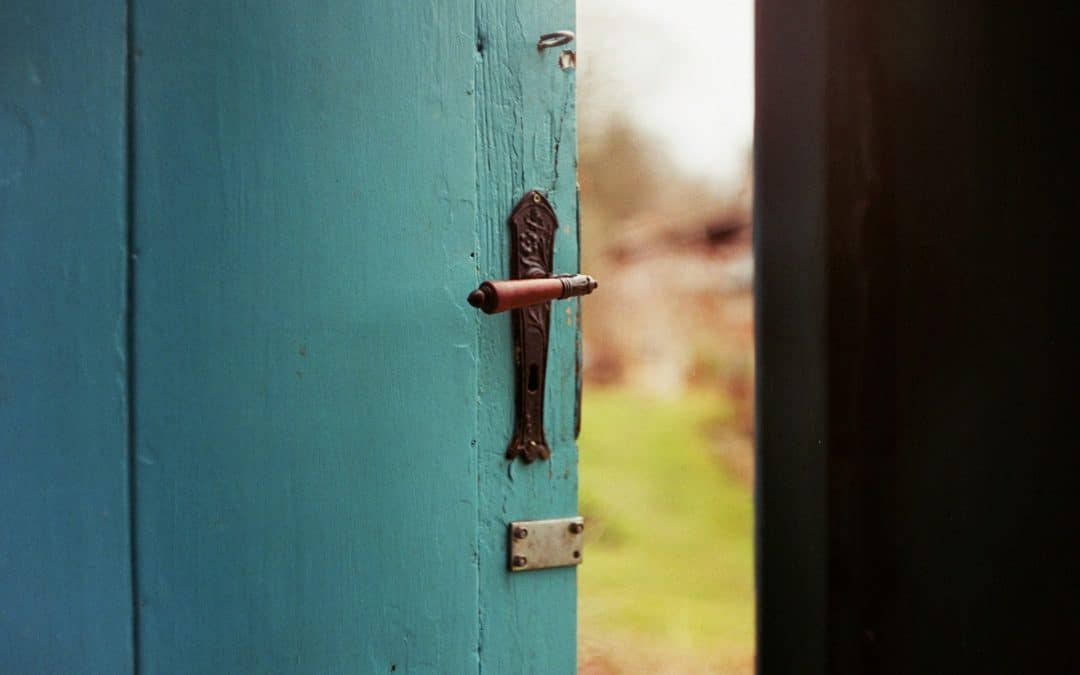
When is it a good time to admit to your therapist that you have literally army crawled through your house like Rambo to avoid answering the door?
I surely can’t be the only one to pin myself up against the wall and peek through the curtains, waiting for the knocking to stop. Have you ever begged the universe to please let the person on the other side of the door be the UPS guy, so you know he’ll be on his merry way? Once, I hid for an hour because someone wouldn’t stop knocking. I didn’t care what they had to sell; I didn’t want it. I didn’t care what they had to say; I didn’t want to hear it. As it turned out, no one was at the door. I’d been hiding from a persistent woodpecker that had decided to tap manically on the side of my house.
Unfortunately, its Morse code failed to reach the logical parts of my brain; I only felt a wave of “baseless” fear.
After a lot of therapy and work to regulate my nervous system, I have fewer of the moments I described above. I’m getting better at answering the door. These days, I often voluntarily leave my hidey hole to “connect” with others and even socialize.
I’ve come a long way in recognizing moments of emotional hijack, but I still have work to do.
For example, I’m writing this article because I’ve fled my house like a refugee. I’m not in danger, but I feel like I am. Why? Because an event in my neighborhood has suddenly swelled the population of my small community. It’s amplified my general fear of unexpected visits from people. Why would I feel fear in this context?
It’s simple. The anxiety around the unknown catapults me into a state of panic, locking me in terror about what could come next. When my safety feels compromised, naturally, my fear responses kick in. Having a sense of “control” of my surroundings makes me feel safe.
Usually, I’m able to ground myself and connect with the logical parts of my brain that know I’m safe. I’m getting better at working through these mental and physical nightmares. Other times, my fear responses do all the talking. All humans have fear responses, which are automatic, survival-driven physiological and psychological reactions designed to keep us safe.
These responses came in especially handy in prehistoric times when the threat of being mauled by a predator in the wild wasn’t out of the question. In modern times, this bodily and mental alarm system is less necessary most of the time. For those of us who have lived in persistently dangerous situations like chaotic childhood homes or in abusive relationships as adults, however, these fear responses have gotten a regular workout.
Our nervous systems, already hardwired by nature to fight, flee, freeze, or fawn in the face of danger, often become dysregulated. Our mind and body learn to “warn us” in situations that don’t warrant fear in most people because something about the moment sets off the alarm bells in our overstimulated nervous systems. Suddenly, we’re off to the races, held hostage by our go-to fear responses.
Depending on the situation, I freeze and play a solo game of possum, or, if possible, I flee. Although the logical part of my brain steps in sooner than it once did, it can be tricky when I’m going through a depressive slump. My whole system is just enough off kilter that it doesn’t take much to shift into the fear responses that feel as natural as breathing. Add a hefty dose of depression to the mix, and I find myself on the floor looking at dust bunnies long after the knocking has stopped.
In fairness, my tendency to avoid people is partly a natural extension of my introverted nature. I need my space to recharge. But it’s more than that.
I think, like so many things, it’s related to trauma. For years, I made myself invisible in a way that extended beyond garden-variety introversion. Some of my reactions cannot be attributed solely to wanting to avoid attention or to being mentally drained from too much “on” time. Wanting to avoid people is one thing, but when fear suddenly pulsates through your body like an angry heavy metal song, it’s a clue that there’s more at play.
These strong physical reactions can be debilitating. Avoiding them can become a way of life.
Over time, I learned to avoid connections altogether. No matter the setting—my child’s baseball game, the office, or even the bread aisle at the grocery store—I shielded myself from others’ eyes and interest. These habits started in childhood; I learned early on to blend into the background and hide my presence. When I was quiet and withdrawn, I was out of sight, out of mind. I mastered a kind of isolated invisibility, and for good reason. I did this because I learned early on that people are unpredictable and can be dangerous. Danger can, in fact, be on the other side of your door.
Accustomed to recoiling or running away in fear since I was in diapers, I’m working to retrain my body. I’m trying to convince myself that not everyone and everything is dangerous. I’m working hard to pull myself out of the shadows. The protective bubble around me is expanding while my perpetual anxiety around the possibility of getting hurt shrinks incrementally. The weight of my self-doubt and fear of falling short or being too much is finally receding. Many days, I succeed in this effort to free myself from the shadows.
I challenge myself to “put myself out there” or, at the very least, not run away. It usually turns out okay. Some days, I take significant strides beyond the dark weight of the shadows. On those days, it feels good to be “seen” after all these years of feeling invisible.
Other days, like today, I silently beg the universe to grant me an invisibility cloak. In these moments, I feel frozen in a place I no longer want to live. At the same time, I realize it’s okay to sit in these dark places and hide occasionally…as long as I don’t linger. Sometimes “hiding” is an act of self-care, but there’s a point when self-imposed social isolation transitions into unhealthy territory. I’m learning where that line is and how I can best support myself in those moments of unsolicited terror.
For a long time, I thought I was the only one who experienced this ongoing battle between a desire for invisibility and a desperate plea to be “seen.” I’m finally realizing I’m not alone in this struggle.
I’ve met more and more people like me over time. I’m one of many hiding in the safe cove of the shadows. Others take back stairways to avoid contact with colleagues or walk across the street to avoid saying “hi” to an acquaintance on days when even a two-word exchange feels like too much. Some days, the internal overwhelm makes it impossible for me to stretch myself. I occasionally worry that if I share these inner thoughts and fears, I will be deemed “insane.”
If you are reading this, you may be shaking your head in camaraderie on some level. Fortunately, our fear responses have little to do with sanity and everything to do with searching for safety. Many of us feel like we will never be safe, but it’s human nature to seek safety. Because we may find safety in hiding, we may subsequently feel resigned to never being truly “seen.” Wanting to be seen and understood, I think, is also human nature. So, here we find ourselves…at these strange crossroads of wanting two things that feel incompatible. They may feel that way, but that doesn’t mean they are.
I’ll never meet most of the people who read my words, but I can tell you this: I see you. I understand. We may be hiding, but we are not hiding alone. Nor are we invisible.
I recently asked myself, “Where the hell were you kindred spirits when I was in my teens and twenties”? I felt “weird” for hiding from people like a vampire fleeing the first rays of the morning sun. I assumed there was something wrong with me and that I was completely alone in my fear of people.
As it turns out, there was nothing wrong with me; my actions were self-protective. And…I’m not alone in this fear of people. Decades later, I finally realized why I couldn’t find “my people” for so long. I laughed out loud when it hit me: you were hiding too! It’s one of those “funny, not funny” kinds of things. Many of us play an ongoing game of hide-and-seek with the world. We all have our reasons. Sometimes, retreating into hiding is exactly what we need. We’ve earned that right. We also deserve to be seen.
One of the biggest things I’ve learned on my healing pilgrimage is that two opposing things can be true at the same time. We can hide while we also seek, and even in those moments of hiding, we can still be seen. I want to remind all my fellow hiders that we’re never actually alone…sometimes we only feel that way because we’re in hiding. That’s okay, though…we’ll come out when we’re ready. Until then, we can keep each other company. And…when we heal, peek-a-boo world, here we come!
Photo Credit: Unsplash
Guest Post Disclaimer: This guest post is for educational and informational purposes only. Nothing shared here, across CPTSDfoundation.org, any CPTSD Foundation website, our associated communities, or our Social Media accounts, is intended to substitute for or supersede the professional advice and direction of your medical or mental health providers. The thoughts and opinions expressed are those of the guest author and do not necessarily reflect the views of the CPTSD Foundation. For further details, please review the following: Terms of Service, Privacy Policy and Full Disclaimer
- About the Author
- Latest Posts
Finally feeling truly alive for the first time in my life, I am writing from a place of gradual healing with an eye to the future and a hope of connecting with others on similar paths. Forced to withhold a tsunami of emotions deemed irrelevant under the roof of my childhood “home,” the blank white pages of my notebooks invited my raw reflections without judgment. Writing allowed me to free the burdens of my soul, but at some point, I muzzled myself. My pen lay dormant for years until, at 41 years old, I experienced a traumatic flashback during an everyday activity that shook me to the core. Five days later, I started writing about the things I had long withheld. I couldn’t stop. Written words have once again become my refuge. I now recognize that these words, resurrected from the ashes of my pain, may have the power to help others. Above all, I want to magnify and share the messages that I have most treasured on my journey: we are not alone and we don’t ever have to go back. This is where we live now and the future is ours.
Hi Heather. What an insightful article. You had me laughing on the floor with your opening paragraph; I love your sense of humor. Although now you’ve done it, I have to go back and read all your past writings to see what humor and a sense of connection with other hiders I’ve missed. I loved this writing.
Jesse
Thank you, Jesse! I can, at times, be pretty dark and that comes through in some of what I write, but other times I just can’t help but embrace the humor and irony in life. You might appreciate my article “Going With the Flow”…it features some good self deprecating humor, which is my favorite kind of humor. I’m so happy you enjoyed my writing and humor. Thank you!
I was wondering if someone could tell me if I”m an empaths or just delusional?
Thank you for sharing this Heather. The sudden fear/panic response resonates strongly with me. I laughed and felt a nerve touched that kept me reading. I also resonate with the hesitant and variable forward motion in healing the socialization wounds.
I really enjoyed and received the truth delivered with a light touch and hope.