Trauma-Informed Blog
New content weekly! Survivor Stories, Research Articles, Poetry, and more written by clinicians, coaches, survivors, and mental health professionals.
Remember...
Important Information About Our Content
Everything you find on this blog, CPTSDfoundation.org, or within our wider digital communities is created for educational and informational use only. No content shared here—whether by our staff or guest contributors—is intended to supersede or replace the clinical relationship you have with your medical or mental health providers. We are here to support your journey with information, but we do not provide medical advice or treatment. Guest opinions are their own and may not represent the views of CPTSD Foundation. Privacy Policy and Full Site Disclaimer, Terms of Service.

Our Mental Health and Society
Mental health services in the UK have always been hard to access. In the past 5 years, they can no longer meet the increasing number of suffering individuals' needs. The recurring question is,...

Reclaiming Serenity: Navigating Self-Care After a Flashback
Over the past couple of weeks, I have been talking about having flashbacks in the workplace, how to get grounded, and how to clean up the mess afterward. If you haven’t noticed, that is a lot of...
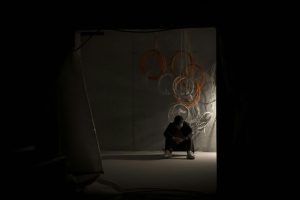
Why Do Men Stay Too Long in Toxic Abusive Relationships?
Many men stay in toxic, abusive relationships (TAR) due to a variety of complex reasons and deep-seated fears. One primary reason is men's tendency to view themselves as "fixers." Men often cling...

I Wasn’t Born Hating Myself
The flashbacks were extra intense one night, and my internal anger was boiling over. As an adult, I have always lived alone, so my apartment was my little oasis (and also my torture chamber)...

An Attack on All Fronts: The Mind-Body-Soul Divide-and-Conquer Technique of Narcissistic Abuse (Part 2 of 4)
Part 2 of 4: I was being future faked In support groups for narcissistic abuse, a word that comes up often is servitude. It took tremendous logistical energy to be with my partner: in a year and...
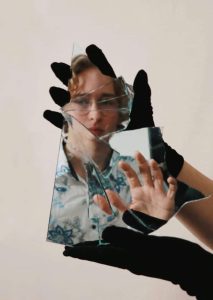
The Strange World of Dissociation
What is Dissociation? Dissociation runs on a continuum from road hypnosis, daydreaming and losing yourself in a good book to Complex Post Traumatic Stress Disorder and then to the extreme of...

Exploring Sadness within Complex PTSD
My name is Elizabeth, and I am a survivor of child abuse and horrific trauma. I feel there is a need for our society to hear about how survivors break away from trauma and lead their lives after...

How Trauma Shows Up In Your Time, Space & Relationships
Repeated challenging experiences make us vulnerable to losing connection with ourselves, others, and the world. This disconnection can be repaired, healed, and transformed by taking the time to...
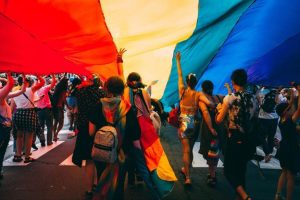
Abuse Doesn’t Discriminate: Facing Abuse in LGBTQ+ Communities
Key: LGBTQ+ is translated as Lesbian, Gay, Bisexual, Transgender, and Queer. The “+” includes members of the Intersex and Asexual communities. It is extremely important to keep in mind that abuse...

An Attack on All Fronts: The Mind-Body-Soul Divide-and-Conquer Technique of Narcissistic Abuse (Part 1 of 4)
Part 1 of 4: I am a big believer in personal responsibility. I’m the first to tell you that I struggle with c-PTSD daily from multiple assaults and a strange cultish upbringing. I manage it...
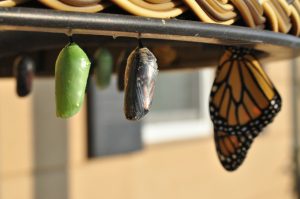
Transforming Tragedy, Secrets, and Lies
The imagined scene fades in: silhouette and shadow, sepia and blue-black charcoal. Fading dusk bleeds its final hint of burnt sienna. The rhythmic slap and skip-step of a single figure jumping...
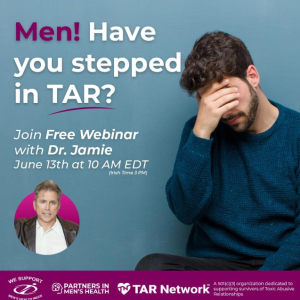
Join Our FREE Webinar- Men! Have You Stepped in TAR?
International Men’s Health Week 2024, which runs from June 10-16, marks the 30th anniversary of this important commemoration. Originating in the United States in 1994 – thanks to a Joint...

What is Complex Post-Traumatic Stress Disorder?
“Complex PTSD comes in response to chronic traumatization over the course of months or, more often, years. This can include emotional, physical, and/or sexual abuses, domestic violence, living in a war zone, being held captive, human trafficking, and other organized rings of abuse, and more. While there are exceptional circumstances where adults develop C-PTSD, it is most often seen in those whose trauma occurred in childhood”.


