
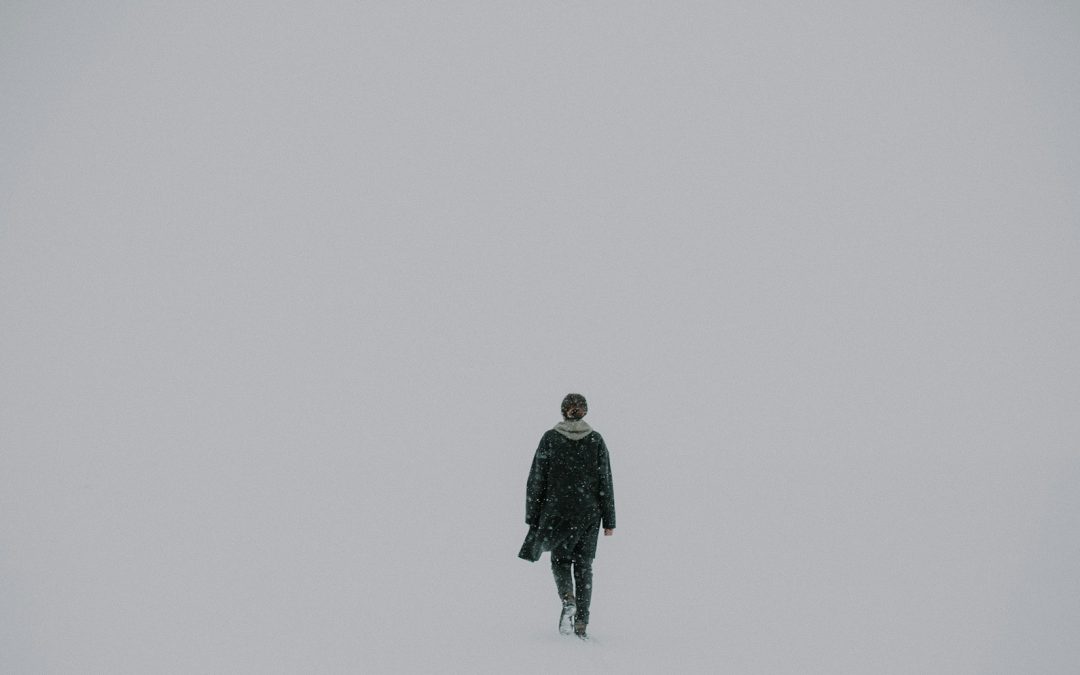
I have spent years struggling in Schools, from elementary to middle school, high school, and finally, many, far too many years at two-year colleges. I have several degrees from those junior colleges, so I am not an ignoramus, nor am I an intellectual; yet I often sit and notice that I frequently feel empty of intelligence. It is as if I experience the moment as a man who is just empty of thought. In those moments, I feel as though I know nothing whatsoever. If you asked me a question, I’d be void of the answer. I could have a doctorate, I imagine, and I’d feel the same void of knowledge in these moments in time. How is knowledge necessary to my ‘identity’ if I sit empty-headed in the moment?
I mentioned I struggled throughout my school years. What do I mean by that? Daydreaming, inability to concentrate or focus, impulsive to be the clown, seeking attention, and thus getting the paddle frequently from the principal (in middle school, it was the vice-principal who performed the ‘imperative’ corrective punishment). Something was wrong with me; something was wrong in my family; something was wrong in society. Back in the 1960s, when I was in elementary school, I was threatened with being held back on several occasions; Yet, I was somehow pushed forward to the higher grades. Perhaps with a hope I would mature, and/or snap out of “it.”
However, I think I was probably looked upon as simply being “willful,” exercising my free will and “choosing” unacceptable behavior. Where were the school psychologists back then, to take notice of a struggling, disturbed child? Passed through the system, like a badge of honor to the schools for having taught me what I was supposed to have learned. I barely managed grades good enough for high school graduation. I most likely didn’t. Yet they allowed me a diploma. Probably to get rid of me, out of the system, and let themselves shine for not having ‘failed’ that one.
Where were the psychologists in my high school? Maybe they were there, but I was unreachable… I look back and know that now. What a sad journey for a troubled child. I hope it is better for children today, especially those who are troubled.
Suddenly, it dawns on me that this may be a form of dissociation, characterized by a sense of empty-headedness from the moment, a blanking out. Why did I begin a paper on my state of feeling empty of knowledge? For one thing, it just struck me as “bizarre.” The experience almost makes it seem as if education is unimportant to who we are in the moment, and certainly unimportant to who I am anyway. My sense of feeling loved, experiencing anxiety, trying to remember what happiness felt like, feeling the biting arrows of bullying, criticism, or rejection from others, all float within, inside/outside the bounds of knowledge.
Life, it seems, exists in the realm of the emotional, not the intellectual or the reasoning. Not to belittle reason, the more knowledge we gain, the wider the paths and opportunities for problem-solving, but then there is the self. Is my identity tied up, anchored to having achieved knowledge? He asks himself. If I have an educational title to my name, do I anchor my sense of pride to that label, wearing it like a badge of honor, of “self”? Am I my title of accomplishments? Indeed, one should be proud of earning degrees and awards that bring societal recognition to their achievements. Still, I’m back to that emptiness and the realization that the emotional experience of being seems determined to be who we are.
Then there is the next day; today I’m feeling, in a quiet moment, the old, internalized pangs of feeling ostracized, unacceptable, or unloved; the ‘emotional’ experience that reeks of an abusive childhood, a painful, disturbing reality of having lived intense trauma in the moment; far too many moments. Complex PTSD is a living, yet buried monument to a troubled childhood. Those emotional reactions to physical and emotional abuse from a disturbed mother fill my senses.
The living internalized experience of prolonged, unrelenting traumatic abuse and emotional neglect fills my moments. It consumes me, not allowing me to focus on much else, “coping.” It leaves me staggered, perpetually seeking an escape from life’s ongoing moments. I’m driven to escape into the world of “distractions,” drugs, alcoholism, and impulsive behaviors that ruin my life, but I can’t help it. The Moment is just too disorienting and painful to endure without intoxicating distractions. Free will is often just a blank, lost, or magical thought that far too many seem to insist is the only thing that energizes human behavior.
If “self-love” is my recipe for change and healing from the internalized, overpowering, and unconscious relics of trauma: how do I ‘engage’ with the same level of emotional strength that trauma and unmet infantile needs invaded my being with intense dramatic ‘shock?’
I was bathed in icky, toxic, living emotional states of basic rejection and deeply shamed by a ‘false’ childhood interpretation that “it is me”, I am unlovable! Something is wrong with me; otherwise, I’d be loved and comforted. “That” is toxic shame. That is what I experience in my usual quiet moments, a toxic experience of being an irredeemably flawed being. The experience of being ridiculed, bullied, and laughed at is waiting for me around the next turn in my life; even my next moment, as my mind sees it, it conjures and feels the terror of reliving the past.
The concept of ‘self-love’ strikes me as simply something I don’t fully understand.
Suppose the intense emotional impact of an unbearable traumatic event consumes my being with a living regurgitation of those old, terrifying reactions. Doesn’t it make sense that an equally powerful, emotional ‘experience’ would be needed to counteract such internalized past experiences? Sitting in that ‘empty’ moment, which started this paper, was a moment free of the Toxic state of Shame.
On one hand, the toxic, painful, debilitating childhood emotional experiences need to be expelled from the system. Working to become aware of the buried and repressed pain leads to ridding those emotions from the system. Feel it and allow yourself to weep deeply, in tune with the pain that lives within you. That isn’t easy because of the numbed-out life we’ve led. Trying to ‘hide’ desperately from what we need to see, feel, and deeply weep will not help us heal. I can’t imagine how else to work through that block to living openly, as fully as we can learn to be. It is a lifelong battle and journey to overcome the prolonged, severe trauma. For God’s sake, be thoughtful when you administer ‘punishment’ upon your children! Ask yourself, is this right or necessary for me to whip my kids? Listen to what your gut is telling you; I love my child; I don’t want to do this. Then please stop it!
Fulfilling sick and unexamined cultural expectations of “appropriate punishment” can damage a child’s psyche, leaving them perpetually unable to trust others. This drives us to seek the experience of being accepted, safe, and welcomed by a friend or an understanding and accepting therapist. This is all in the hopes of finding the actual ‘existential’ reality that “I am OK,” “It was not my fault what happened to me,” a tragic victim of trauma (CPTSD). It is a struggle for some of us to see and feel that we are lovable, though we are. Just because I think and/or fear I am not, doesn’t mean I am not. It means I’m afraid I am not, and I feel I am not.
Perhaps the powerful ‘emotional’ experiences I’m looking for, or that I conceive as necessary for an impactful change within one’s heart and soul, need to be in a social group setting. To feel and see a group of people ‘welcoming you,’ accepting you into the group; a person or people who authentically miss you if you don’t show up to the group meeting. A place where you can learn to be expressive and find that you are not radically shamed and abused for ‘being’ open and authentically expressive.
That expression of self may be consumed, in an uncontrollable state of hypervigilance, as your moment-to-moment social experience is now; however, with time, patience, and persistence, that can change.
Acutely self-aware of your new behavior, daring for once to begin to express, openly, honestly, and authentically. This sounds like the beginning of learning to become one’s authentic self. That is, being expressive without the toxic, abusive trauma that drove your inner little child scurrying for safety under the proverbial bed. Perhaps the ‘individual’ experience of an intimate friend or therapist, before moving out into the world of a therapy group, when the time is right.
Others who share the same issues that have held you back seek a similar path from a life that was filled with toxic shame, self-blame, intense psychic pain, feeling indescribably ‘different’ from others – alienated. In other words, we are not alone if we reach out and risk connecting, taking baby steps at first.
I’ve known the depths of alienation. You are not alone. You have to ‘risk’ reaching out, risk being vulnerable, and find the courage and guidance toward seeking out a therapist. Before we seek, we must learn how and what it is we are seeking —change, freedom?
That is where knowledge comes into “the play.” Act 1 is stepping out and risking self-change…
Photo Credit: Unsplash
Guest Post Disclaimer: This guest post is for educational and informational purposes only. Nothing shared here, across CPTSDfoundation.org, any CPTSD Foundation website, our associated communities, or our Social Media accounts, is intended to substitute for or supersede the professional advice and direction of your medical or mental health providers. The thoughts and opinions expressed are those of the guest author and do not necessarily reflect the views of the CPTSD Foundation. For further details, please review the following: Terms of Service, Privacy Policy and Full Disclaimer


*Copyright notice. All writings copyrighted and registered with the Library of Congress.
Therapy has helped improve my self-understanding as well as writing skills through journaling and essays. Although this writing journey began in later years, it has led to 70+ essays oriented around issues with CPTSD – a trauma disorder.
My writings, which include therapy notes, poems, novels (unpublished), and essays, are all a part of my ongoing personal therapy. Initially, the essays, intended for my therapist’s eyes only, began with exposing my thoughts, fears, and feelings, or the lack of, onto paper, a journal of therapy notes. Then, with fear overcome and via a personal decision, I shared them with the readers. *My thanks to Paul Michael Marinello, the editor of the CPTSD Foundation. My intent is to encourage readers to recognize traits in themselves and find (if desired) a therapist when they are willing and ready for that step. For some of us, it can be a long and challenging process, over extensive periods, to awaken to the unconscious issues that cause us to act out in life. Our behavior may seem like dancing to a buried, invisible cause we cannot directly see or confront. It is my sincere hope that my insights will assist the reader in the process toward reaching a deeper self-understanding.
Bringing the unconscious out into the light of self-awareness, understanding, and acceptance fosters self-love and the process of change.
Jesse B. Donahue
*Type a keyword into the foundations search engine. (Jesse, Heart, Personal, Twelve, Bugaboo, etc.) Or, Type Jesse Donahue at The CPTSD Foundation on a Google search.
Published with the CPTSD foundation. Top 10 essays in order of number of views:
- ** Personal Honor, Integrity, Dignity, Honesty
- ** The Heart of the Matter
- * The Smoldering Embers of C-PTSD
- * The Hidden Bugaboo (Parts 1-4 of 4)
- Twelve Days Without Coffee
- Learned Helplessness
- Cast Out of Eden by Toxic Shame
- *Codependency – Overriding the Monster of Self-Hate
- The Emptiness of Yesterday
- Surfing the Light Through the Darkness