Your Circle Is Your Mirror: Cliques, Gatekeeping & Life Lessons
***TRIGGER WARNING*** This article discusses trauma, including bullying, abuse, and crowd baiting references that may not be appropriate for all. My name is Jenney Clark and I am a voice for the voiceless.
“I would venture to guess that Anon, who wrote so many poems without signing them, was often a woman.” – Virginia Woolf.
Virginia Woolf’s epic observation, often rephrased as “For most of history, Anonymous was a woman,” is a clinical analysis of a biased history that still continues to haunt many writers, especially in conservative cultures. Many adopted pen names or vague pseudonyms out of necessity.
History is full of these survival tactics. The Brontë Sisters published as Currer, Ellis, and Acton Bell to avoid being “looked on with prejudice.” George Eliot (Mary Ann Evans) knew her work required a male name to be taken seriously. Jane Austen wrote simply as “By a Lady” to shield her family from scandal. Centuries later, E.L. James (Erika Mitchell) of “Fifty Shades of Grey” fame chose a pen name to write bold themes without judgment. And then there is J.K. Rowling.
For these writers, anonymity was a shield to navigate a world that punished their voices. Their narratives remind us how exclusion, gatekeeping, and the pressure to perform or disappear have long shaped who gets heard—and who gets erased.
Never Hide Your Voice: Own it
‘If liberty means anything at all, it means the right to tell people what they do not want to hear.’ — George Orwell.
My experience has been a masterclass in life lessons. I speak only for myself here. I have anxiety, BPD, and mild ADHD, and I am no expert on human behaviour. Yet every time I think I’ve finally built a shield against toxic behaviour, life comes crashing with another powerful lesson.
Lack of Empathy, and Dehumanization
Truth be told, we are constantly surrounded by mirrors—people whose kindness, cruelty, manipulation, or love reveal who we are.
As humans, we cannot live as islands. We crave the security of community. Yet the dark irony is that we often judge others to feel we belong in a community.
We huddle into cliques, become self-appointed gatekeepers of groups, and decide who is in and who is out.
We use taunts and jabs by indirect implication. We hide behind herds, and God help the person who doesn’t fit the mold.
When “Your Circle” Weaponizes Power &Triggers CPTSD
For CPTSD survivors, the deepest wounds often come not from dramatic violence, the screaming arguments, the stinging blow of physical abuse, or getting sucker punched. It happens from slow, agonizing social isolation—whether chosen or weaponized by others. In my dysfunctional family, the people meant to be my safe haven hurt me in ways that still echo to this day.
Toxic families and friends can use exclusion and isolation to hurt you. This is a silent ban with a thousand cuts, delivered by people who claim to care about you.
The “Outcast/Blacksheep” Syndrome
I have anxiety, BPD, and mild ADHD; growing up in a dysfunctional family, my sister and I were the “unnecessary baggage” . We were outcasts because it was easier for the “strong adults” to trample the “weak children.”
“There is bullying, and then there is bullying of the worst kind; it’s called ‘social isolation… where you herd together ‘the strong’ and trample ‘the weak’ because there is strength in numbers.” — Jenney Clark, Don’t Be Afraid to Love
When you grow up with BPD, your nervous system learns that safety is conditional. You learn that if you don’t “perform” how the family wants, you will be cast out. This is the very definition of CPTSD. It is about the constant, looming threat of being abandoned, socially and emotionally.
Tales from the Trenches
Discrimination and bullying don’t end just because people become adults after they get their degree or a manager’s office. It just gets a more expensive haircut, a success or money-can-buy-anything uncivilized behaviour, and a “social” mask. I’ve seen it play out in my own life for years, through family, work, and inner circles. These are situations that shaped my life.
Consider the dynamic I encountered a few years back.
The Architect, a person with professional standing who never raised their voice. Instead, they used the “social snub”: inviting me to events only to exclude me from conversations, joking loudly with others just out of my reach. It was a clear power move signalling to the room: She is on the outside. It keeps you permanently on the outside looking in.
Not calling out such behaviour is tantamount to letting this form of bullying happen to someone else.
Then, there are the Bystanders. The ones who watched this happen. This person was the “silent enabler.” They will look at you, shrug, and justify the Architect’s behavior. “Oh, they didn’t mean it like that.” But their eyes will say, I’m just happy it’s you and not me. In a clique, silence isn’t neutral. By saying nothing, the Bystander becomes the enabler. If you dont speak out against a wrong, you are an accomplice.
Discrimination and Baiting Crowd: Why This Triggers CPTSD
Is bullying even more contemptible when it is done by adults?
For those of us with childhood trauma, these adult “toxic communities” are retraumatizing. They mirror the “outcast” feeling of being unprotected and unseen. When your experience is invalidated as “everyone goes through difficulties,” it triggers a primal survival fear. Imagine opening your heart to trusted people and getting trolled for baring your soul to them.
It’s a psychological hijack. You feel like you are five years old, abandoned, and alone again
And the worst part? The gaslighting that follows—“You’re too sensitive,” “It’s all in your head”—is classic emotional abuse.
Choosing “Real Love” Over “Fake Safety”
The hardest lesson I’ve learned—and one I’m calling from the rooftops to my fellow trauma warriors is that you cannot find “healing” in toxic relationships.
If you’re feeling alone, consider this:
Call out the bully: Bullies are often cowards, and they no longer exist only on the playground. They exist on your social media as trolls behind the safety of a screen; they are in your teams and in your communities. Calling out their behaviour sets boundaries, stops the cycle of abuse, and asserts that their behaviour is unacceptable.
- Recognize people for who they are: Some people thrive on security in numbers, rather than authenticity or inner resilience. Their need for control says everything about them and nothing about your worth.
- Forgive, but set boundaries: As for me, I forgave those who hurt me, yet I no longer allow them space in my life.
- Seek your genuine exceptions: Look for the rare souls who offer kindness when it costs them something—the “loyalists” who provide support and unconditional love.
- Refuse to settle: You are as worthy. Real love—authentic connection—exists outside the trolling and herd mentality.
Don’t shrink yourself to fit rooms that want to keep you out. Healing means refusing to let others define your story.
Practical Steps for Healing from Trauma
- Understand your triggers and patterns: Journal the ways childhood dysfunctions, bullying, and toxic behaviours have shaped your nervous system responses.
- Practice somatic safety: Gentle body-based practices such as grounding, mindfulness, and breathwork help “the fight or flight” mode that exclusion triggers.
- Build micro-connections: Start with one safe person or a small, values-aligned group rather than seeking large groups.
- Seek trauma-informed support: Therapies like EMDR, somatic experiencing, or CPTSD-focused groups can help with relational wounds.
While everyone’s journey is unique, in my experience, reaching out for support helps. If you are experiencing any form of toxic relationships, bullying, adult bullying, or isolation, reach out to the CPTSD Foundation community or a trauma-informed therapist. You are not alone. The only person who can truly grant us freedom is ourselves. So, take your power back!!!
Resources & References
- Relational Trauma: CPTSD Foundation – Treating Complex Relational Trauma
https://cptsdfoundation.org/2022/11/14/treating-complex-relational-trauma/
https://cptsdfoundation.org/2026/02/19/the-hidden-legacy-of-relational-trauma-breaking-free-from-codependency-and-complex-ptsd/) - Scapegoating Dynamics: Psychology Today
https://www.psychologytoday.com/us/basics/family-dynamics
https://www.psychologytoday.com/us/blog/tech-support/202104/how-toxic-families-choose-a-child-to-scapegoat) - My Journey: Awakened Souls Podcast | www.jenneyclark.com
International Support for Adult Bullying, Trauma & Isolation:
- Befrienders Worldwide – Emotional support and listening services in over 90 countries (find local helplines): https://befrienders.org/
- International Bullying Prevention Association (IBPA) – Global resources for bullying prevention and intervention: https://ibpaworld.org/
- International Society for the Study of Trauma and Dissociation (ISSTD) – Resources, fact sheets, and therapist locator for complex trauma: https://www.isst-d.org/
- Blue Knot Foundation (Australia-focused but useful internationally for complex trauma survivors): https://blueknot.org.au/ (Helpline: 1300 657 380)
- Support: If you are experiencing adult bullying, reach out to the Workplace Bullying Institute (a leading resource for adult and workplace bullying support) https://workplacebullying.org/
- Additional general support: StopBullying.gov resources for adults – https://www.stopbullying.gov/
If you’re in immediate distress or crisis anywhere in the world, reach out to a local helpline via Befrienders Worldwide or your country’s emergency services.
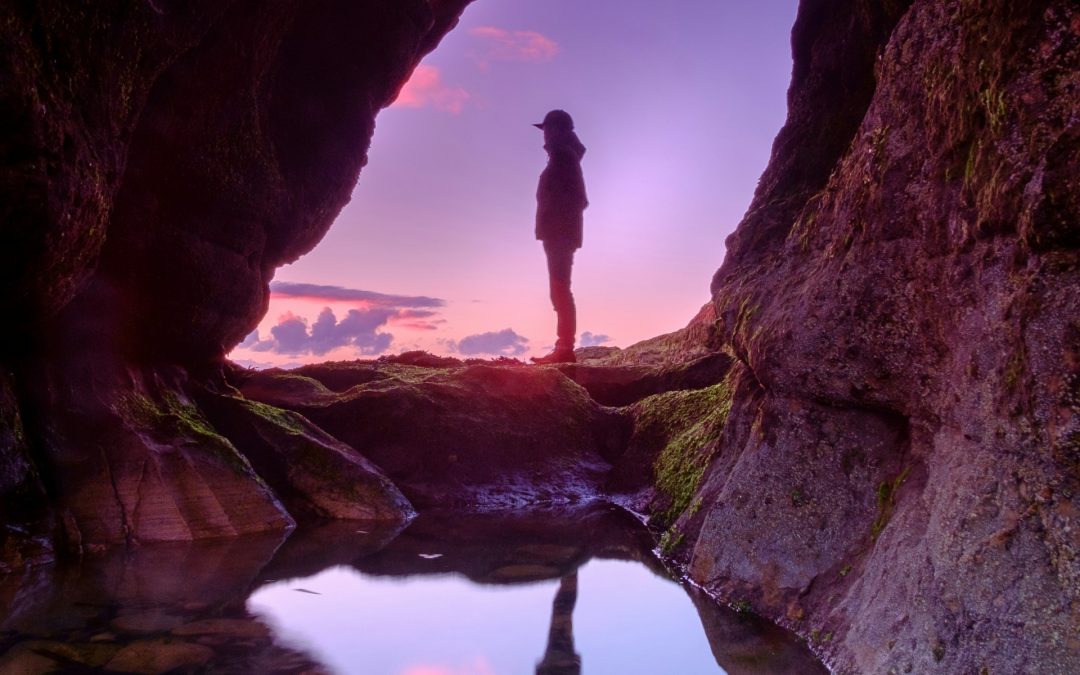
Photo by Luke Leung on Unsplash
Guest Post Disclaimer: This guest post is for educational and informational purposes only. Nothing shared here, across CPTSDfoundation.org, any CPTSD Foundation website, our associated communities, or our Social Media accounts, is intended to substitute for or supersede the professional advice and direction of your medical or mental health providers. The thoughts and opinions expressed are those of the guest author and do not necessarily reflect the views of the CPTSD Foundation. For further details, please review the following: Terms of Service, Privacy Policy and Full Disclaimer
- About the Author
- Latest Posts
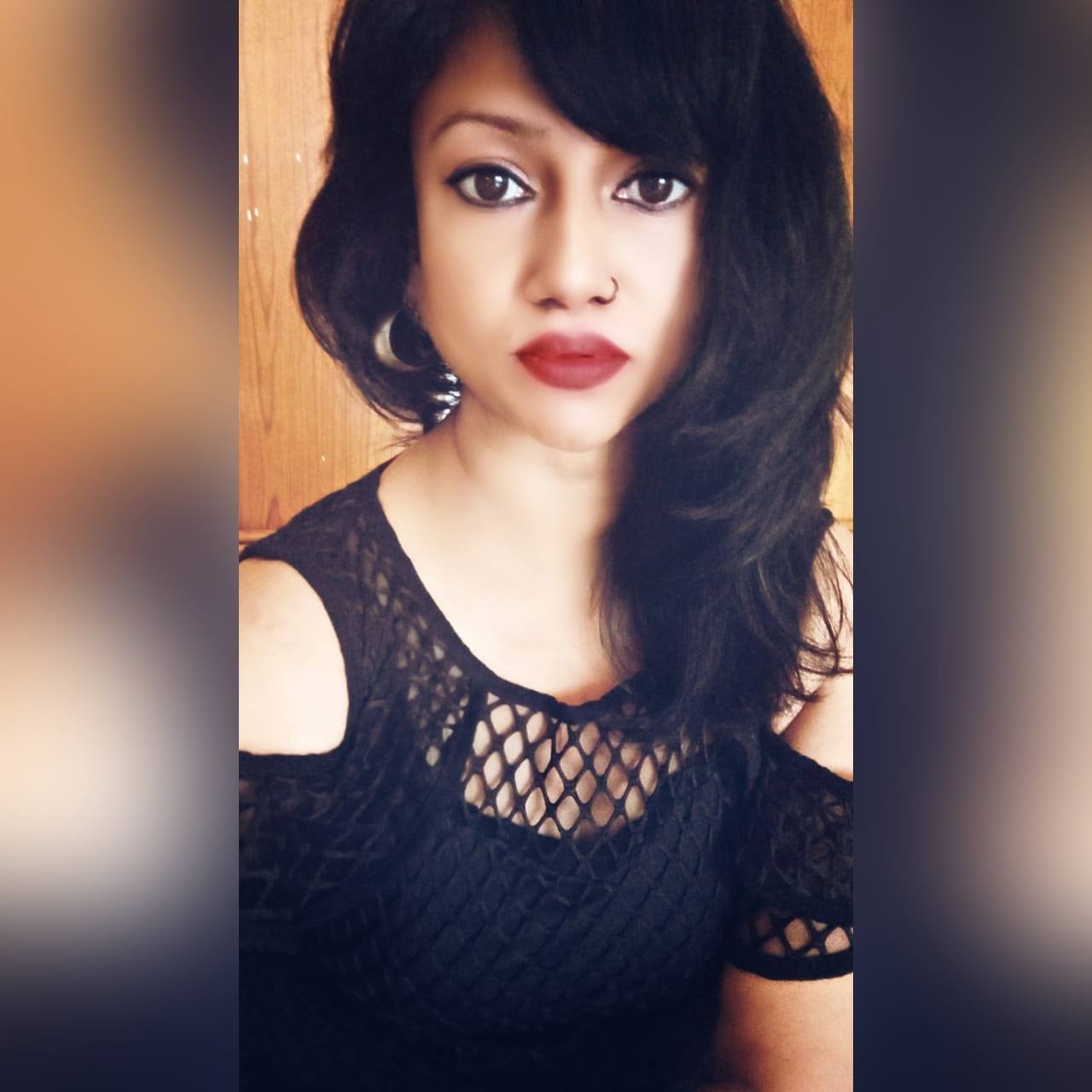
Jenney Clark is an Indian author and poet, best known for her book “Don’t Be Afraid to Love.” She has published eight books, including “Magic of the Ancients,” and hosts a podcast titled “Awakened Souls.” After leaving a successful job in the service industry, she pursued her passion for writing and became a life coach. Raised in a small town in India she discovered her psychic abilities at a young age and developed a strong interest in Tarot, astrology and numerology. She enjoys connecting with a diverse range of friends, including artists and writers and lives in a cozy “cubby hole” in Hyderabad with her dog, along with her beloved books and music