
“I Feel Like I Don’t Matter” Where Does This Belief Come From? (Internalized Worthlessness)
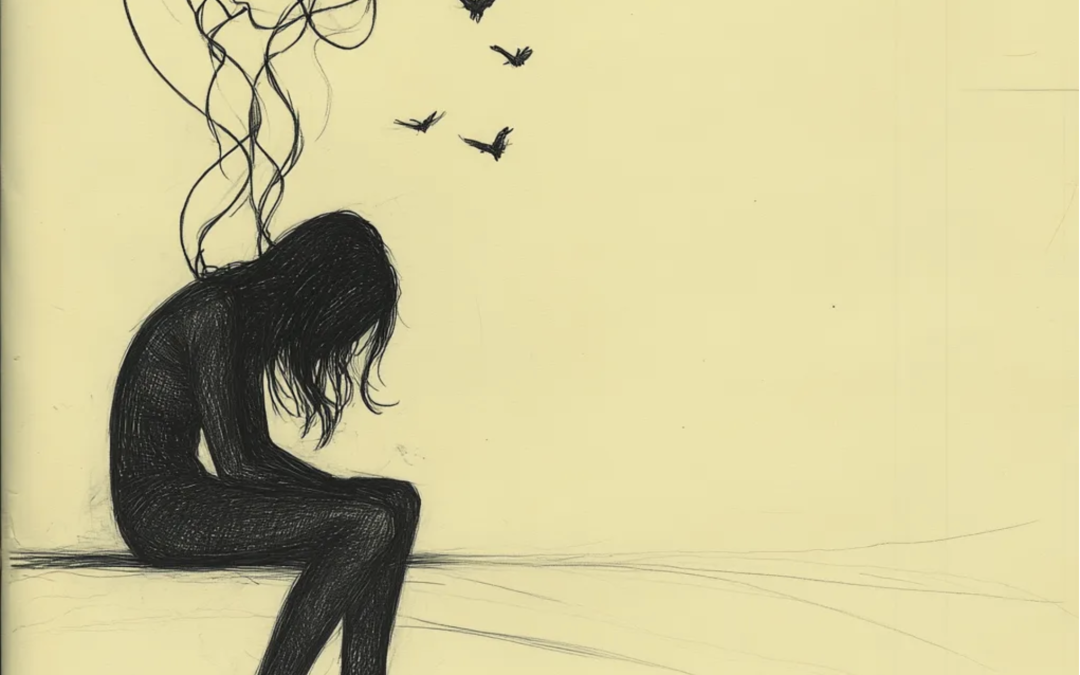
For many, this profoundly sad notion is buried so deeply, we don’t even realize it’s driving our search for significance. Why do we believe this and how can we heal it?
Internalized Worthlessness: When You Truly Believe You Don’t Matter
Khalil stood in front of his bathroom mirror, adjusting his tie for the third time. His therapist Dr. Rivera had suggested this simple daily affirmation: “I matter. My voice matters.” But today, the words felt foreign in his mouth, like stones too heavy to lift.
The promotion letter lay unopened on his dresser—the department chair position he’d been quietly encouraged to apply for. Instead, he’d recommended his colleague Tariq, insisting Tariq would be “a better fit.” Yet in his current role, Khalil regularly stayed hours after his shift ended, taking on the cases nobody wanted, covering colleagues’ weekends without complaint, and volunteering for every committee that needed members.
“You’re the hardest working doctor in this hospital,” his supervisor often said, not realizing that Khalil’s relentless work ethic wasn’t ambition but atonement—constant payment for the space he occupied in the world.
Downstairs, his achievement awards lined the hallway—the community leadership plaque, his medical school diploma, framed articles about the free clinic he’d helped establish. His mother Amara had insisted on displaying them, proud of the son who had “made something of himself.” What the awards didn’t show was how he’d driven himself to exhaustion earning them, taking on impossible workloads while declining recognition that might put him too visibly in the spotlight.
At the clinic, he was known for working through lunch, seeing extra patients, and personally making follow-up calls on his drive home. The staff marveled at his dedication while worrying about his health. Last month, he’d nearly collapsed from pneumonia after refusing to take sick days, convinced the clinic would fall apart without him—not because he was irreplaceable, but because he felt responsible for everyone else’s welfare while dismissing his own.
“You coming to the fundraiser tonight?” His colleague Nisha had texted earlier. “They’re recognizing your refugee healthcare initiative.”
Khalil had responded with a thumbs-up emoji, not mentioning how he’d personally covered three families’ medical bills last month when funding ran short, stretching his finances thin. He hadn’t told anyone, adding it to the invisible ledger of things he did to prove his worth—a ledger that somehow never balanced, no matter how much he gave.
Last week, he’d run into Leila at a conference. Now married with children, she’d mentioned casually, “Remember how I always said you worked too hard? Looks like nothing’s changed.” She didn’t know that after their breakup, he’d thrown himself even deeper into his career, taking overnight shifts and weekend rotations that no one else wanted, filling every moment so he wouldn’t have to face the silence of his apartment and the whispers of inadequacy that filled it.
He practiced his smile in the mirror—the one that projected confidence while hiding the constant calculation happening behind it: Am I doing enough? Have I earned my place today? What more should I be giving?
The irony wasn’t lost on him. As a doctor, he fiercely advocated for his patients to prioritize their wellbeing, to set boundaries, to recognize their inherent value beyond what they could produce or achieve. He could articulate with perfect clarity how every human deserved care and rest simply by existing. For everyone except himself.
There’s a particular kind of heartbreak that comes from trying your absolute hardest to make a difference—whether in the life of someone you love, a community you care about, or a cause you believe in—only to watch your efforts disappear like teardrops in an ocean. You extend your hands to try to hold back what feels like a tsunami of dysfunction, injustice, or pain, and find yourself nearly drowning in the process. And after years, perhaps decades of this pattern repeating, something shifts deep inside. A quiet, devastating conclusion forms: I don’t matter.
This is internalized worthlessness—what psychologists might clinically term “existential invalidation” that has been absorbed into your very sense of self. It goes beyond mere discouragement or feelings of ineffectiveness. It’s the bone-deep belief that your existence, your voice, your efforts fundamentally lack the weight or significance to affect the world around you. Yet this belief, however entrenched, is a distortion, not a truth.
How This Wound Forms
Internalized worthlessness rarely begins in adulthood. Its seeds are typically planted in childhood, often in homes where a child’s emotions, perspectives, or needs were consistently dismissed or minimized. In narcissistic family systems, children learn early that their reality holds less value than the distorted reality their caregivers insist upon. They’re told they’re “too sensitive,” “overreacting,” or simply wrong about what they’ve experienced.
But even those who grow up in relatively healthy homes eventually encounter a world that can be profoundly invalidating:
- The high-achieving student whose genuine passion is met with indifference
- The whistleblower whose truth-telling is punished rather than rewarded
- The compassionate friend whose efforts to help a struggling loved one are resisted or rejected
- The advocate who watches institutions protect the powerful while abandoning the vulnerable
Each instance reinforces the message: “I don’t count. I can’t change anything. I make no difference.”
In our modern digital landscape, this wound now comes with metrics. Social media platforms offer concrete numbers to measure our “impact”—likes, shares, follows—creating an endless treadmill where we can never quite outrun the feeling of insignificance. Previous generations may have wondered about their reach; today’s can watch it quantified in real-time, often reinforcing feelings of inadequacy.
One of the most powerful and often unconscious dynamics in this struggle is how our primal need for attachment frequently overrides our authenticity. As humans, we are wired for connection before almost anything else. When faced with a terrible choice between maintaining our authentic sense of worth and maintaining attachment to important people in our lives, our survival brain will often sacrifice our self-worth to preserve the attachment.
This explains why even people who intellectually understand their inherent value may continue to behave as if they don’t matter when around certain people – particularly authority figures, romantic partners, or family members. The threat of losing connection activates such primal fear that abandoning our truth feels like the safer option. Children in invalidating environments make this bargain instinctively: “I’ll believe I don’t matter if it means you’ll stay connected to me.” As adults, we continue this pattern unconsciously, particularly in relationships that echo our early attachment experiences.
The Blueprint for Future Relationships
This early conditioning creates a powerful template that shapes all future relationships. Having learned that their needs and opinions matter less than others’, many carry this blueprint forward, unconsciously seeking out or creating situations that confirm what they already “know” to be true. They enter friendships, romantic relationships, or work environments where they automatically defer to others, accept mistreatment as normal, and feel guilty for having needs at all.
They become magnets for people who sense this pliability and exploit it – partners who expect them to remain in relationship while being totally neglected, friends who disappear when support is needed but demand immediate attention for their crises, bosses who pile on extra work without recognition or compensation. They’re so busy hustling for their worthiness, they don’t even notice their own self-worth baseline is at zero.
What makes this cycle so devastating is how it confirms the original wound. Each relationship that follows this pattern becomes another piece of “evidence” reinforcing the belief that was planted long ago, operating beneath your conscious awareness but directing your choices nonetheless.
The Paradox of Accomplishment
Perhaps the cruelest aspect of internalized worthlessness is that it often persists despite objective evidence to the contrary. Many who suffer from this belief are highly accomplished individuals—teachers who’ve inspired hundreds, healthcare workers who’ve saved lives, artists whose work has moved many to tears, parents who’ve raised kind and capable children.
Yet deep in their nervous system, a primal panic remains: I haven’t done enough. It’s not enough. I’m not enough.
What makes this so insidious is that this belief often operates completely outside of conscious awareness. Many people reach middle age or beyond before realizing that “I don’t matter” has been the invisible force shaping their entire lives – their career choices, relationships, how they respond to conflict, their reluctance to ask for help, their endless drive to achieve, their difficulty receiving love. It’s not a thought you consciously think, but more like an operating system running silently in the background, influencing everything without announcing its presence.
When you receive genuine words of appreciation, these validations can get dismissed as the other person just being nice, unable to alter your core belief of unworthiness. The belief exists primarily in your nervous system, not your logical mind, which is why reasoning with yourself rarely helps. You can’t estimate how much you would need to achieve or how many affirmations it would take to finally feel secure in your worth.
This relentless sense of ‘not enough’ is not just personal but reinforced by cultural narratives that equate worth with productivity, self-sacrifice, and external validation. Messages from family, media, and institutions can make it seem as though our right to exist is contingent on what we contribute, further embedding this belief beneath conscious awareness.
As people age and their spheres of influence naturally shift or narrow—retirement from a profession, children growing independent, physical limitations increasing—this sense of worthlessness can escalate into an existential crisis. They feel they’ve failed to earn their right to occupy space on this planet, as though existence itself were a privilege that must be continually justified through service, achievement, or impact.
The Wider Context of Invalidation
This personal wound exists within societal structures that reinforce it. Many who feel this profound worthlessness are responding to very real systems of invalidation:
- Survivors of narcissistic abuse whose reality was systematically denied
- Marginalized groups whose histories, experiences, and pain are routinely dismissed
- LGBTQIA+ and gender non-conforming people whose identities are questioned or rejected
- Immigrants facing dehumanizing rhetoric, policies, and the constant threat of deportation
- Patients with invisible or contested illnesses who face medical gaslighting
- Neurodivergent individuals whose perceptions and needs are invalidated
- Whistleblowers and truth-tellers who face institutional silencing
- Elderly people whose wisdom and contributions are increasingly overlooked
- Children whose emotions are dismissed as manipulation or overreaction
In each case, people receive the message that their existence, their suffering, their perspectives simply don’t matter enough to deserve acknowledgement or response. For those holding multiple marginalized identities—like being a disabled survivor of color—these messages compound. Systems of oppression conspire to amplify worthlessness, making healing both more urgent and more complex. When these messages compound over time, the toll on mind, body, and spirit becomes inevitable.
The Compounding Weight of Intersectionality
For those holding multiple marginalized identities—such as being a disabled survivor of color or a queer immigrant—messages of worthlessness are amplified by overlapping systems of oppression. For example, Black women often face the “strong Black woman” stereotype, which equates worth with relentless self-sacrifice, while neurodivergent individuals may mask their needs to avoid being labeled “difficult.” These layers create unique barriers to healing, requiring approaches that honor both personal trauma and systemic erasure. These systemic intersections often exacerbate the trauma types we’ll explore next.
The Impact of Different Types of Trauma
The wound of worthlessness can be deepened by various forms of trauma that operate at different levels:
Systemic Trauma: When entire communities or identity groups face discrimination, marginalization, or violence, the message that “you don’t matter” becomes institutionalized. This creates a burden that goes beyond individual healing, requiring collective recognition and systemic change.
Intergenerational Trauma: The feelings of worthlessness can be passed down through families, with parents who never healed their own wounds unconsciously transmitting these beliefs to their children through behaviors, attitudes, and unspoken family rules.
Developmental Trauma: Occurring during critical periods of brain development, this form of trauma shapes how the nervous system responds to stress and connection, often creating deep patterns of shame and self-doubt that feel wired into one’s very being.
Cultural Trauma: When dominant narratives consistently devalue certain ways of being, thinking, or existing, people can internalize these messages as truth about their fundamental worth.
Each of these trauma types requires specific healing approaches that acknowledge both the individual pain and the larger contexts in which that pain exists.
Internalized Ableism: A Special Form of Worthlessness
For neurodivergent individuals, people living with disabilities, and those with chronic illness, internalized worthlessness often takes the specific form of internalized ableism. In a society that equates productivity with value and independence with dignity, those who need accommodations or whose bodies or minds work differently receive constant messages that they are “less than.”
This can manifest as:
- Feeling like a burden when asking for needed accommodations
- Pushing through pain or exhaustion to appear “normal”
- Hiding aspects of neurodivergence to fit in, even at great personal cost
- Measuring self-worth by ability to function according to neurotypical or able-bodied standards
- Constant apologizing for needs related to disability or neurodivergence
Healing from internalized ableism involves recognizing that human value does not depend on productivity, independence, or conformity to neurotypical standards. It requires finding communities that celebrate neurodiversity and disability justice, where different ways of being in the world are recognized not as deficits but as valuable forms of human diversity.
The Just World Fallacy and Cosmic Unfairness
Many who struggle with internalized worthlessness are, at heart, idealists. They believe deeply in justice, compassion, and the possibility of a better world. They are the ones who feel actual pain when witnessing cruelty or indifference. Their sensitivity—often pathologized as weakness—is actually a form of moral courage and empathic awareness.
When these sensitive souls repeatedly witness:
- Corrupt individuals rising to power while ethical ones are marginalized
- Wealth accumulated through exploitation rather than contribution
- Vulnerable populations abandoned by systems meant to protect them
- Truth distorted while lies are amplified
- The natural world desecrated for temporary profit
…something breaks inside. They feel like a tiny speck trying to resist a tornado of corruption and cruelty, powerless against forces that seem to reward the very qualities they’ve refused to embody: selfishness, manipulation, callousness, greed.
The psychic burden of maintaining hope in such circumstances becomes overwhelming. The gap between what should be and what actually is grows too vast to bridge, and with it comes profound disillusionment about one’s capacity to matter in such a world.
Few experiences cut as deeply as pouring everything you have – your time, energy, heart, voice, resources, and courage – into fighting for justice or positive change, only to watch the forces of corruption, indifference, or cruelty prevail anyway. The environmental activist who watches corporations continue to pollute despite years of advocacy. The family member who tries everything to help a loved one escape addiction only to attend their funeral. The whistleblower who sacrifices their career to expose wrongdoing, only to see perpetrators promoted while victims remain silenced.
The unique agony of these experiences lies in having to continue living in the reality you fought so hard to change. You must still breathe the polluted air, still pass the house where your loved one used to live, still read industry publications praising those you know have caused harm. Each day becomes a reminder of your defeat, your smallness against systems that seem designed to crush the compassionate and reward the callous.
After several such defeats, a bone-weary exhaustion sets in – not just physical tiredness, but a depletion that reaches into your soul. You begin to wonder if the problem isn’t the injustice itself, but your naïve belief that your efforts could ever make a difference against it. And that wondering hurts more than any external defeat ever could.
Many who experience this deep wounding come to see their own empathy and moral sensitivity as liabilities rather than strengths. They may wish they could stop caring so deeply, stop feeling the pain of others, stop being moved to action by injustice. This too becomes evidence for the belief that something is wrong with them – that they were built incorrectly for this harsh world, too tender to survive in it without constant wounds.
The Toll of Worthlessness
When the belief that you don’t matter takes root, it exacts a devastating toll across every dimension of your being:
Mental and Emotional Impact
The mind becomes a battlefield where what you know clashes with what you feel. You might understand in your head that all people have value, but your heart refuses to include you in that category. This painful split creates a constant inner tension that wears you down day after day.
You might find yourself living in constant worry, always on high alert, thinking “If I stop proving my worth even for a moment, I’ll be abandoned.” Depression can settle in like a heavy fog, bringing thoughts like “Why even try if nothing I do matters?” When you make a mistake, shame can wash over you for days, far beyond what the situation calls for.
Many describe the crushing experience of “emotional flashbacks” – where a small setback today suddenly throws you back into the overwhelming feelings of being worthless that you experienced as a child. The voice in your head becomes so harsh, so familiar, that you mistake it for the truth rather than recognizing it as echoes from the past.
For some, this struggle becomes so unbearable that they lose the will to continue. The thought takes root: “If I don’t matter, why go on?” This isn’t simple sadness, but a soul-deep exhaustion from fighting to feel valuable in a world that seems to confirm at every turn that you aren’t. This despair can lead to a dangerous defeat – not just on goals or dreams, but on life itself.
Physical and Somatic Manifestations
The body keeps the score of this internal battle:
- Chronic tension, particularly in the shoulders, jaw, and stomach
- Disrupted sleep patterns, often with difficulty falling asleep
- Digestive issues triggered by chronic stress
- A sensation of heaviness in the chest or throat
- Exhaustion that doesn’t resolve with rest
- A physical collapse response when facing situations that trigger feelings of ineffectiveness
The Body’s Role in the Experience of Worthlessness
The belief that you don’t matter isn’t just a mental concept—it lives in your body as well. Research in trauma studies has increasingly revealed how our bodies store emotional wounds, particularly those formed in early childhood before we had language to process them.
When children experience consistent invalidation, rejection, or neglect, their developing nervous systems adapt to this reality. The constant state of feeling unsafe, unwelcome, or burdensome creates patterns of physiological stress that become encoded in the body. Over time, these patterns become your baseline—so familiar that you don’t even recognize them as abnormal.
This embodied experience of worthlessness often manifests as:
- Chronic muscle tension, particularly in areas associated with protection (shoulders, jaw, abdomen)
- A collapsed posture that literally takes up less space in the world
- Shallow breathing that never quite fills the lungs completely
- Disrupted interoception (the ability to sense and interpret internal bodily signals)
- A persistent feeling of being “on guard” even in safe environments
- Disconnection from bodily sensations as a survival mechanism
What makes this particularly challenging is that many people with internalized worthlessness have diminished interoception—the ability to accurately sense what’s happening inside their bodies. You might not notice hunger until you’re lightheaded, fail to register fatigue until you collapse, or be unable to identify emotions until they’re overwhelming. This disconnect happens because sensing your needs requires believing those needs matter—something your nervous system may have learned wasn’t true.
Healing worthlessness therefore cannot be purely cognitive. You can intellectually understand that you matter and still have a body that behaves as if you don’t. True transformation requires working with the nervous system directly, helping it establish new patterns of safety, belonging, and inherent value. Practices like trauma-sensitive yoga, somatic experiencing, or even simple body awareness exercises can gradually help reconnect you with the bodily sensations that have been muted or misinterpreted for so long.
Pay particular attention to moments when setting a boundary or asking for something you need creates intense physical reactions—racing heart, churning stomach, dizziness, or the urge to flee. These are not signs that you’re doing something wrong; they’re your body’s outdated alarm system responding to perceived danger based on early experiences. With patience and practice, you can teach your nervous system that standing in your worth is safe, that your needs are valid, and that your body deserves to exist fully in the world.
No one is funding my writing. If this saves you a therapy appointment, feel free to buy me lunch: Venmo @ellentift
Spiritual Impact
Perhaps most profound is the spiritual crisis this belief creates:
- A sense of cosmic abandonment or rejection
- Difficulty receiving love or care from the divine
- Questions about whether existence itself has meaning
- Disconnection from one’s sense of purpose or calling
- The painful sense of being invisible to whatever forces govern the universe
Beyond Achievement: The Many Faces of “Not Mattering”
While feelings of worthlessness often attach to achievement and impact, they manifest in many other domains:
Relational Worthlessness
Many experience the belief that they don’t deserve love or meaningful connection:
- The person who automatically moves aside when someone walks toward them on the sidewalk
- The partner who can’t express needs for fear of being “too much”
- The friend who never initiates gatherings, certain no one truly wants their company
- The family member who sits silently at holiday gatherings, feeling invisible
- The person who accepts mistreatment, believing they deserve nothing better
Bodily Worthlessness
Some experience profound alienation from their physical existence:
- Difficulty taking up physical space or speaking up
- Neglecting basic self-care, feeling their body doesn’t deserve attention
- Apologizing for basic needs like hunger, rest, or medical care
- Pushing through illness or pain to avoid being “a burden”
- Feeling fundamentally uncomfortable in their own skin
Existential Worthlessness
Others experience a cosmic sense of being superfluous to the universe:
- The belief that their death would go largely unnoticed
- Feeling like an “extra” in the story of life rather than a protagonist
- A persistent sense that no one cares about their perspective
- The sense that their suffering or joy is insignificant to the larger world
- Feeling fundamentally alone even in crowded rooms
Moral Perfectionism: The Exception Rule
Those who struggle with worthlessness often live by a profound double standard — what we might call “the exception rule.” This manifests as the unshakable belief that:
“It’s fine for others to be human, make mistakes, and have limitations—but I must do better.”
This isn’t ordinary perfectionism aimed at achievement, but a moral imperative about one’s basic right to exist. The person operating under this belief system might:
- Easily extend compassion to others while mercilessly judging themselves
- Set impossible standards for themselves that, when inevitably unmet, confirm their unworthiness
- Make elaborate excuses for others’ shortcomings while allowing themselves no margin for error
- Believe they must “earn” what they freely insist others deserve inherently
- Feel fraudulent when receiving care or compassion they freely give to others
This moral perfectionism often operates beneath conscious awareness, becoming so deeply ingrained that it’s perceived as fact rather than a learned belief. It often stems from early experiences where a child’s worth was contingent on meeting impossible standards, carrying responsibilities beyond their years, or compensating for dysfunctional family systems. The child learns that their basic safety depends on extraordinary performance, creating a profound split between what they believe about others’ worth and what they believe about their own.
Read the rest of this article in the first book of Ellen’s series “There’s A Word for That”: https://a.co/d/05GMPCCX
Copyright Notice: This excerpt is from my book. All content is © 2025 Worldwide Groove Corporation. Unauthorized reproduction, distribution, or use of this material without permission is prohibited. Thank you for respecting my work. 😊
Photo Credit: Original Content Image
Guest Post Disclaimer: This guest post is for educational and informational purposes only. Nothing shared here, across CPTSDfoundation.org, any CPTSD Foundation website, our associated communities, or our Social Media accounts, is intended to substitute for or supersede the professional advice and direction of your medical or mental health providers. The thoughts and opinions expressed are those of the guest author and do not necessarily reflect the views of the CPTSD Foundation. For further details, please review the following: Terms of Service, Privacy Policy and Full Disclaimer
- About the Author
- Latest Posts

Ellen Tift** is a longtime university educator, veteran musician, and trauma-informed writer. After three decades as a music professor, she now brings the same clarity, depth, and care to her work on narcissistic abuse, betrayal trauma, and Complex PTSD.
A survivor herself, Ellen combines lived experience with extensive research to offer insight that’s both emotionally validating and intellectually grounded in language that’s easy to understand. Her writing speaks to fellow survivors with warmth, precision, and hard-earned wisdom.
Her book series, _There’s A Word For That_, began its release in 2025 on Amazon and Kindle. Designed for overwhelmed minds and hurting hearts, each volume can be read in small doses, with skimmable headings and stand-alone sections that meet readers right where they are.
Additional Terms and disclaimers for images used in my posts on CPTSD Foundation.
Brilliantly written!
How can I practise being aware of my needs, feelings, boundaries and my own body when my nervous system has dissociated from these and is therefore preventing me from doing so?
I have never experienced co-regulation or connection/relationship, and they are not present.
I have tried everything in my power to rid me of the daily depression, sadness. and flashbacks with prayer, counseling, therapy, and research. This article really helped.
Very informative and helpful. I would like to know where you learned all of that? I had unsubscribed to the list. My stalker/hacker resubscribed me. So the joke is on them, because it actually helped a little I think.