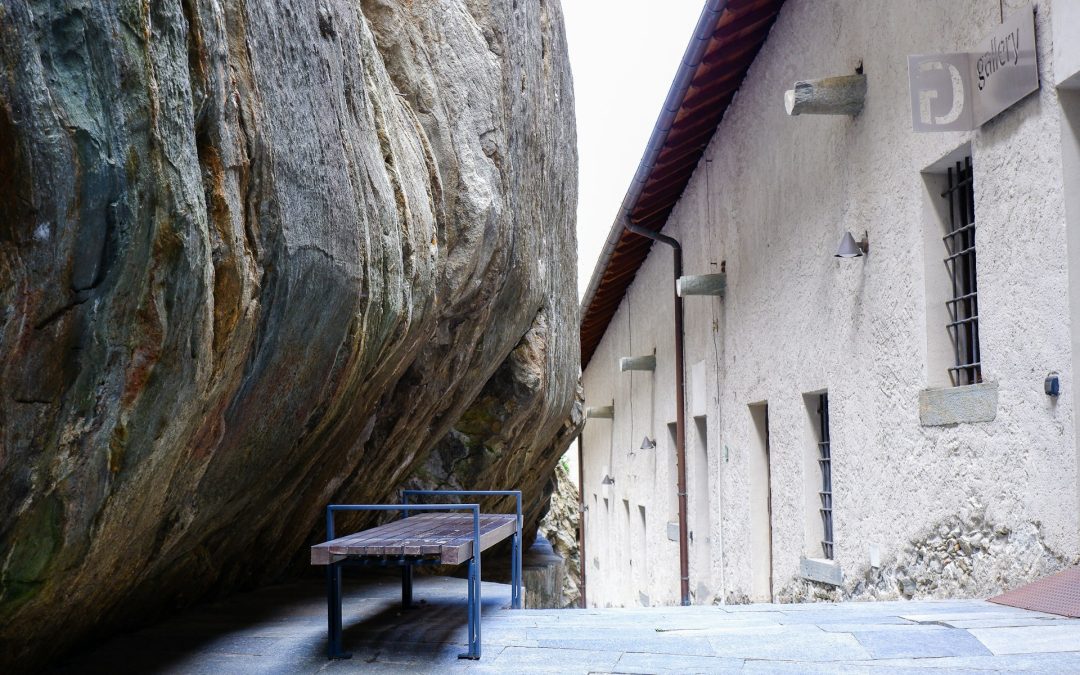
The Rock and the Hard Place
I only found the “language” surrounding CPTSD very late in my life. Learning the reason for my decades of dysfunction and brokenness was my fiftieth birthday present from the universe–a genuine revelation. And long overdue.
Like so many people who finally “discover” what is wrong with them, I embarked on a program to “fix” myself. I was determined to overcome the earlier portion of life that had hampered and shaped me. For the last near decade, I struggled to find help that was qualified, knowledgeable, affordable, reachable, and available. It’s a set of problems that most folks with CPTSD (at least here in the U.S.) commonly have to fight their way through.
“Maybe now,” I think, “maybe now I’ll have time to finally heal.”
And then I wonder, is it worth it?
I suspect some readers will give that sentence the side-eye.
It sounds kind of unintuitive to my mind, too. But here is the thinking behind the idea…
I’ve written before about the crushing sense of lost time that overshadows me. As you might guess, as I’ve gotten older, that sense of the end is nigh is only looming larger in my thoughts. I really don’t have time to waste.
So, am I calling the attempt to “heal” from CPTSD a waste? No, I’m not (although, yes, I might be, a little). And there stands a spectacular example of the near-terminal ambivalence that can accompany folks sporting this lovely set of letters. Let me try to explain. It goes like this:
Healing takes time. That’s a given. There is no pill, no magic word, no ritual that can reshape me into a whole and functional human in an instant (pity that). So healing takes time and work. Don’t forget the work!
It also takes money and access to resources, both of which are in short supply in my life at the moment.
Let’s limit the scope of this question to just one aspect: time. I have limited time on this rock–that’s also a given. Modern medicine might extend my life, but I want functional years. And I want them now, while I can still function.
So instead of growing, I became small. I learned to do without. I learned to stop wanting. Then I stopped dreaming. I remember in high school frustrating a teacher to no end because I couldn’t answer the question, “Where do I want to be in ten years?” I had no way to even frame the question in my mind. Answering was impossible.
Fifty years on, I finally have an answer. I want to write. I want to tell stories and be remembered for them.
Finally, after treading water for decades and floundering in some pretty heavy seas for nearly another decade, I have a direction.
And I have no time.
That’s the part that feels cruelest.
There is, associated with CPTSD, a form of pain in knowing that you aren’t living. And, once you discover the reason behind the problem, that ushers in a new challenge of doing the work to birth yourself, years later. And finally, when you know, or at least have a pretty good inkling of who you are, you find that you have no time to become that person.
Obstacles that folks faced with support (and while they had youth on their side and a “the future ahead of them”) I am facing now, well over half-way through my expected years.
So, here’s the reality I’m wrestling with: I can function to an extent day to day. Pursuing healing, the messy de- and then reconstruction would take time and resources I don’t have. What I do have is a direction. After flailing for over fifty years, I have a direction. And, I have limited time.
Photo Credit: Unsplash
Guest Post Disclaimer: This guest post is for educational and informational purposes only. Nothing shared here, across CPTSDfoundation.org, any CPTSD Foundation website, our associated communities, or our Social Media accounts, is intended to substitute for or supersede the professional advice and direction of your medical or mental health providers. The thoughts and opinions expressed are those of the guest author and do not necessarily reflect the views of the CPTSD Foundation. For further details, please review the following: Terms of Service, Privacy Policy and Full Disclaimer
- About the Author
- Latest Posts

Currently I’m trying to find a publisher for novel 1. Writing. Writing. Editing. Editing.
And trying to tame the feral kittens that overrun the tiny town I call home.
Hi Mari. I always love it when I see you’ve published another paper. Sincerely, what a writer you are. I’ll be turning 70 in a few short months. Unfortunately, I relate to all aspects of what you speak of here and have spoken in the past. Ugh. You be true.
Thanks for taking the direction of your essay’s topic. Sometimes it is hard for me to say the truth out loud.
Jesse
Hi Jesse, Thank you for reading. :::Hugs::: respectfully offered.