
Shattered Reflections: How Truth Demolishes Family Illusions
Summer is coming, and the county fair will be a highlight as always. As a child, I enjoyed the Ferris wheel, the smell of kettle corn, and cinnamon buns. The Fun Zone delivered excitement with barkers calling us to games rigged just enough to keep us hooked – and paying – as well as roller coaster-type rides.
But my favorite attraction was the house of mirrors.
Once inside, I was immersed in distorted angles and false illusions. Some reflections multiplied me into infinity, while others reflected back a fractured face. We all laughed inside the maze because the distortion -the mirage- provided entertainment.
The temporary illusions ended once I stepped out through the exit door and into daylight. Proportions returned to normalcy.
When Distortion Becomes Structure
Families shaped by abuse often function differently, much like the house of mirrors. Non-abusive families frequently have difficulty understanding this dysfunction.
Abusive families build their reality around survival, denial, and secrecy. We could surmise that the distorted reflections do not remain inside the house of mirrors. Yet many times, those clinging to the lies refuse to leave the fun house and step through the exit door into the sunlight.
The fun house becomes the architecture of daily life. Roles form around that structure. The narcissist, the scapegoat, the golden child, the enabler, the invisible child, the flying monkeys, the hero, the grey zone, or the truth-teller. Over time, some family members recognize the distortion and leave. Others never gain any insight into the maze of lies.
The system depends on the mirrors remaining intact.
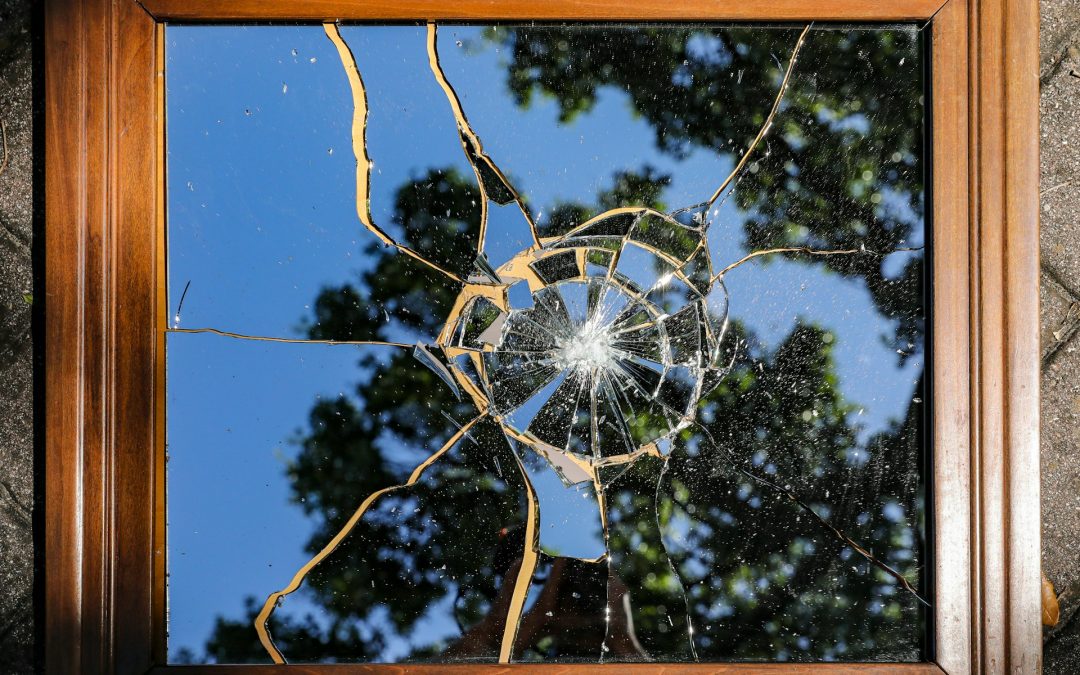
That is why naming abuse inside a family system rarely breaks only one relationship. The revelation acts more like a structural demolition. The entire building trembles prior to collapse. People who seemed grounded suddenly cling to distortions that once comforted them. Some retreat deeper into the maze. Some desperately try to reposition the mirrors so the old reflections still work. Others stand frozen, unable to reconcile the person they loved with the reality now standing in front of them. Those who remain stand amidst the shards of shattered glass.
Some will walk out into daylight, even though it costs them nearly everything.
Disrupting the Family Illusion
When I spoke publicly about my maternal grandfather being a child molester and that I had been a victim, I did not fully understand that I was doing more than telling the truth. I disrupted an entire system of orientation, or I would argue, disorientation. Family members who had spent decades accepting distorted images suddenly had to make choices-the comfort of the familiar maze or the disorienting clarity of sunlight.
Some relatives supported me immediately and without hesitation. Others hovered in painful gray areas: We believe you, but we also want to support the family. At first, I struggled to understand how both statements could coexist. Now I think trauma often teaches people to confuse harmony with safety. The preservation of the structure can begin to feel more urgent than the protection of the people inside it.
Some people viciously attacked me. And they still do. Mostly, these are family members who married into the family after the first accusations had long been smothered.
My mother could never fully leave the house of mirrors..
She and I had many conversations over many decades surrounding her father. While she went to her grave denying he committed child sexual abuse, those conversations gave me enough information to decide that she had also been a victim. However, she had learned that survival depended on silence, minimization, and denial. Survival depended on viciously attacking any truth teller, which is what she did to her sister and me.
Those distortions became so woven into her understanding of reality that removing them may have felt like psychological annihilation. To acknowledge the truth would have required her to confront not only what had been done to her, but also her failure to protect her daughter despite knowing what her father was capable of doing.
That is the unbearable weight hidden inside many family systems shaped by abuse: pain welds itself to grief, which welds itself to guilt and identity. The resulting amalgamation presents as a unified whole.
By the end of her life, my mother had surrounded herself primarily with the few people who could still remain inside her version of reality. In her final instructions, she requested that I not be informed of her death or invited to her funeral. The same exclusion extended to relatives who had supported me when I spoke publicly about the abuse. Even in death, the family remained divided along the fault lines opened by truth.
Stepping into the Light
For a long time, I experienced that division as proof of destruction. Now I understand it differently.
The truth did not shatter a healthy structure. The structure was already fractured beneath the surface. The mirrors merely concealed it.
And perhaps that is the cruelest part about systems built around secrecy: when the mirrors finally break, people often blame the person who spoke truth rather than the violence that made the distortions necessary in the first place.
Still, I no longer believe healing happens inside the maze.
Healing begins the moment we stop using distorted reflections to tell us who we are.
Photo Credit: Unsplash
Guest Post Disclaimer: This guest post is for educational and informational purposes only. Nothing shared here, across CPTSDfoundation.org, any CPTSD Foundation website, our associated communities, or our Social Media accounts, is intended to substitute for or supersede the professional advice and direction of your medical or mental health providers. The thoughts and opinions expressed are those of the guest author and do not necessarily reflect the views of the CPTSD Foundation. For further details, please review the following: Terms of Service, Privacy Policy and Full Disclaimer
- About the Author
- Latest Posts
Wendy Hoke writes about complex trauma, dysfunctional family systems, boundaries, faith, and recovery. Her essays combine personal experience with thoughtful exploration of the psychological, relational, and spiritual questions that often follow childhood adversity.
She is the author of The Bishop’s Cross: A Journey to the Truth and co-author of The Church of Gomorrah: When Sexual Abusers Remain in the Church. She lives in San Diego with her two sons and continues to write memoirs, essays, and nonfiction.