
Whose Grave Was It Anyways?

My father died on June 6, 1998. My mother died on June 8, 2025, at the age of 89, 27 years after her husband almost to the day.
On the day my father passed away, my mother, Gretchen, began digging a grave. Not literally, but metaphorically. For 27 years, she tried to symbolically murder me, a public filicide in her systematic, intentional effort to bury the truth.
I’ve pondered my choice of words carefully. Murder, filicide. These are intense characterizations. I’m sticking with them. By the end of this article, I believe you will understand why.
Gretchen’s father, my maternal grandfather, was a child molester who preyed on little girls in the family. When my mother’s sister made accusations against him, the family symbolically buried her using isolation, smear campaigns, and cutting her off from the family. I was in my teens at the time and already a victim.
The First Shovelfuls of Dirt
Gretchen possessed a knack for altering the truth. When my father was alive, he acted as a restraint for her fantastical tales. In his absence, she became reckless and extravagant in her lies, which were increasingly detached from reality.
She told her tales with utter consistency and persistence. Her narratives became less like ordinary lies and more like an alternate reality system that demanded participation from those around her. She immediately spoke over anyone who tried to present an alternate view.
She dug the grave slowly. One accusation at a time. One smear at a time. One triangulated conversation at a time. Every lie required another shovel of dirt.
For decades I remained silent. Many survivors do. Silence required no fight, just acceptance of isolation.
To speak against the narrative machine required waging war, going into battle, and grappling with those lies. It required sparring with extended family systems and social circles. I never held hope that eventually reasonable people would believe me. I already had the example of what my family did to my aunt.
I did try to address the issue of her father with her for decades, although I did this obliquely, timidly.
Each time I tried to do this, her reasons for destroying my credibility increased. Her need to write me off and cut me out of the family, her need for a symbolic death increased.
When a Birth Announcement Becomes a “Spiteful Letter”
One of the moments that finally shattered my silence involved the birth of my son.
I had gone “no contact” with Gretchen many years prior to my marriage. I told my husband he would never know her because she and I had such a poor relationship.
During that time, I discovered that Gretchen was “lurking” on my blogs. Our original wedding plans involved going to Nepal for the nuptials. However, we changed to a small ceremony in San Diego.
I became pregnant, yet I announced the change in wedding plans and the pregnancy by email only to trusted family members. Gretchen repeated our initial plans to everyone as if she still had a good relationship with me. So she knew nothing of the changes.
Finally, a family member informed my mother that she had another grandchild on the way. I suspect that was quite humiliating for her to have her scheming so exposed. Still, I sent her his birth announcement.
In May 2010, shortly after my son was born, my mother sent an email claiming she had visited a psychotherapist because she was distressed by a “spiteful letter” from me. She claimed outright that the therapist had diagnosed me with Borderline Personality Disorder, which would be highly unethical for a therapist to do. In other words, it was a lie. She also stated the therapist advised her to “protect herself” from me.
That email got forwarded around and eventually landed in my inbox.
The only thing I sent to her was my son’s birth announcement.
That was it.
A photograph and announcement welcoming her grandson into the world became transformed into evidence of pathology and aggression.
At the time, I struggled to fully comprehend the psychological machinery at work. Her narrative painted me as a woman who was unstable, dangerous, and disordered—the daughter who deserved burial rather than relationship.
And it served as an answer when people asked her, “why weren’t you invited to the wedding, and why don’t you know your grandson?”
The Grave Deepens
As the years passed, the consequences of her lies became increasingly destructive.
My husband became quite ill and eventually developed severe psychotic symptoms, including paranoia and delusions. During this period, my mother sided not with observable reality, medical intervention, or stability, but with the narrative she had spent decades constructing about me.
She reassured a mentally deteriorating man that nothing was wrong with him. She repeated her lies about BPD and an “official diagnosis.”
She reinforced his paranoia while he spread her increasingly bizarre accusations about me to therapists, churches, schools, and family court systems. Even after psychiatric professionals documented psychosis, she continued to spread her lies that I was the problem.
Worst of all, she put her own grandson’s safety at risk by telling my ill husband that I was planning “to kidnap” our son and move away. After that, my son came home from visits with his father saying: “Mom, if dad takes me somewhere and never brings me back, as long as I’m having fun, it’s not kidnapping. Dad said so.”
Out of anger, I texted her in 2015 telling her of my decision to go public regarding the sexual abuse. As a result, she doubled down on the efforts to metaphorically destroy me.
At one point, she even reinvented herself as the ‘Director of a Psychiatric Hospital” for a dual purpose. She claimed that my husband was not psychotic, and she had worked around people in psychotic episodes long enough to spot it. And, she used this tale to reinforce her claim that I was mentally ill.
In reality, she had once been an inpatient at a psychiatric ward while I was in high school. She was never an employee…not even a janitor.
These were all frantic efforts to destroy my credibility. If I spoke the truth, then it was no longer Gretchen’s word against her sister’s. It became 2 against 1.
But abusive family systems organize not to promote truth, but in order to prevent psychological annihilation.
Witnesses to the Burial
Those who smear the truth teller in a family need the smears to flood out from private family discussions into the public realm. The person driven by secrecy recruits unwitting allies. Some become active participants. Others remain in painful gray areas—recognizing pieces of the truth while still trying to preserve family equilibrium.
And occasionally, an outsider sees the entire dynamic with startling clarity.
A dear friend of mine, Lola, once sent my mother a lengthy email after the birth of my son. Lola had known me for years. We had played competitive tennis together, traveled together, and laughed together. She had watched my life directly rather than through distorted family narratives.
Her email was warm, hopeful, relational. She praised my parenting, spoke lovingly about my son, and gently encouraged reconciliation between mother and daughter. She wrote something that has remained with me ever since: no matter how old her own adult children became, she believed it remained her responsibility as a parent to preserve connection at all cost.
My mother never responded to Lola. That hurt Lola immensely.
Looking back, the silence itself became symbolic. Lola represented something dangerous to the grave my mother was digging: an emotionally healthy witness. Someone standing outside the family system who could still recognize humanity where the burial narrative required condemnation.
If I was loved, stable, capable, and surrounded by authentic relationships, then the grave no longer made sense.
The Psychology of Burial
I no longer believe my mother’s lies were primarily about hatred.
They were about intense fear, shame, and guilt.
After decades of pondering my conversations with Grethcen I believe, my mother was victimized herself as a child. The fragments she revealed over the decades gave me enough information to understand that much.
Acknowledging the truth would have required accepting shame and guilt. And it would have required an almost complete suspension of reality for those around her, like her husband. My parents were married in 1956. Her father was a pastor. Pastors didn’t do things like molestation. My mother would have been labeled mentally ill as her sister was, and she would have been considered “damaged goods.”
That is an unbearable confrontation for many trauma survivors trapped inside abusive family defenses.
In this way, this abuse functions like psychological entombment. The victim who chooses secrecy clings to distorted narratives because the collapse of those distortions feels synonymous with psychic extinction.
The Final Exile
By the end of her life, my mother had largely isolated herself inside the reality she had constructed. She surrounded herself primarily with those willing to participate in it.
In her final instructions, she requested that I not be informed of her death or invited to her funeral. The same exclusion extended to relatives who had supported me publicly after I spoke about the abuse within our family.
Even after her death, her attempts to bury me and the truth continued. But now I know that the grave she dug was never mine.
It was hers.
Every lie deepened her isolation. Every distortion narrowed the possibility of authentic connection. Every attempt to bury truth required further separation from reality, from family, and ultimately from herself.
In trying to symbolically execute her daughter, she slowly interred her own life.
Climbing Out of the Grave
For survivors of abusive family systems, one of the hardest truths to accept is this: you may never receive acknowledgment from the people most invested in denying reality.
The apology will never come.
The reconciliation will never come.
The family may continue protecting the myth long after the damage is visible to everyone standing outside it. And they will likely try to send that false narrative down to future generations to preserve legacy.
At some point, survivors face a choice. We can continue organizing our identity around distorted narratives imposed upon us, or we can begin the painful work of climbing out of a grave not dug for us.
And perhaps that is the final tragedy surrounding abusive systems built on secrecy and lies: the person most committed to burying others rarely gains insight into their own self-imposed, metaphorical burial.
My mother’s funeral was held on June 27, 2025. Three days later on June 30, her sister, the one who had first made public accusations about her father and CSA, passed away.
I am the only living survivor holding the truth.
I will continue to hold and tell that truth until the day I die.
Photo Credit: Unsplash
Guest Post Disclaimer: This guest post is for educational and informational purposes only. Nothing shared here, across CPTSDfoundation.org, any CPTSD Foundation website, our associated communities, or our Social Media accounts, is intended to substitute for or supersede the professional advice and direction of your medical or mental health providers. The thoughts and opinions expressed are those of the guest author and do not necessarily reflect the views of the CPTSD Foundation. For further details, please review the following: Terms of Service, Privacy Policy and Full Disclaimer
- About the Author
- Latest Posts
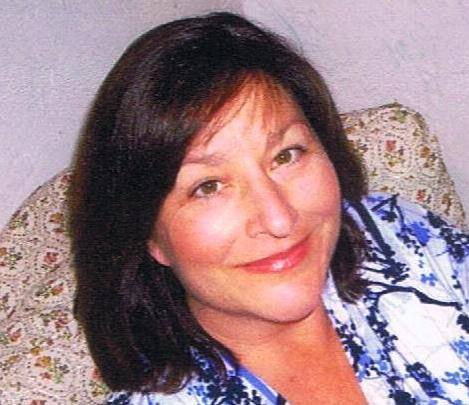
Wendy Hoke writes about complex trauma, dysfunctional family systems, boundaries, faith, and recovery. Her essays combine personal experience with thoughtful exploration of the psychological, relational, and spiritual questions that often follow childhood adversity.
She is the author of The Bishop’s Cross: A Journey to the Truth and co-author of The Church of Gomorrah: When Sexual Abusers Remain in the Church. She lives in San Diego with her two sons and continues to write memoirs, essays, and nonfiction.
Firstly I am so sorry that you have endured this. Learning why a mother and extended family have acted in the ways they did, does not lessen the enormous psychological struggle you’ve put up to survive. Thank you, too, for being brave enough to write about it. Reading your words has enabled me to understand a similar dynamic in my own family. My older sister whom I love very much, and who I know cares about me, is unable to admit to herself, or others, that our father was a cruel, selfish abuser. Because I have sought therapeutic help over many years to assist me to understand and heal from the abuse, my dear sister has carefully kept me out of her life. She visits me and we enjoy light, meaningless conversation, but looking back, I can see that she has been assiduous in keeping her life and mine very separate. I understand, on reading your words, why she has done this. My willingness to speak about what our father was like, is frightening to her. Exposing him feels as though she is being exposed, carrying the shame and guilt that is his alone.
Thank you so much for sharing this. Although I don’t know you, reading your words brought something to mind that helped me during some of my own darkest hours of accepting the truth about my grandfather and mother. I read a book called Miss America by Day by Marilyn Van Derbur (Miss America 1958). Later in life, she went public about her father being an incestuous child molester. She was the oldest of four daughters. When she spoke out, only the youngest sister publicly confirmed her account; the two middle sisters refused to comment. My recollection is that those two middle sisters essentially stopped communicating with Ms. Van Derbur, although I read the book 24 years ago. My recollection could be faulty. You may find some additional insight or comfort in her story. It helped me understand how differently siblings can respond when the truth threatens the family’s carefully protected narrative.
Thanks for sharing your story. My life is so intertwined with family secrets the first of which is that my oldest sister had an ongoing sexual relationship with her father, a pastor and teacher. When she moved out he came after me and I shoved him away. He looked back at me and stated that I would pay for rejecting his advances. The crux of the myriad of lies finally was revealed by a cousin who had his DNA taken. Turns out that the person I had believed was my uncle was actually my biological father.
The sheer damage done to my reputation and the fact that the would be molestor, sold me to an unsuitable boy who raped me and attempted to murder me several times. Life was utter hell with him. My mom went into overdrive to slander me and he joined in. My children don’t speak to me. That’s not okay. My CPTSD is worse than ever. I’m hyper vigilante and I have moved to get away from the drama. I need help. Sometimes I feel completely alone and lost and since I was never allowed to have a childhood my response is poor.
Thank you for reading and for having the courage to share the immense weight of what you have survived. Please know that you are not alone, and the pain and disorientation you are feeling right now are completely valid responses to such systemic harm. The CPTSD Foundation offers many resources for situations like this. Please take care of yourself.