Trauma-Informed Blog
New content weekly! Survivor Stories, Research Articles, Poetry, and more written by clinicians, coaches, survivors, and mental health professionals.
Remember...
Important Information About Our Content
Everything you find on this blog, CPTSDfoundation.org, or within our wider digital communities is created for educational and informational use only. No content shared here—whether by our staff or guest contributors—is intended to supersede or replace the clinical relationship you have with your medical or mental health providers. We are here to support your journey with information, but we do not provide medical advice or treatment. Guest opinions are their own and may not represent the views of CPTSD Foundation. Privacy Policy and Full Site Disclaimer, Terms of Service.
Transforming Self-Harm into Self-Care
In bringing closure to self-harming expression, the process may inadvertently place inordinate emphasis on the symptoms. It happens when valuing the disorder overrides the underlying cause and...
Co-Occurring Post-Traumatic Stress Disorder and Complex Post-Traumatic Stress Disorder
In previous posts in this series, we have discussed post-traumatic stress disorder (PTSD) as though it occurs alone. Unfortunately, thinking that PTSD acts alone would be incorrect. Many other...
CPTSD – the Thief of Time
There is no word to describe the feeling. I tried time after time to define this knot of emotions. It is a task that is beyond my ability. I cannot find a singular word that describes the...
Obsessive-Compulsive Disorder: The Line between Routine and Ruin
Your mother liked her figurines smallest to largest. Your friend chews food exactly 25 times before swallowing. Come to think of it, you do like your books stacked a certain way… We’ve all heard...
Post-Traumatic Stress Disorder and the Brain
Post-traumatic stress disorder is a life-altering condition that, according to the National Center for PTSD, affects approximately 8 out of every 100 people at some point in their lives. This...
Flower Power
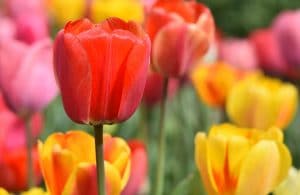
Today, I bought flowers for myself. They are five perfect little floppy tulips with careless streaks of red, yellow, and orange on a white background. Every time I look at them, I smile because I...

1,000 Easy Steps to Curing CPTSD
As anyone in recovery, books are a go-to source of help and healing. When I learned about CPTSD and my poster child status, I headed for Dr. Google to find some clarity and to do some home study....
A Partner’s Guide For Abuse And Trauma Survivors
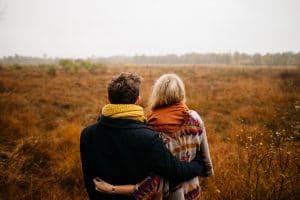
If you find that you have fallen in love with an abuse or trauma survivor, understand right up front that healing is possible. Sometimes by understanding what your partner has been through can help you to better support them as they work through their tangled up and confused inner world. There is not anything inherently wrong with your lover that needs fixing, they are just deeply wounded. Many times all they need is a safe place to land, with a pair of loving arms to hold them, when something happens and they get upset.
Post-Traumatic Stress Disorder Awareness
Post-traumatic stress disorder (PTSD) has become well-known among the public today. However, many do not understand that anyone can form PTSD and ignore the symptoms putting themselves at risk...

How Family of Origin Work Can Impact Future Generations
How family of origin work can impact future generations: A simplified understanding of epigenetics and multigenerational healing
Seek Help and You Are Half Way There!
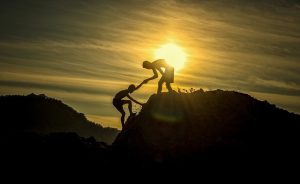
My husband found me sobbing in a corner with a medication strip in my hand. It was a normal day until... There was some minor setback at the workplace, and my anxiety started controlling me. I...
We always have choices.
We always have choices, sometimes the choice to make a change or take on a quest or journey can be the scariest decision of all. But it is when we leave behind what is familiar that we make space to see with perspective where we were. While the journey itself can take on a life of its own the most important questions we always have to come back to, i.e. "What do I need?", "How do I feel?", "What is right for me?" contain answers that only lie within ourselves. In answering these, we take responsibility for our power and in doing so empower ourselves and heal.
Go within don't go without.
"Perhaps everything that frightens us is, in its deepest essence, something helpless that wants our love.”
~Rilke
Autobiographical Chronicles: https://vocal.media/authors/jeff-spiteri
What is Complex Post-Traumatic Stress Disorder?
“Complex PTSD comes in response to chronic traumatization over the course of months or, more often, years. This can include emotional, physical, and/or sexual abuses, domestic violence, living in a war zone, being held captive, human trafficking, and other organized rings of abuse, and more. While there are exceptional circumstances where adults develop C-PTSD, it is most often seen in those whose trauma occurred in childhood”.


