
The Child Who Could Never Do Enough: Understanding the Lasting Effects of Chronic Parental Criticism, Part 1
The invisible wound
When people think about childhood trauma, they might imagine bruises from physical abuse, scars on skin that remain red and thick, stories of children left alone to fend for themselves without food or comfort, or various forms of sexual assault.
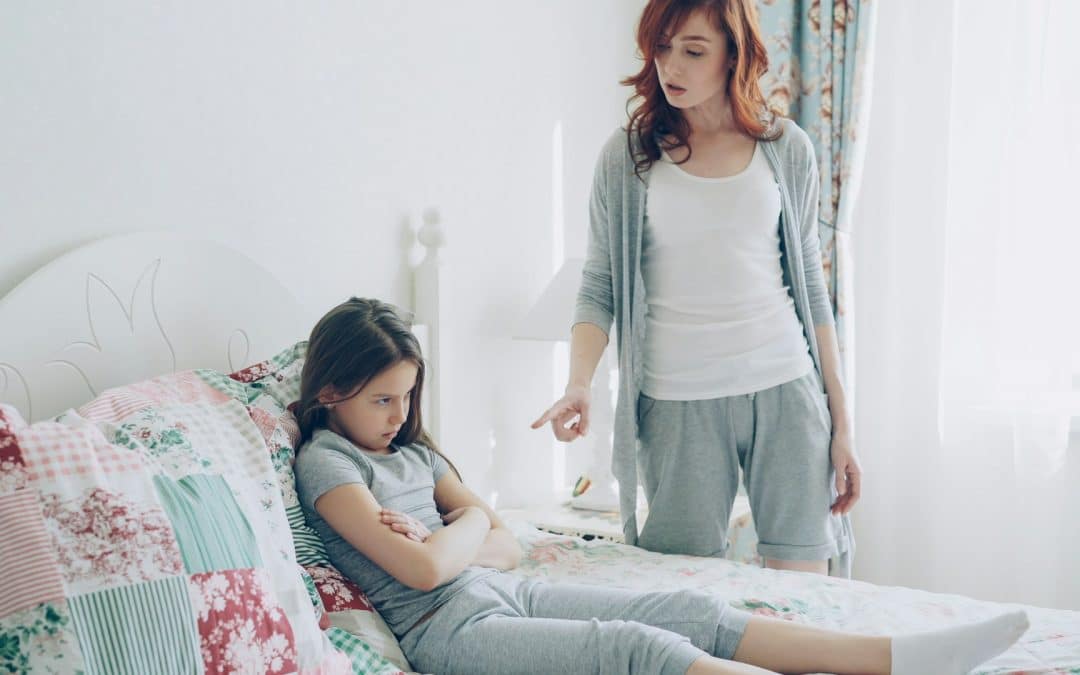
Many children grow up in homes where their basic needs are met, and they aren’t beaten or sexually assaulted, but they grow up with chronic belittling, nit-picking, and criticism. For those parents, nothing is ever quite good enough, and the child is reminded of it regularly. When the young one tries to achieve or perform to please the parent, it’s followed by a parental judgment or correction. The parent reminds the child of what they missed, lack, or didn’t do right.
As a child, I learned at a very young age that I was not measuring up to my mother’s expectations. When I was younger, it started out with my physical appearance. My mother was born a small person, with small bone structure, which kept her petite all her life. While I was short, I had a very different structure. It seemed to me like my creator was confused, thinking I needed to be built like a linebacker as a 5-foot 4-inch female.
That difference displeased my mother, and I could not measure up to her physical expectations of me. For her, grades and academic performance were irrelevant compared to how I looked or behaved, because what other people thought meant more than my own achievements outside of having a “perfect” body.
As I aged, I was reminded even more regularly that my body just did not measure up, and her expectations (outside of academics) were that I took care of all household chores. Even when I was working two jobs and going to school, while earning good grades, if the house wasn’t spic and span, I was punished. My brother had no expectations laid upon him. I consistently disappointed my mother, and nothing I could do could earn her praise, except the time that I lost 30 pounds. Her praise then was endless, albeit temporary, as the weight came back.
Over time, the child learns a valuable but painful lesson: “I am only as valuable as my performance,” or “I am only valuable if I meet the expectations my parents have of me.” For many adults living with complex trauma, the wound isn’t what the parent did to them; it was what the parent repeatedly said.
What does an overly critical parent look like?
A healthy parent teaches their children. They use constructive criticism and redirection if the child needs it, and do so with the goal of helping and nurturing the child’s growth. On the contrary, overly critical parents do not teach; they evaluate. They judge.
Common patterns look like: constant fault-finding, unrealistically high expectations, rare or non-existent praise or acknowledgment, comparing a child to their siblings, dismissing emotions or shutting down the child’s emotions, labeling their children (lazy, dramatic, difficult, ungrateful), and focusing on mistakes and overlooking successes and efforts to please the parent. The message is explicit or implied: “You could have done better.”
Why chronic criticism is so harmful
Children develop their sense of self through their relationship with their caregivers. When their caregivers repeatedly communicate disappointment, rejection, or conditional acceptance, children often internalize those messages as truths about themselves.
Research suggests that persistent parental criticism can contribute to negative self-image, depression, anxiety, and difficulty with emotional regulation (Spinazzola et al., 2014). Harsh and rejecting parental behaviors are also linked to increased psychological distress and poorer mental health outcomes (Cruz, et al., 2022). Children aren’t simply hearing criticism–they are building their identities around it.
The adult child’s hidden beliefs
Many adults raised by highly critical parents continue carrying harmful, unconscious beliefs like: I must earn love; my worth depends on what I do or accomplish; mistakes are dangerous; other people’s needs matter more than mine; I am responsible for maintaining my family’s peace; if I just try harder, I will finally be enough.
When criticism becomes trauma
Trauma is shaped by what happened to someone repeatedly. Developmental trauma research suggests that chronic interpersonal stressors in caregiving relationships can alter the way people handle their emotions, their self-concept, attachment patterns, and social functioning. Psychological maltreatment, which is what chronic criticism is, has been associated with depression, anxiety, shame, dissociation and relationship difficulties (Lippard & Nemeroff, 2020).
Chronic parental criticism, emotional abuse, and harsh parenting are also associated with increased risk for emotional distress, adverse childhood experiences, and substance use problems. For some people who grow up in this environment, alcohol or drugs become a way to cope with the pain of feeling perpetually inadequate, rejected, or unseen (Felitti et al., 1998).
Sometimes trauma looks less like a single event and more like thousands of moments that communicate to the child, “who you are is not enough.”
Why adult children keep trying to earn approval and what happens later
One of the most painful realities for children who grow up with chronic criticism is that the pursuit of parental approval carries long into adulthood. These children grow up to be high achievers, caregivers, helpers, people-pleasers, and perfectionists. They hope that enough success, sacrifice, and service will finally produce the validation they long for, yet many discover that the goalposts continue to move.
Adults who are raised by chronically critical parents might find themselves in relationships with people who do the same thing to them, because it feels like home. It’s familiar. They go from one unhealthy environment into another and maintaining a healthy relationship is difficult when they choose unhealthy partners (Vaillancourt-Morel et al., 2024).
The adult child might struggle with perfectionism, fear of failure, self-doubt, difficulty setting boundaries (especially with the parents), anxiety, depression, sensitivity to criticism (overreacting to it), and relationship problems (Kuo et al., 2011).
They may keep trying to prove their worth
One of the most common patterns is over-functioning that looks like becoming: the helper, the fixer, the provider, and/or the caretaker. This happens not because their partner demands it, but because that’s what the adult child learned: contribution is how they secure connection. However, their healthy partner might say, “you do not have to earn your place here,” but the adult child doesn’t know how not to do that.
The adult child might have difficulty needing anything from their partner because receiving feels vulnerable. If their healthy partner offers comfort, support, or help, they might feel guilty, indebted, weak, or exposed. The adult child might react strongly, in a negative way, becoming defensive or even angry because they learned early that needing someone felt dangerous.
References
Cruz, D., Lichten, M., Berg, K., & George, P. (2022). Developmental trauma: Conceptual framework, associated risks and comorbidities, and evaluation and treatment. Frontiers in Psychiatry, 13, Article 800687. https://doi.org/10.3389/fpsyt.2022.800687
Felitti, Vincent J., Anda, Robert F., Nordenberg, D., Williamson, D. F., Spitz, A. M., Edwards, V., Koss, M. P., & Marks, J. S. (1998). Relationship of childhood abuse and household dysfunction to many of the leading causes of death in adults: The Adverse Childhood Experiences (ACE) Study. American Journal of Preventive Medicine, 14(4), 245–258. https://doi.org/10.1016/S0749-3797(98)00017-8
Kuo, J. R., Goldin, P. R., Werner, K., Heimberg, R. G., & Gross, J. J. (2011). Childhood trauma and current psychological functioning in adults with social anxiety disorder. Journal of anxiety disorders, 25(4), 467–473. https://doi.org/10.1016/j.janxdis.2010.11.011
Lippard, E. T. C., & Nemeroff, C. B. (2020). The Devastating Clinical Consequences of Child Abuse and Neglect: Increased Disease Vulnerability and Poor Treatment Response in Mood Disorders. The American journal of psychiatry, 177(1), 20–36. https://doi.org/10.1176/appi.ajp.2019.19010020
Vaillancourt-Morel, M.-P., Godbout, N., Bigras, N., Sabourin, S., & Bergeron, S. (2024). Partner effects of childhood maltreatment: A systematic review and meta-analysis. Trauma, Violence, & Abuse, 25(2), 1323–1343. https://doi.org/10.1177/15248380231173427
Photo Credit: Unsplash
Guest Post Disclaimer: This guest post is for educational and informational purposes only. Nothing shared here, across CPTSDfoundation.org, any CPTSD Foundation website, our associated communities, or our Social Media accounts, is intended to substitute for or supersede the professional advice and direction of your medical or mental health providers. The thoughts and opinions expressed are those of the guest author and do not necessarily reflect the views of the CPTSD Foundation. For further details, please review the following: Terms of Service, Privacy Policy and Full Disclaimer
- About the Author
- Latest Posts

Angela Solic, Ph.D., is an educator, scholar, and advocate whose career spans more than twenty‑five years. She began teaching college‑level reading, writing, and communication in 1998 while earning her master’s degree in English, and later completed her Ph.D. in Education in 2010, a testament to her determination to thrive after surviving extensive childhood trauma. In 2007, Angela transitioned from teaching students to teaching college faculty members. Over the course of her career, she has trained thousands of faculty members worldwide, specializing in instructional design, learning innovation, and evidence‑based teaching practices. In 2018 she created and leads the Center for Teaching Excellence and Innovation at Rush University in Chicago, a hub for educator support, curriculum development, and pedagogical transformation.
Besides being dedicated to improving college teaching, Angela is determined to help advocate for complex childhood trauma, especially emotional abuse, through “The Still I Heal Project”, an Instagram‑based advocacy platform dedicated to educating parents, survivors of emotional abuse, and mental‑health professionals about trauma, resilience, and recovery. You can find out more about her project at stillihealproject.org.
Hello CPTSD Foundation,
Would you please consider putting an option to listen to this being read aloud? The author could read and send to you. Or you could. Or AI could.
I have trouble reading now. I have not read it to comment further on the topic itself. Thank you for considering my request.