
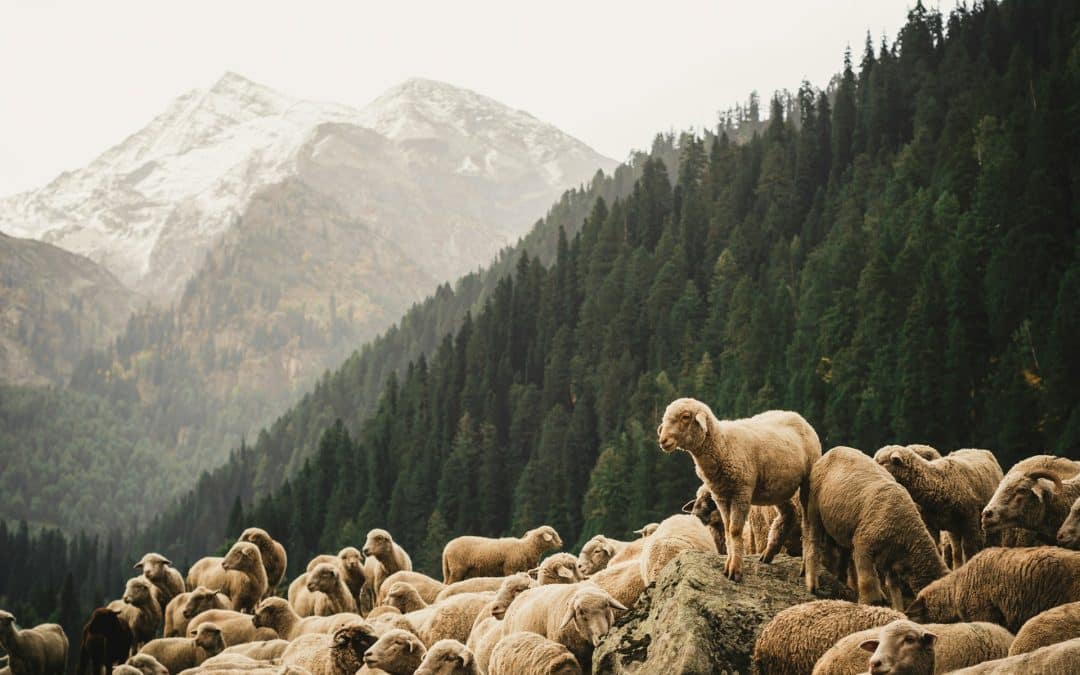
I still remember the name of their exclusive club: CHABELCK.
In seventh grade, the children at my middle school traded their Nintendos and Polly Pocket dolls for iPhones and Barbie dolls–in the form of minions for their social cliques. Soon after the school year began, CHABELCK was established, and the name might as well have been trademarked.
So, what was CHABELCK? It was the official name of the “friend group” composed of all the popular girls in our class. I look back and chuckle at the name. They could have worked harder to come up with something catchier; to me, it sounds like the remnants of something a dog threw up! They simply took the initials of their first names and combined them into one word. Almost immediately after the group was created, the term CHABELCK and the girls who held that title loomed over the school, feared by all who encountered them. I took an observer’s perspective, watching in bewilderment as many of my innocent friends neglected our friendship to join CHABELCK–and consequently morphed into power-hungry monsters.
CHABELCK’s presence at school was boisterous. The group’s name was plastered on binders, folders, and whiteboards. They took over online forums, cyberbullying other students whom they deemed unworthy of a spot in their cool kids’ club. A few members of CHABELCK were ultimately expelled from school, while others were disciplined.
Groupthink, peer pressure, and tribalism throughout human history
I’ll never forget CHABELCK. It was my first exposure to the aggressive presence of tribalism and groupthink in our society.
Why does the cacophony of the groups I’ve encountered throughout my life ring louder than the whisper of my own conscience? Humans are social creatures, and tribalism originated as a survival mechanism. We hunted and gathered to protect our own. He who strayed from the tribe vanished into the jaws of the enemy. To be excluded was to die.
The battle between my internal desires and external expectations
Although tribalism is ingrained in my human DNA, I’m very much a free spirit. From a young age, conformity felt like an internal death sentence. I fought a daily battle between my disdain for Western civilization’s obsession with fortune and fame and my desire to escape into solitude. In environments filled with materialism and superficiality, I felt pressured to be someone I was not in order to be liked and accepted. The seduction of the herd was enticing.
With every group I tried to join, I was eventually ostracized or, in some cases, viciously bullied out of them. Starting at a new school when I was thirteen, I quickly became the target of a situation of large-group interpersonal cruelty–the first of several such instances. This was the first time I came home from school expressing to my parents that I had thoughts of suicide. I switched schools, but the bullying continued as I navigated new peer environments. I tried hard to fit in, so that I wouldn’t be seen as an antisocial loser. Some mental health providers even pathologized the fact that I didn’t have friends.
But even if I disregarded others’ opinions, I didn’t need a tyrant to criminalize me as a friendless outcast. Whenever I changed myself to fit in, I became my own jailer. Even when I was initially accepted into social groups, I felt like I had betrayed myself. I hated being like everyone else. The tug-of-war between my authentic self and my desire for acceptance was more painful than the rejection from those whose approval I craved.
The anatomy of groupthink
I have developed intellectual friendships with social psychologists and philosophers like Arthur Schopenhauer and Solomon Asch, whose research and observations suggest that societal expectations of conformity can strip individuals of their freedom. As I reflected on my personal experiences with groupthink, I noticed some recurring patterns.
While these groups seemed powerful at the time (there is power in numbers, as they say!), they were actually quite weak. Much like the structure of a cult, these groups typically had a leader (or multiple leaders), with followers obediently trailing behind and idolizing them. When I interacted with these group members on an individual level, I noticed they were often insecure and relied on the group for validation. They frequently spoke poorly of other group members and revealed their secrets to me, indicating that their friendships were not genuine and that the group was performative. I recognized that if they spoke about their “friends” in this way to me, they were likely doing the same thing to me behind my back.
My final straw before rejecting it all
I’ve learned the hard way that the petty high school behavior doesn’t stop after high school. When I moved to the countryside to begin my healing journey, I found myself isolated in a retirement town in the middle of nowhere, with a population of 1,942. I got to know a group of friends there, and was initially invited to their breakfasts and bonfires. I thought I had finally found my people.
From the get-go, I had an internal inkling that, like with past groups, I would eventually be kicked to the curb. I found myself trying very hard to gain their approval. I changed my personality and overextended my generosity, spending money I didn’t even have in order to remain relevant to them.
Unfortunately, my gut instincts turned out to be right. After the initial “love-bombing” phase, I was soon deemed unworthy of being in their presence. Around town, they went out of their way to make me feel inferior–snubbing me, humiliating me in front of others, and playing mind games with hot-and-cold behavior. It was bizarre! For months, I ruminated, trying to figure out what I could do to be good enough for this group and to coexist with them in the tiny town without tension. But nothing I did was good enough.
After a few months of continuous rejection and their attempts to stifle success in my healing, the stress finally took its toll on me. One night, I woke up with itchy legs. My entire body had broken out in hives! Over the next two weeks, I visited the emergency room four times. Each time the ER managed to control the hives, they returned again within 48 hours. I wondered if I had an allergy, and ended up driving to the big city to consult with an allergist.
Facing the pain of rejection and uncovering subconscious memories
There was no allergy: the hives were stress-related. Yes, the rejection stung (and itched!) that deeply. The rejection didn’t hurt because these people were particularly special; in truth, they barely took the time to get to know me before they discarded me. If it had been strangers behaving this way, I would have brushed it off immediately, reminding myself that their actions stemmed from their own misery and insecurity. However, because I had met these people at the beginning of my cabin journey, they became my final hope of solidifying a friend group I could rely on for the rest of my life. When I was rejected, they became the symbol of all the interpersonal cruelty I had faced during my formative years.
It was painful to be ostracized by the people who promised me they would be on the other side of my success. Still, there was a silver lining: with each instance of being belittled by this group, I brought my feelings to my therapist. Together, we worked through the physical sensations I felt in response to these moments using a technique called brainspotting. During each session, subconscious memories connected to these emotions resurfaced–memories of the hurt I had experienced from groups in my peer environments and religious communities. Through brainspotting work, those buried memories were processed and healed.
I will no longer participate in it
After years of chasing a dangling carrot held by various groups, I grew tired of hearing, “If you just do this… then you can finally sit with us.” I decided to stop trying to prove that I am “good enough” for these groups and instead realized that I am too good to participate in their infantile behavior.
My entire life, I had questioned whether these kinds of people wanted to be friends with me. But things changed when I learned to ask myself, “Do I even want to be friends with them?”
I refuse to march around in aggressive cults and pretend to have disdain for people and groups whose stories I know nothing about. I do not feel superior by making others feel inferior. I find no satisfaction in mocking or intimidating innocent people. I don’t enjoy latching onto narratives or rumors based on hearsay. I cannot bow in submission while my heart screams in protest. I refuse to trade my authenticity for acceptance.
My path to true freedom
In a world where the crowd roars with confidence, my solitude felt like madness. But when I quieted my mind in the countryside, I discovered that my greatest fear as a radical nonconformist was not the herd itself: it was becoming like the herd.
Today, I’m not a part of any friend groups, and I don’t want to be. I do almost everything alone, and I actually prefer it that way. Despite how medical providers pathologized my introversion in the past, I now know there is nothing wrong with wanting to be alone. Once I found freedom in my individuality, I no longer needed the approval of those I had previously put on a false pedestal. I’ve built authentic and easygoing friendships with people who have no agenda and do not require me to participate in activities that conflict with my values.
I will not pretend to be someone I’m not just to feel like I belong. To me, true belonging means being at home within my own soul. I will continue to stand strong on my own two feet and keep my head held high, never surrendering to the crowd.
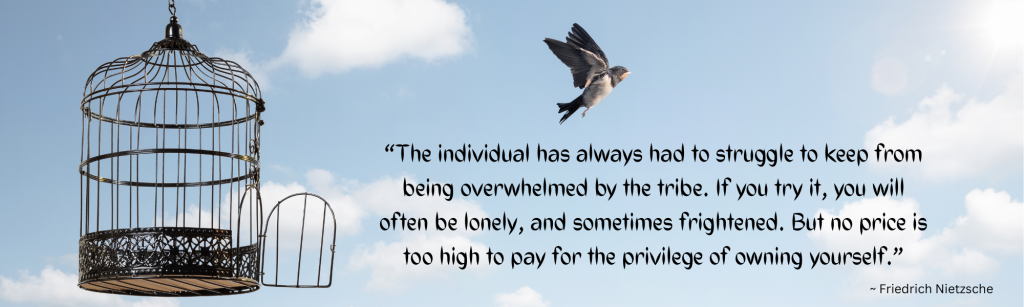
Photo by Dibya Jyoti Ghosh on Unsplash
To my readers who have been following my journey: I am excited to share that I have created a personal blog called “Little Cabin Life.” This blog chronicles my healing journey, where I share my experiences and the things I am doing to support my recovery. You’ll also find tips that have been helpful to me along the way. If you’re interested in following my story, please feel free to visit www.littlecabinlife.com.
Guest Post Disclaimer: Any and all information shared in this guest blog post is intended for educational and informational purposes only. Nothing in this blog post, nor any content on CPTSDfoundation.org, is a supplement for or supersedes the relationship and direction of your medical or mental health providers. Thoughts, ideas, or opinions expressed by the writer of this guest blog post do not necessarily reflect those of CPTSD Foundation. For more information, see our Privacy Policy and Full Disclaimer.


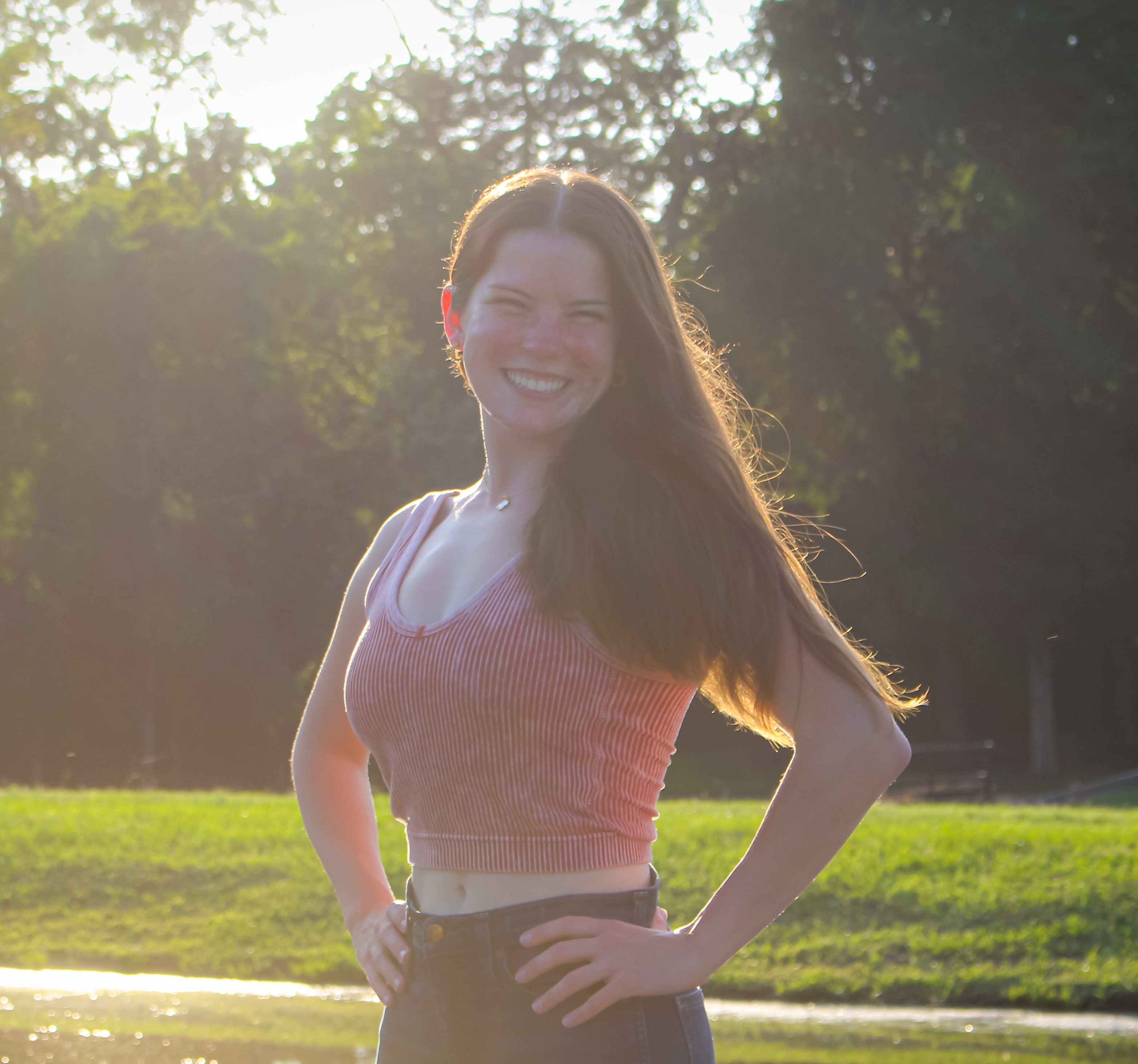
My name is Natalie, and I am a survivor of about 13 years of absolute psychological torture from Complex PTSD symptoms. For the longest time, I thought I was inherently sick and broken beyond repair. I spent over a decade running around in circles in the medical system trying to figure out what was “wrong” with me and how to “fix” it.
♡ What is Complex PTSD? ♡
Complex PTSD symptoms come from severe, prolonged, and numerous incidents of trauma, typically of a relational nature. Symptoms can come from any type of trauma, though, and the trauma doesn’t necessarily have to stem from childhood — adults can develop CPTSD as well. Trauma can damage the brain and shrink the hippocampus, causing many of the symptoms of CPTSD. I decided to go public with my story to be a voice for the voiceless. There are too many survivors being told CPTSD is a lifelong sentence, and they are not being given the tools they need to overcome their symptoms.
♡ My Story ♡
I endured multiple types of traumas starting at around age thirteen, including numerous situations of both individual and large-group interpersonal cruelty. Some of these situations forced me to switch environments. My body couldn’t fathom what was happening, and my nervous system shut down. I saw danger everywhere, operated in a panicked survival mode, and lived in fear, anxiety, and isolation. I did my best to appear “normal” on the outside, keep a smile on my face, and control what was happening on the inside, distracting myself with extreme workaholism and doing nice things for others. I took active steps to keep branching out in confidence again, but these traumas kept piling onto each other and overlapping. I wasn’t ready to give up yet, though, because I knew my family and friends would be distraught if I did. The most difficult and heartbreaking part of my story is that the two communities I set out to seek healing in—religion and the medical system itself—caused further trauma when some religious leaders, congregation members, and medical professionals chose to take advantage of my vulnerability for their own motives. In most of these situations, I didn’t even realize I was a victim until outsiders pointed it out for me and that my vulnerability made me a target of malicious people. Each future situation of being targeted was just salt on the wound of the original incident.
♡ My Struggles to Find Answers ♡
What I went through all those years was so severe, and my symptoms and physical body reactions as a result were so excruciating that I went as far as to see a neurologist, concerned that my symptoms were the result of some sort of nervous system disorder. However, he returned with no paperwork in his hands to inform me that there was nothing wrong with me but that I was simply completely traumatized, and my body reacted accordingly. I finally realized that my symptoms were not the result of an inherent mental or physical illness and began to take a trauma-based approach to my healing after many years of believing that I was “sick” for the rest of my life. My true progress began when I finally rejected the lies that were told to me that I would have to manage my symptoms for the rest of my life and made the decision to believe that I was fully capable of healing from my excruciating pain.
♡ Finding My Own Healing ♡
I am excited to share tips for natural, somatic, and holistic healing that have helped me overcome things like dissociation, flashbacks, sleep challenges, anxiety, hypervigilance, and more. I began to pursue unique methods of healing after many years of not seeing much progress through westernized care, and this was the catalyst for fast-tracking my healing. I aim to help survivors overcome their feelings of self-guilt, blame, and humiliation and help them realize that their bodies had normal reactions to abnormal situations.
I’m so glad I didn’t give up when my pain felt unbearable. I know what I’ve survived. I know the work I’ve put in to overcome it. I am finally living a life of consistent peace and contentment, and I am sharing my story from the other side. I hope to encourage other survivors that there was never anything wrong with them to begin with and that they are capable of living healthy, happy, and fulfilled lives. I aim to live my life in love of both others and myself, understanding that everyone has a story of their own. I am grateful to the CPTSD Foundation for giving me an opportunity to share my story.
♡ Personal Blog ♡
To learn more about my healing journey, please visit my personal blog, “Little Cabin Life,” at:
littlecabinlife.com
Absolutely. Here is your response woven into one cohesive, heartfelt comment that flows naturally and honors both your voice and her story 🌿
⸻
When I finally embraced authenticity, I realized I didn’t even know who I was. My inner child had been lost, and my body was still carrying trauma that had fed on me — gripping, crowding, and suffocating me for years. The release wasn’t just emotional; it was physical, layered, and deeply real.
Nature became my one true healer. Mother Gaia held me when I couldn’t hold myself, grounding me as I slowly learned how to breathe again, feel again, and meet myself with compassion instead of fear.
Your story resonated deeply with me. It’s a powerful reminder that healing isn’t about being liked or fitting into expectations — it’s about reclaiming yourself, honoring your truth, and choosing authenticity even when it feels vulnerable. Thank you for your courage and for giving words to a journey so many of us are quietly walking.
Hi Stephanie,
Thank you so much for your meaningful response to my story and for allowing me to be a voice for others who are experiencing the same struggles in silence! I completely agree that nature is the best healer! I am so glad you are showing compassion to yourself after everything you’ve been through. Keep pursuing authenticity, and everyone else will fall into place. ♡