
“Can’t You Take A Joke?” How Small Things Can Lead to Existential Humiliation

Have you ever found yourself suddenly humiliated, yet forced to pretend otherwise in front of people? How covert narcissists intentionally do this to their targets while appearing perfectly innocent.
I’m Embarrassed That I Exist
Carter’s Story
Carter had been looking forward to his trip home. After being financially independent since he was 18 and nearly depleting his savings during his first years of graduate school, he needed the film equipment his family had promised to help purchase for his final thesis project. “Make sure to leave room in your suitcase,” his parents had reminded him repeatedly before his visit. “You’ll need space to bring back your birthday gifts.”
The day before his birthday party—the first his family had thrown for him in almost 20 years—Carter and his brother Samuel went to lunch. “After tomorrow, you’ll have everything you need for your film thesis,” Samuel assured him with a smile. Carter felt a mixture of gratitude and unease; his family had never shown much interest in his filmmaking aspirations before.
Samuel ran a non-profit food bank and was father to five children. Within the family and their community, he was universally admired for his selflessness and service. Carter, by contrast, had always struggled to be taken seriously. No one ever asked what kinds of films he wanted to make; they simply assumed his work was shallow entertainment. The family had developed a habit of calling him “Hollywood” and “Mr. Big Shot”—nicknames that carried more dismissal than affection.
On the day of the party, extended family members crowded the local park. When gift-opening time arrived, Samuel saved his present for last. The box was the perfect size for the vital camera equipment Carter needed. As everyone watched, Carter opened it to find a bright orange 1970s-style tuxedo with comically wide lapels. There was nothing else in the box.
“This is your outfit for when you go to the Oscars!” Samuel announced, prompting laughter from the gathered relatives.
In that moment, Carter felt his stomach drop—hurt by the deception, confused by why they would deliberately set up false expectations, and desperately worried about how he would now buy what he needed for his thesis. But years of conditioning kicked in. He smiled broadly, stood up, and modeled the ridiculous outfit for everyone’s amusement. The laughter that followed masked his internal collapse. No one acknowledged his disappointment, not even privately.
When Carter finally gathered the courage to express his hurt to his family the next day, Samuel’s eyes welled with tears. “I wanted to get you the equipment, but I just couldn’t afford it with the kids and everything. I thought the tuxedo would show that I believe in you—that I know you’ll make it to the Oscars someday.”
Carter found himself comforting his brother instead of addressing his own feelings. He left feeling guilty for even thinking Samuel would ever be able to afford giving him that gift. But something nagged at Carter: just one day before the party, Samuel had explicitly told him he would have everything he needed for his thesis after the birthday celebration, fully aware of the prank.
It took Carter decades to recognize the pattern of covert narcissism in his brother’s behavior. Even longer to reflect on that birthday party as an act of intentional humiliation. Only after going no contact with Samuel could Carter see how odd it was that his brother had orchestrated a birthday party when no one had thrown him one in nearly two decades—and how the public gift-opening had been crafted as a spectacle with Carter as the unwitting entertainment.
Understanding Existential Humiliation: The Tripping Metaphor
While existential shame involves internal beliefs about one’s inherent wrongness that develop over time, existential humiliation represents something different—and in many ways, more insidious.
Imagine walking confidently through a crowded room when someone deliberately trips you. As you fall, there’s that unmistakable moment of physical disequilibrium followed by the searing heat of embarrassment as all eyes turn to you. Your cheeks burn, your heart races, and you feel a desperate urge to disappear. Though you may have sustained real injuries—scrapes, bruises, even broken bones—others may only see your awkward tumble and assume you’re naturally clumsy or weren’t paying attention.
What makes this experience particularly devastating is that no one saw the person who tripped you. They maintain complete deniability while you’re left picking yourself up from the floor. If you try to explain what really happened, you risk appearing paranoid or like you’re making excuses. Over time, these experiences fundamentally change how you move through the world—you become hypervigilant, constantly scanning for potential hazards, never fully relaxed in public spaces. You may never walk with the same confidence again.
This is existential humiliation—a deliberate attack on your dignity and belonging that others either don’t recognize or actively deny. And like being tripped, we can never fully prevent others from attempting to humiliate us. What we can develop are strategies for catching ourselves more quickly when we start to fall, building networks of people who will help us up, and recognizing that these falls say nothing about our inherent worth or right to walk freely through the world.
With this metaphor in mind, let’s explore the specific characteristics that make humiliation so damaging, especially when it becomes existential in nature.
The Anatomy of Existential Humiliation
Existential humiliation has several distinguishing characteristics:
1. Intentional targeting of core identity
Unlike shame, which may develop without anyone’s deliberate action, humiliation involves someone intentionally targeting aspects of who you are. In Carter’s case, his identity as a serious filmmaker worthy of support was undermined, reinforcing a family narrative that positioned his educational pursuits as frivolous indulgences.
2. The social witness component
Humiliation almost always involves a social component—the real or perceived presence of witnesses. Carter’s humiliation was magnified by the extended family members watching as he opened the purposely misleading gift. The public nature of humiliation adds layers of damage, as it threatens one’s standing in the community.
3. Plausible deniability by the perpetrator
Perhaps most damaging is the common element of plausible deniability that often accompanies acts of existential humiliation. Samuel maintained an image of selflessness that made it impossible for Carter to call out the manipulation without seeming ungrateful or petty. The claim that the orange tuxedo was meant as encouragement for Carter’s future success provided perfect cover for what was actually a humiliating gesture.
4. The fawn response and forced performance of emotional labor
Victims of existential humiliation often find themselves engaging in a “fawn” response—a trauma response (alongside fight, flight, and freeze) where a person accommodates, appeases, and focuses on others’ needs while suppressing their own emotions. This manifests as performing emotional labor to manage the situation—comforting their abusers, putting on brave faces, or acting as though everything is fine.
Carter’s impromptu “fashion show” and later comforting of his brother exemplify this fawn response. This wasn’t merely people-pleasing but a survival strategy developed in environments where expressing authentic negative emotions was punished or dismissed. The fawn response serves multiple purposes: managing others’ emotions, staying personally safe, and preserving one’s social standing when more authentic responses might lead to further rejection or humiliation.
5. Long-term identity destabilization
What transforms a humiliating incident into existential humiliation is its power to destabilize one’s fundamental sense of self and place in the world. For Carter, this incident reinforced a lifetime of subtle messages that his pursuits were less valuable than his brother’s, his needs less important, and his feelings less valid.
The Neurobiological Impact
Neurobiological research has shown that experiences of humiliation activate the same brain regions as physical pain. When someone experiences existential humiliation, their brain processes it as a threat not just to their social standing but to their very survival. The fight-flight-freeze-fawn response activates, but in situations like Carter’s, social constraints eliminated the fight option (confronting Samuel would only reinforce the “ungrateful” narrative), the flight option (walking away would appear rude and dramatic), and even the freeze option (sitting silently would be interpreted as sulking). This left only the fawn response as viable—performing emotional labor to appease others while suppressing his authentic reaction.
This biological response helps explain why memories of humiliation can remain painfully vivid decades later. The brain flags these experiences as significant survival threats, encoding them with heightened emotional intensity. For survivors, the body may still carry the physiological signature of these experiences long after the events themselves.
What makes existential humiliation particularly insidious is that it often occurs right under the noses of witnesses who remain oblivious to what’s happening. The covert nature of these interactions—small, subtle acts with plausible deniability—means the target often stands alone in recognizing the deliberate nature of the humiliation. Examples of these subtle humiliations include:
- A family member “accidentally” revealing an embarrassing story at a gathering, then saying “Oh, I thought everyone knew that already”
- A colleague praising your work but attributing the best parts to someone else
- Someone repeatedly mispronouncing your name despite corrections, then laughing it off as “just so difficult”
- Being interrupted repeatedly in meetings, then told you’re “not assertive enough” when you mention it
- Having your dietary restrictions or health needs dismissed as “picky” or “high-maintenance”
When these experiences form a pattern, the damage compounds in ways that exceed simple addition. Each new incident reactivates and deepens previous wounds, creating a snowball effect where neural pathways become increasingly sensitive with repeated activation. The harm isn’t linear but exponential; ten small humiliations don’t create ten units of harm but rather multiply in impact, with each incident magnifying the effect of all previous ones. This explains why targets of repeated humiliation often appear to ‘overreact’ to what others perceive as minor incidents—they’re experiencing the cumulative weight of the entire pattern.
Families and the Normalization of Humiliation
One particularly damaging context for existential humiliation is within families, where harmful dynamics can be dismissed as normal or expected. When humiliating interactions are labeled as “just sibling rivalry” or “that’s how brothers are,” the target’s pain becomes invalidated before it can even be fully acknowledged.
Carter’s experience illustrates this pattern perfectly. His family had normalized the dynamic where his pursuits were treated as less valuable than his brother’s. The nicknames “Hollywood” and “Mr. Big Shot” weren’t seen as problematic but as harmless teasing. This normalization made it nearly impossible for Carter to recognize his experience as humiliation rather than just “how families are.”
The “can’t take a joke” defense is particularly common in family settings. When someone expresses hurt at humiliating treatment, they’re often told they’re “too sensitive” or “can’t take a joke,” effectively gaslighting them about their right to feel hurt. This invalidation becomes a second layer of humiliation—not only was the original experience painful, but their pain itself is framed as evidence of personal deficiency.
For children growing up in such environments, these normalized patterns of humiliation can become foundational to their sense of self and place in the world. A child who is regularly the butt of family jokes may develop a deep belief that they are somehow less worthy of dignity than others, even without being able to articulate this belief. The fact that these dynamics often occur within loving families where other needs are well met makes them particularly confusing to identify and heal.
Read the rest of this article with steps toward healing is in Ellen’s first book of her “There’s A Word for That” series: https://a.co/d/07i5yn1Q
Copyright Notice: This excerpt is from my book. All content is © 2025 Worldwide Groove Corporation. Unauthorized reproduction, distribution, or use of this material without permission is prohibited. Thank you for respecting my work. 😊
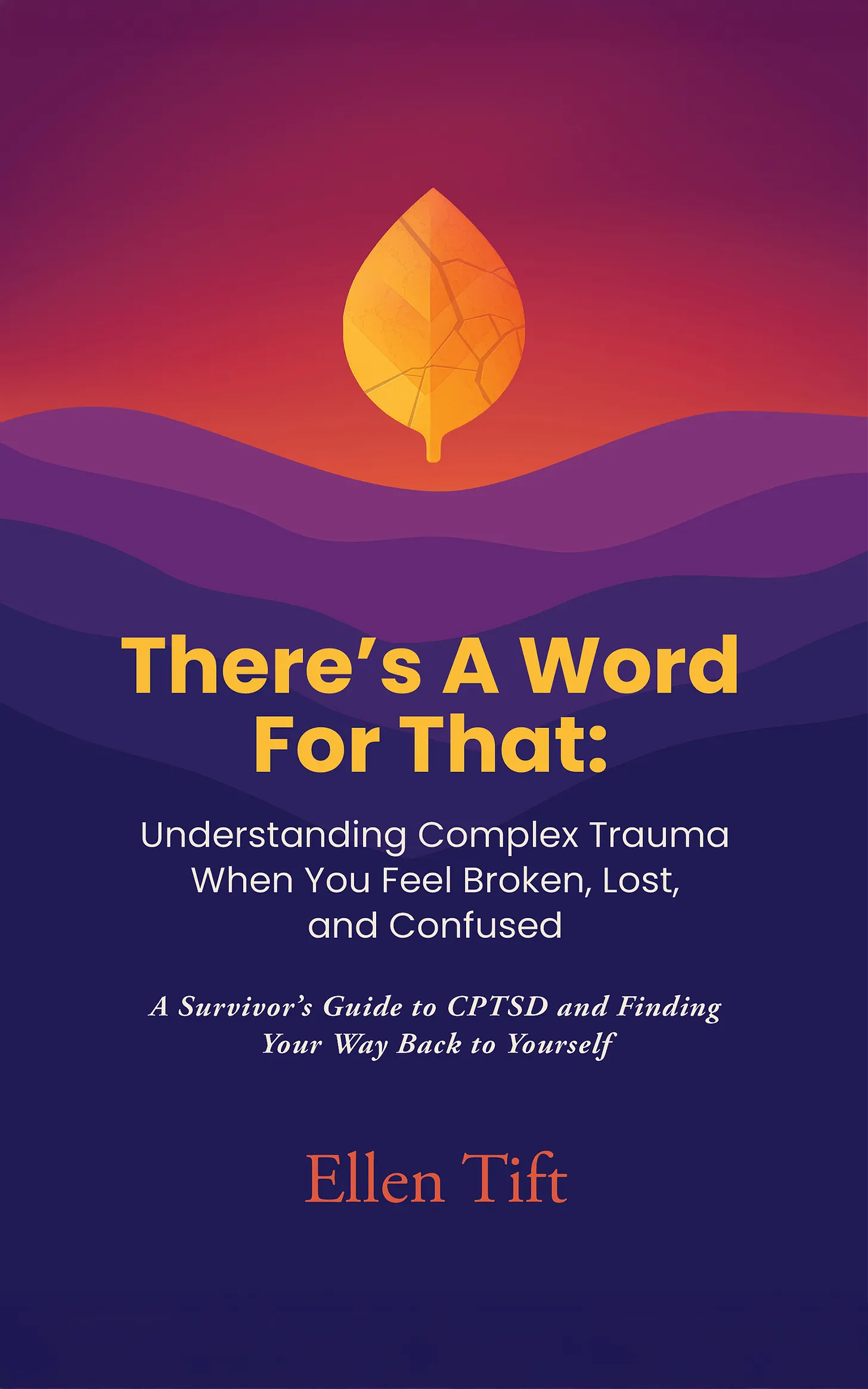
Photo Credit: Author – Additional Terms and disclaimers for images used in my posts on CPTSD Foundation.
Guest Post Disclaimer: This guest post is for educational and informational purposes only. Nothing shared here, across CPTSDfoundation.org, any CPTSD Foundation website, our associated communities, or our Social Media accounts, is intended to substitute for or supersede the professional advice and direction of your medical or mental health providers. The thoughts and opinions expressed are those of the guest author and do not necessarily reflect the views of the CPTSD Foundation. For further details, please review the following: Terms of Service, Privacy Policy and Full Disclaimer
- About the Author
- Latest Posts

Ellen Tift** is a longtime university educator, veteran musician, and trauma-informed writer. After three decades as a music professor, she now brings the same clarity, depth, and care to her work on narcissistic abuse, betrayal trauma, and Complex PTSD.
A survivor herself, Ellen combines lived experience with extensive research to offer insight that’s both emotionally validating and intellectually grounded in language that’s easy to understand. Her writing speaks to fellow survivors with warmth, precision, and hard-earned wisdom.
Her book series, _There’s A Word For That_, began its release in 2025 on Amazon and Kindle. Designed for overwhelmed minds and hurting hearts, each volume can be read in small doses, with skimmable headings and stand-alone sections that meet readers right where they are.
Additional Terms and disclaimers for images used in my posts on CPTSD Foundation.
This is a fantastic article!!
Thank you{“:
This article really resonated with me, especially the part about how small incidents can spiral into feelings of existential humiliation. It’s amazing how we sometimes minimize our feelings in front of others, despite the impact on our well-being. I’ve found that practicing self-compassion helps me navigate these tricky emotions. I often consult a helpful free resource for guided meditations that focus on self-kindness.