
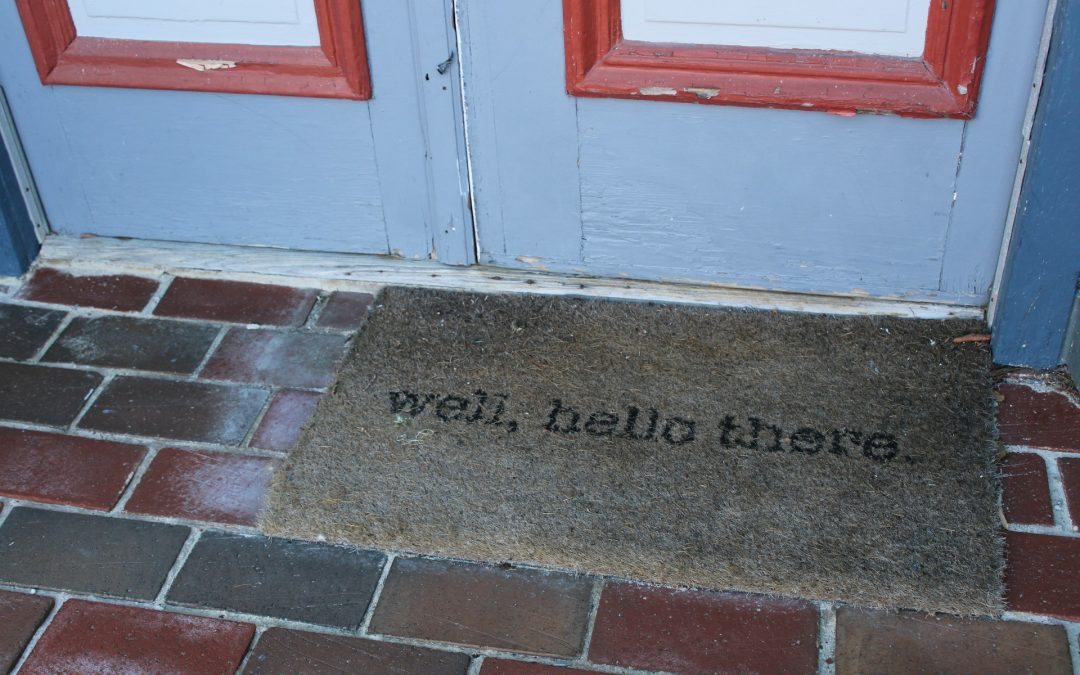
When Being “Good” Hurts: The Doormat Syndrome
Setting Boundaries and Protecting Your Peace of Mind:
Yes, because of my CPTSD, I was a people-pleaser. This was like a survival-mode I learned as a child. And that doormat syndrome was often painful for me, for many years. Until one day, I had had enough and decided to change. Here is what I learned:
Studies show that people-pleasing significantly increases the risk of burnout. People-pleasers are especially susceptible because their difficulty setting boundaries and their desire to be loved by everyone directly lead to chronic stress and emotional exhaustion.
Maybe you’re an empath, and perhaps you’ve often heard, “Oh, you’re so kind.” Many of us were raised to be good girls or good boys to earn our parents’ approval and affection. Nothing is more traumatic for a child than losing that parental love.
Children who experience love withdrawal when they make a mistake naturally become people-pleasers. What many don’t realize is that these patterns often lead to depression and chronic burnout later in life.
Being taught to be a good girl or boy as children turns people-pleasing into a learned, but deeply painful emotional pattern. At home, in church, and at school, the message was the same: we had to be kind and nice. Otherwise, we wouldn’t be loved and might even be rejected by our entire social circle, triggering primal survival fears in young hearts.
The roots of that chronic fear of rejection run deep and are triggered in every area of life, both private and professional. Naturally, we always do more than we’re asked to do, driven by that OCD-like need to keep everyone around us happy. This is where burnout and depression gently take root, growing over time when our efforts remain unreciprocated.
Yes, people will love you as long as you serve them in one way or another. The people-pleaser is often the best student, the most perfect secretary, the kindest boss, and, of course, the ideal parent. People like you because you’re always the first to help others.
But one day, the sky becomes clouded. You notice that weird feeling in the background and realize that people may be abusing your kindness: they aren’t there for you when you need them and don’t appreciate all your efforts. Often, we respond by working harder, trying harder, and performing better until we find ourselves in the doctor’s office, exhausted and perhaps diagnosed with depression.
There is a lasting impact of early approval‐seeking.
When you grow up trained to be a people-pleaser, it often looks on the outside as if everyone likes you; but they stop liking you as soon as you learn to say, “Sorry, no. I can’t help this time.” The more you establish healthy boundaries, the more they criticize you, accusing you of selfishness.
When a people-pleaser awakens and starts setting boundaries, their children often rebel because their parent suddenly says “no” as part of a healthy upbringing. Coworkers begin to gossip because they can no longer exploit your kindness and must handle their own tasks. Employees in your team, too, have to learn to respect their boss in earnest.
And, of course, all the groups that once welcomed you (as a volunteer, donor, or committee member) will let you go as soon as you stop paying with your time or money. They never truly cared about you, only about the resources they could extract.
Maybe, those so-called best friends, or even family members, will tell you that you’ve disappointed them lately, because as a people-pleaser you were their favorite trash bin for emotional issues. But since you learned to say “no” and you’re no longer as available as before, of course, they’re disappointed: they can’t use you for their narcissistic intentions anymore.
Now, another important point: as people-pleasers, we were often trained to forgive and taught that we should always remain kind and nice to those who hurt us. In many situations, this pattern is deeply harmful. It’s one of the main reasons so many of us end up feeling exhausted, depleted and depressed
Depending on the situation, yes, we may forgive, but we don’t have to stay in contact.
If you keep seeing toxic, negative, critical narcissists and other manipulative people, you’ll never move forward or reach your goals in life. If you feel worse after every conversation, that’s a clear sign it may be better to move on.
Like my grandfather used to say, “It is often wiser to spend a season in your own gentle company than to remain surrounded by those who do not truly see, honor, or respect your sacred light. When you lovingly release connections that no longer feel aligned, you create beautiful, open space for the Divine Universe to bring in people who genuinely cherish you.”
It’s wonderful to be kind and helpful – so long as it’s mutual and the appreciation is genuine, valuing you as a person rather than your performance. You are not a doormat or a trash bin for other people’s unresolved issues, jealousies, laziness, or frustrations. There is great relief on the other side of healthy boundaries, and sometimes going no-contact is simply the healthiest way to protect your peace of mind.
Warning signs you’re a doormat for others include chronic exhaustion and resentment, guilt when you say “no,” and feeling used or unappreciated. And the cost of continuing to “be good” often shows up as burnout, depression, and loss of identity, along with relationship imbalances at home and work.
It’s better to be alone for a short time than to stay with people who have no honest respect for you, who belittle, judge, and criticize you just to keep you pleasing them. When you let go of the wrong people, you create space for the divine universe to bring better people into your life.
The good news is that you can build a healthier tribe: because you deserve people who truly support you, respect your boundaries, and uplift your self-worth.
If this message resonates and you need help with a similar situation, feel free to reach out.
With warm regards,
Jeanne
💗
Photo Credit: Unsplash
Guest Post Disclaimer: This guest post is for educational and informational purposes only. Nothing shared here, across CPTSDfoundation.org, any CPTSD Foundation website, our associated communities, or our Social Media accounts, is intended to substitute for or supersede the professional advice and direction of your medical or mental health providers. The thoughts and opinions expressed are those of the guest author and do not necessarily reflect the views of the CPTSD Foundation. For further details, please review the following: Terms of Service, Privacy Policy and Full Disclaimer
- About the Author
- Latest Posts
Having navigated trauma and its long-term effects myself, I understand how non-linear, layered, and deeply personal recovery can be. Every article here is written by me from the heart, based entirely on my own lived experiences and personal journey. The goal of my writing is to encourage all those who, like me, are living with a lifelong medical diagnosis, and everyone navigating difficult times in their lives. May my texts bring you comfort and encouragement. My website: https://www.janehealingangels.com/